
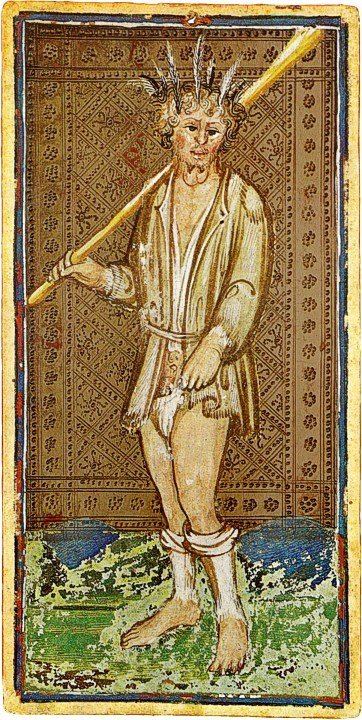
The tarot did not come from ancient Egypt. It did not arrive from Atlantis, and no pharaoh ever laid out a Celtic Cross. These stories were invented in the 1780s, and they stuck because they are better marketing than the truth. The truth is better anyway: tarot began as a card game for Italian nobles in the 1400s, spent centuries as ordinary entertainment, and only became a fortune-telling tool in the last 250 years. Here is that history, with dates you can check.
A trick-taking game for the Milanese court
The earliest surviving tarot decks were painted by hand in northern Italy around the 1440s, most famously the Visconti-Sforza decks made for the ruling families of Milan. Nobody used them to predict the future. They were luxury game cards for tarocchi, a trick-taking game a bit like bridge, with an extra suit of 22 allegorical trump cards: the Fool, the Magician, the Empress, Death, the Tower, and the rest of the cast we still know. Playing cards themselves had reached Europe in the late 1300s, probably by way of Mamluk Egypt. But that is the history of playing cards in general, not of tarot: the trumps were an Italian invention. For roughly 300 years, tarot was furniture at card tables, not a tool of the occult. If you want the anatomy of the modern deck, see our breakdown of how a tarot deck is structured.
The Marseille pattern settles in
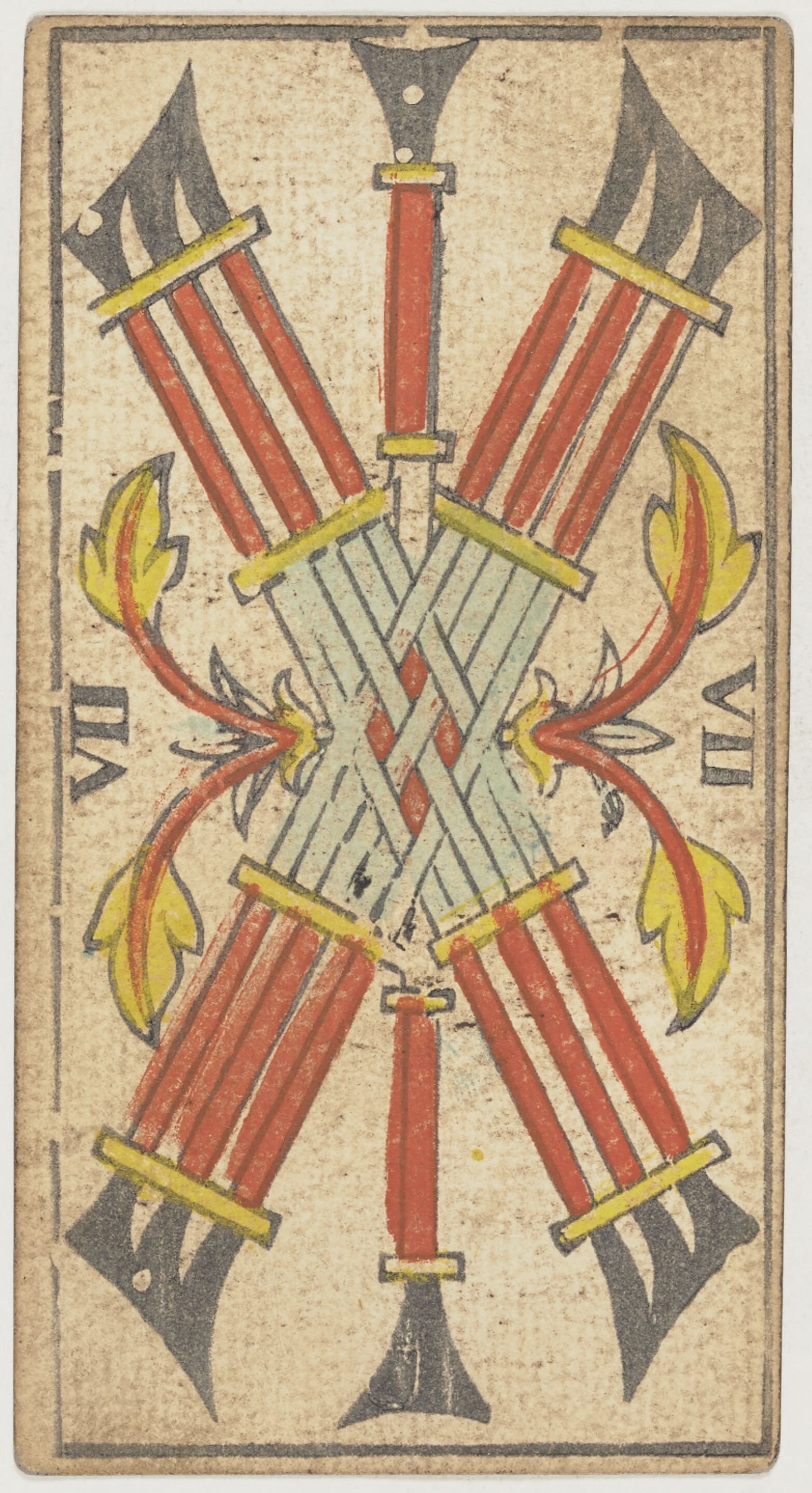
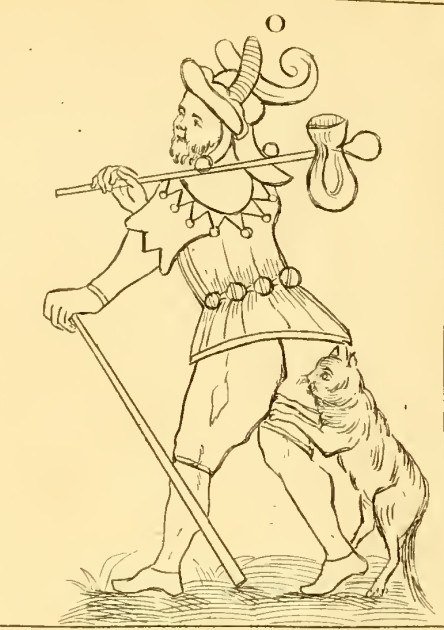
By the 1600s, French card makers had standardized the design into what we now call the Tarot de Marseille, printed from woodblocks and hand-colored in workshops. The most famous version is Nicolas Conver’s 1760 deck from Marseille, which fixed the sequence and imagery that later decks would copy or rebel against. Note the date: 1760, and still a game. The French game of tarot is played to this day, with national championships and everything. Nobody at those tables is asking the cards about their love life. The deck that occultists would later treat as a book of mysteries was, at this point, a mass-produced pastime.
1781: the occult revival invents an origin
Everything changed in 1781, when the French scholar Antoine Court de Gébelin published a volume of his Monde primitif claiming tarot was the surviving “Book of Thoth” from ancient Egypt. There was no evidence for this. Court de Gébelin simply looked at the cards, decided the trumps must encode Egyptian wisdom, and declared it so in print. The claim was false, but it was enormously productive: within a few years, French occultists were designing divination methods, assigning astrological and Kabbalistic correspondences, and selling the idea that the cards were never really a game at all. Eliphas Lévi folded tarot into ceremonial magic in the 1850s, Papus systematized it in 1889, and the Hermetic Order of the Golden Dawn made it central to English occultism. The Egypt story is the one piece of tarot lore you should actively discard: it was marketing, not history.
1909: Waite, Smith, and the deck on every shelf
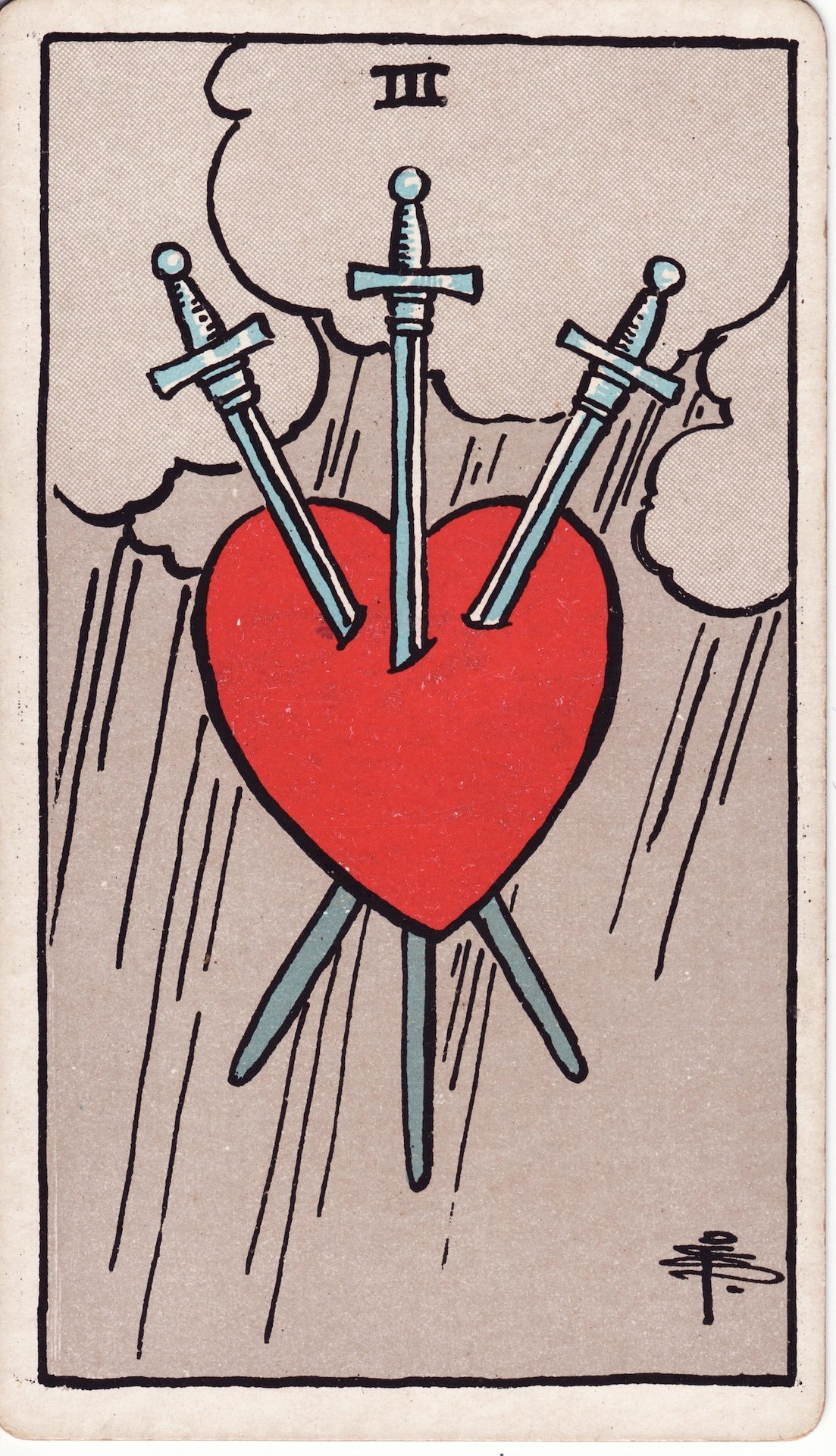
The deck most readers picture today was published in London in 1909. Arthur Edward Waite, a Golden Dawn member, wrote the meanings; Pamela Colman Smith, an artist and fellow occultist, illustrated all 78 cards, the first widely printed deck to give every pip card a full scene instead of a bare arrangement of suit symbols. That single design choice changed everything: beginners could read the pictures instead of memorizing number meanings, and the deck spread through the English-speaking world. (Smith, who did the visual work that made the deck famous, was paid a flat fee and died with little recognition; Waite’s name went on the box.) Our Rider-Waite vs. Thoth comparison traces what happened next, when Aleister Crowley and Lady Frieda Harris answered with a rival deck in the 1940s.
What the timeline means for readers
None of this makes tarot less useful as a reading tool. The cards spent 300 years as a game and 250 years as an oracle, and the second career is the one that matters to readers. But knowing the real timeline protects you from two mistakes. The first is treating invented lore as authority: if someone tells you a card’s meaning “comes from the Egyptian priests,” you now know it comes from an 18th-century Frenchman with an active imagination. The second is the opposite error, dismissing the cards because they are not ancient. A tool does not need to be old to be good. It needs a coherent system and an honest reader. Tarot has both, and its real history of Italian courts, French print shops, and London occultists is strange enough without the pharaohs. When you are ready to use the deck rather than study it, our guide to the Celtic Cross spread walks through the most famous layout position by position.