
If you are choosing your first tarot deck, two names come up again and again: Rider-Waite and Thoth. Both appeared in the first half of the twentieth century, both shaped how the English-speaking world reads tarot, and both are still in print. They teach in very different ways, and the right starting deck depends on how you like to learn. Here is an honest look at each, with neither side dressed up as the obvious winner.
The two decks at a glance
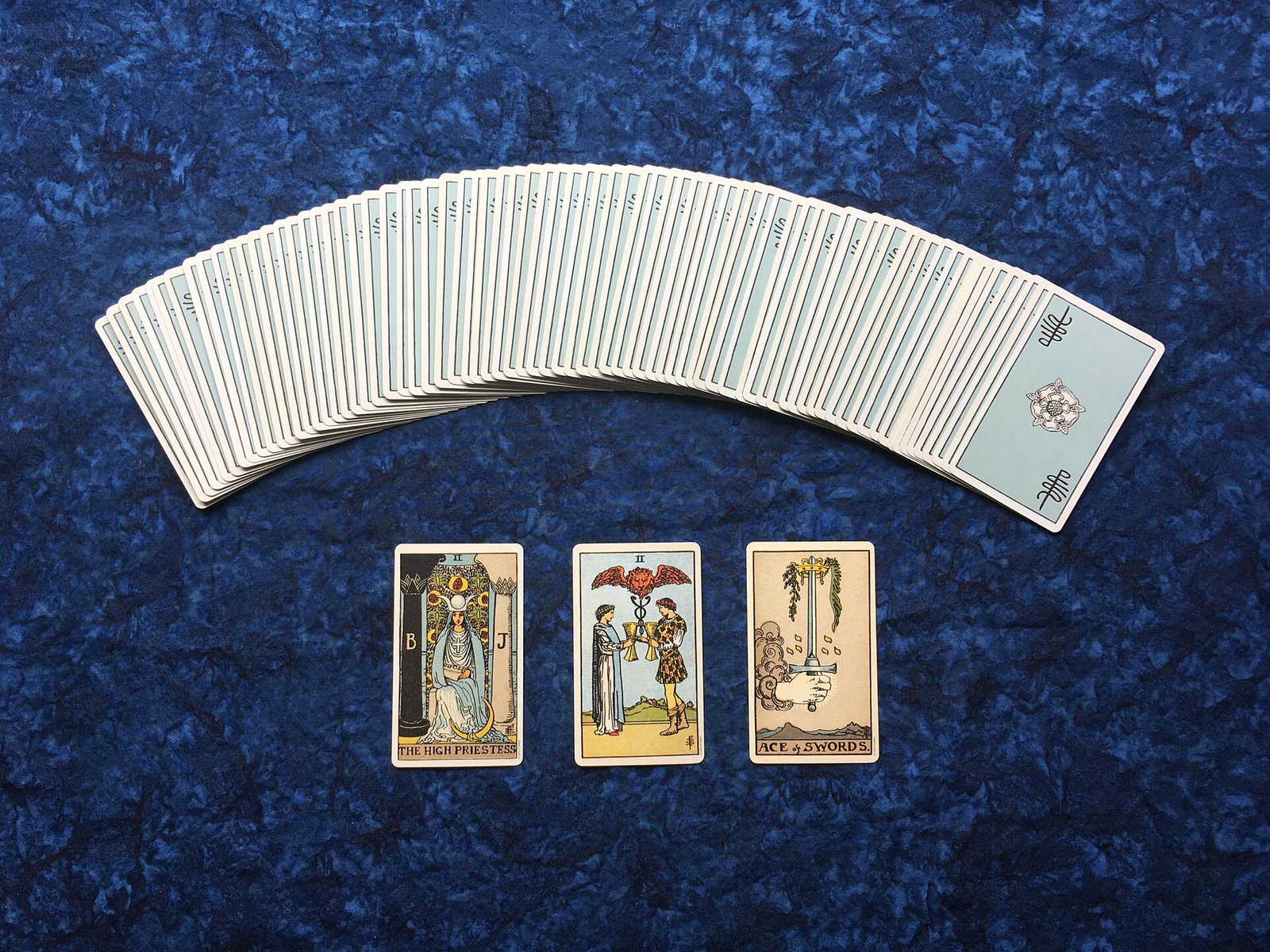
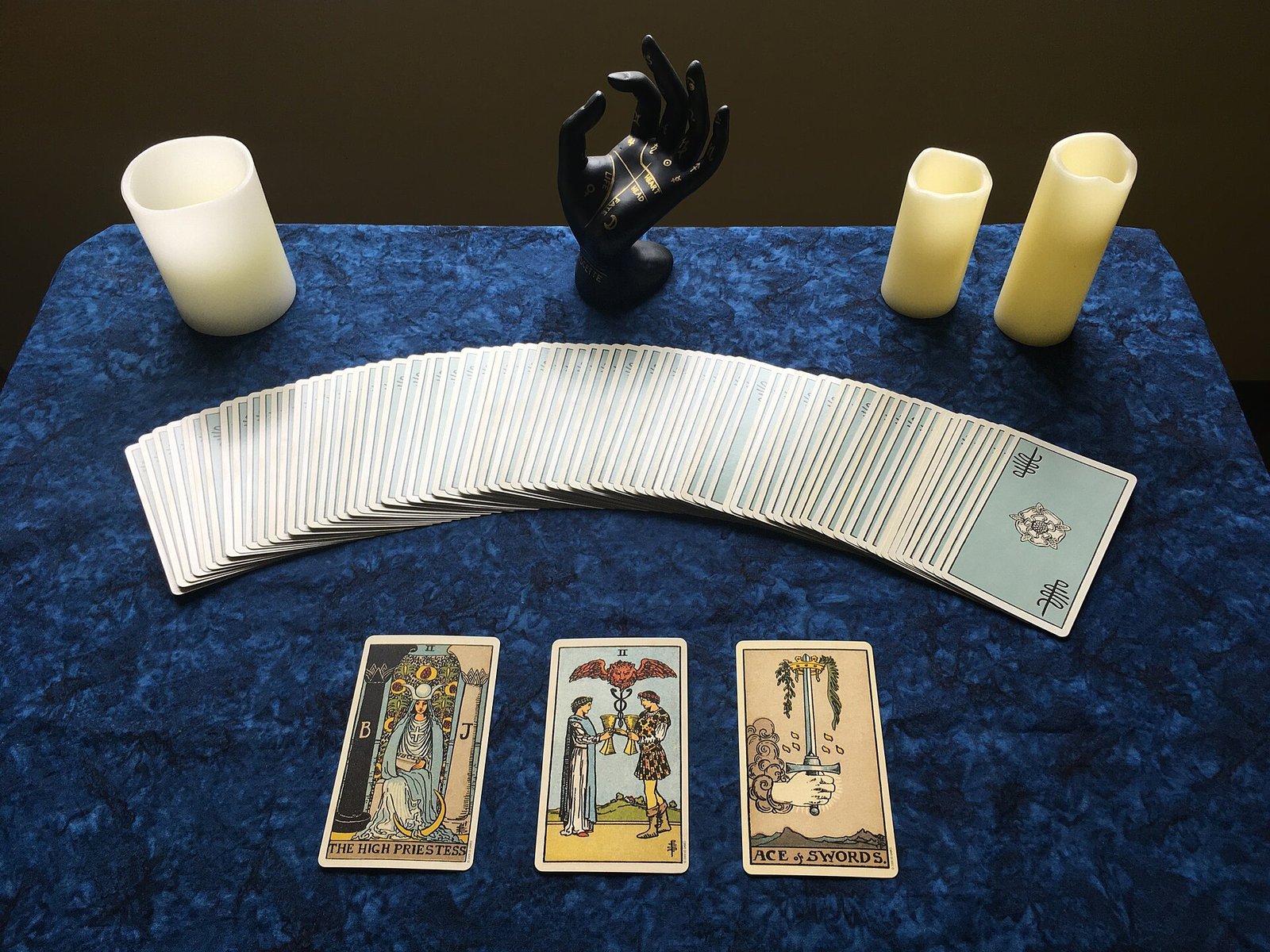
The Rider-Waite deck, usually shortened to RWS, was published in 1909 by the London publisher William Rider & Son. Arthur Edward Waite, a scholar of Western occultism, designed the system, and the artist Pamela Colman Smith drew all 78 images. It was the first widely sold deck to give every minor arcana card its own illustrated scene instead of plain numbered pips, and Smith’s scenes are the reason generations of beginners could pick up a card and get something from it before memorizing a single keyword.
The Thoth deck came decades later. The occultist Aleister Crowley wrote its system, and the artist Lady Frieda Harris painted the cards between 1938 and 1943. The deck was not printed until 1969, after both creators had died. Every minor card carries a title drawn from Crowley’s scheme: the Two of Wands is the “Lord of Dominion,” the Ten of Swords the “Lord of Ruin.” The courts were renamed as well, becoming Knight, Queen, Prince, and Princess.
What you see on the cards
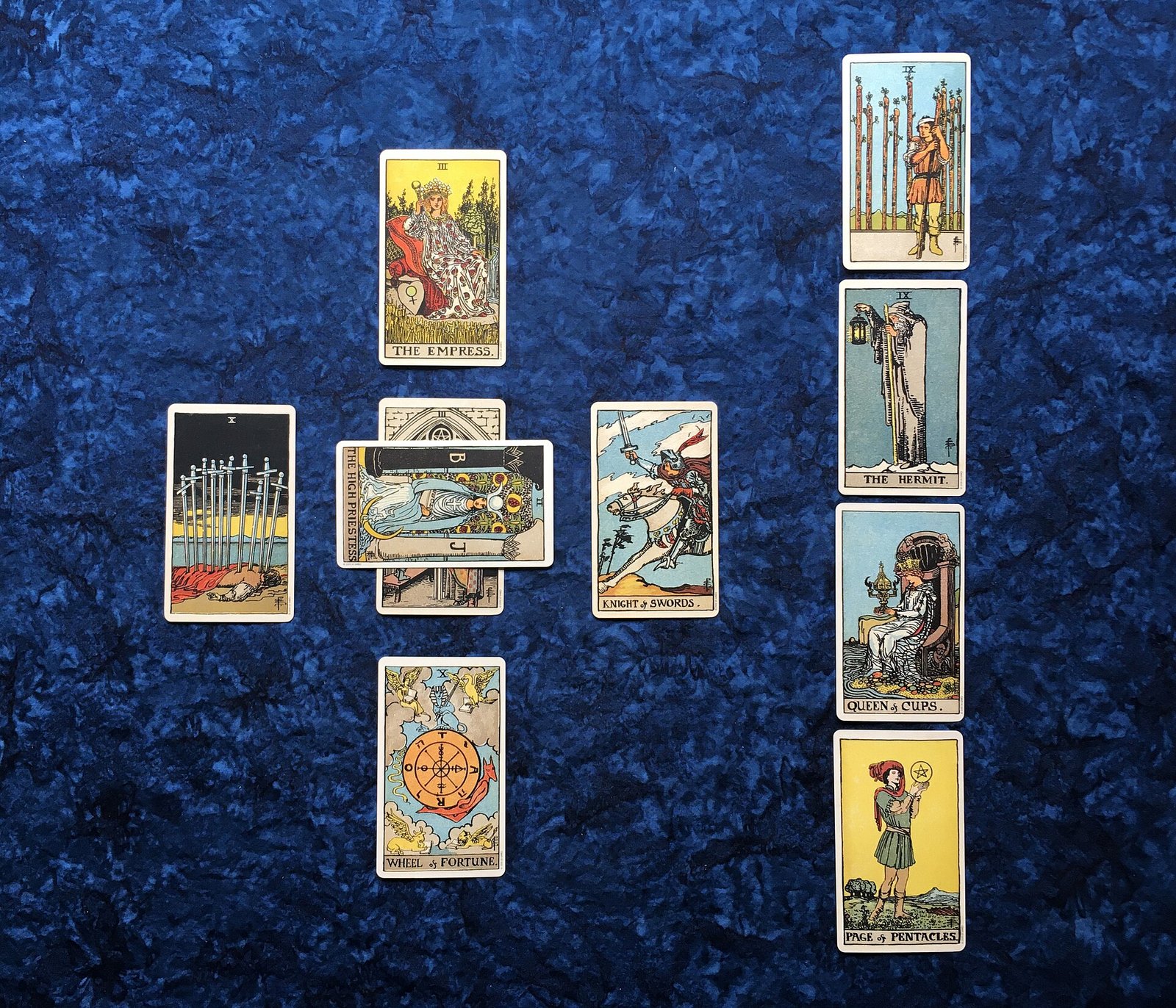
Rider-Waite puts its teaching in the pictures. The Three of Swords shows three swords piercing a heart under a gray sky; the meaning lands before you have studied anything. The Ten of Pentacles shows an old man, a family, and dogs outside a decorated archway; you can feel the theme of established comfort without a book. This is the deck’s great strength for beginners: concrete scenes that reward looking.
Thoth packs more reference systems into each card. The minors combine astrological decans, color scales, and geometric arrangements, so a reader who already knows some astrology keeps finding connections between cards. A reader who does not may feel the cards are assigning homework. The art is bold and strange in a way many people love, but it does not explain itself the way Smith’s scenes do.
There is no need to rank these approaches. Rider-Waite is illustration-led, and Thoth is system-led. That is the whole argument in one sentence.
The courts get renamed
One practical difference trips up beginners: the court cards. Rider-Waite uses Page, Knight, Queen, and King, a familiar ladder. Thoth uses Knight, Queen, Prince, and Princess, and Crowley rearranged their roles to fit his system. If you learn court meanings from a Rider-Waite-based book and then pick up a Thoth deck, you will need a translation layer. It is not a flaw in either deck, just something to know before you mix study materials.
Learning support is lopsided
Rider-Waite wins on available help, and it is not close. Nearly every beginner course, keyword list, and practice guide assumes this deck, so you will rarely get stuck without a reference. Most explanations of the structure of a tarot deck, its suits, and its symbols use Rider-Waite cards as their examples, which means the deck and the literature reinforce each other.
Thoth has fewer entry-level guides. Crowley’s own The Book of Thoth is dense and assumes the reader already knows his other writing. Later authors, notably Lon Milo DuQuette, wrote friendlier introductions, and they are worth reading, but the Thoth path still asks for more reading than the Rider-Waite path before readings start feeling comfortable.
Reading style in practice
The decks also nudge you toward different reading habits. Rider-Waite’s illustrated scenes invite storytelling: you describe what you see, and the story becomes the interpretation. This suits readers who think in images and narratives.
Thoth’s titled minors and layered references invite analysis: you weigh the card’s title, its astrological decan, and its position, then synthesize. This suits readers who enjoy systems and cross-references. Neither habit is better; they are different doors into the same room.
Which one should you learn on
Pick Rider-Waite if you want illustrated minor cards, the widest range of study material, and a deck that matches what your teacher or book is probably using. It is the common language of tarot, and learning the common language first is rarely a mistake.
Pick Thoth if systems and astrology already excite you, and you are willing to read longer books to get comfortable. Its art keeps teaching for years, and readers who start here often develop a precise, analytical reading style.
Plenty of readers end up owning both. The usual pattern is to learn the shared grammar on Rider-Waite and move to Thoth when the first deck starts feeling too simple, but starting with Thoth is fine too; it just means a steeper first month. If you are still weighing the field, our guide to how to choose your first tarot deck walks through the practical questions, like card size, art style, and where you plan to learn.

A note on editions
Both decks exist in many editions, and print quality varies. Rider-Waite reprints range from faithful reproductions of Smith’s original colors to muddy copies; it is worth reading reviews of a specific edition before buying. Thoth editions differ mainly in card size and finish, with larger cards showing Harris’s paintings better. Whichever you choose, buy from a reputable publisher so the colors and card stock match what the deck’s readers actually use.