
Beginners learn quickly that tens look heavy. They should. A ten is the end of the number line in the minor arcana, and it carries the whole suit’s story to its conclusion. But a conclusion is not always a happy one, and tens are where the suits show their sharpest differences. Two tens are celebrations. Two are warnings. The number is the same. The suit decides which one you are looking at.
What ten means on its own
In tarot numerology, ten is completion: a cycle finished, nothing left in the tank. That is a neutral fact. A completed project and an exhausted worker are both tens. The feeling you get from the card comes from the suit, because each suit completes differently. Wands burn out. Cups fill up. Swords end things. Pentacles settle into place.
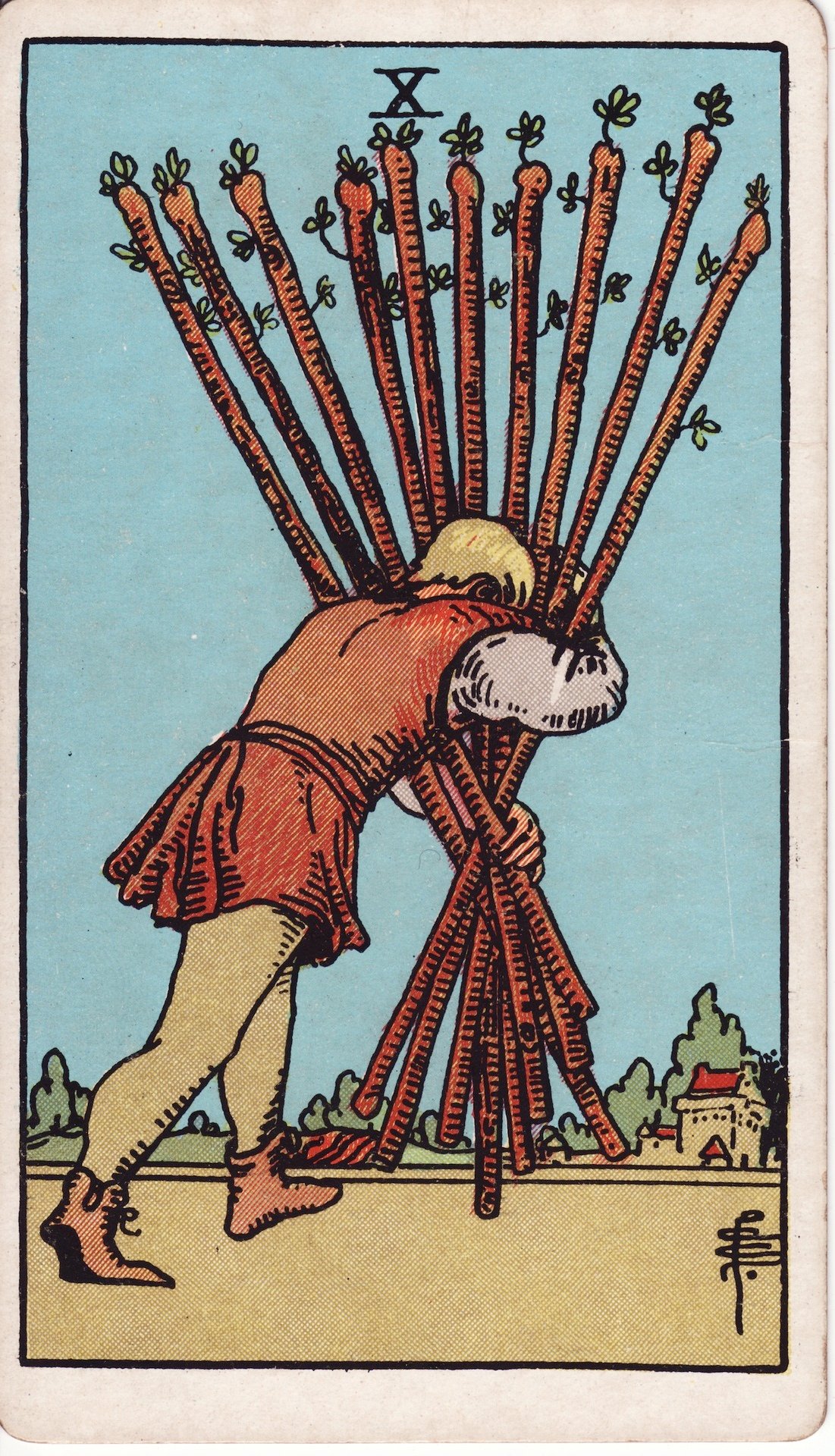
Ten of wands: overload
This is the heaviest ten in the deck, and the image says why: a figure bent under a bundle of wands, carrying more than the load requires. The Ten of Wands is completion as burden. The project got done, but it cost too much, or it is still getting done the hard way because nobody will delegate. In readings, this card rarely means failure. It means the current pace cannot continue. Something has to be set down.
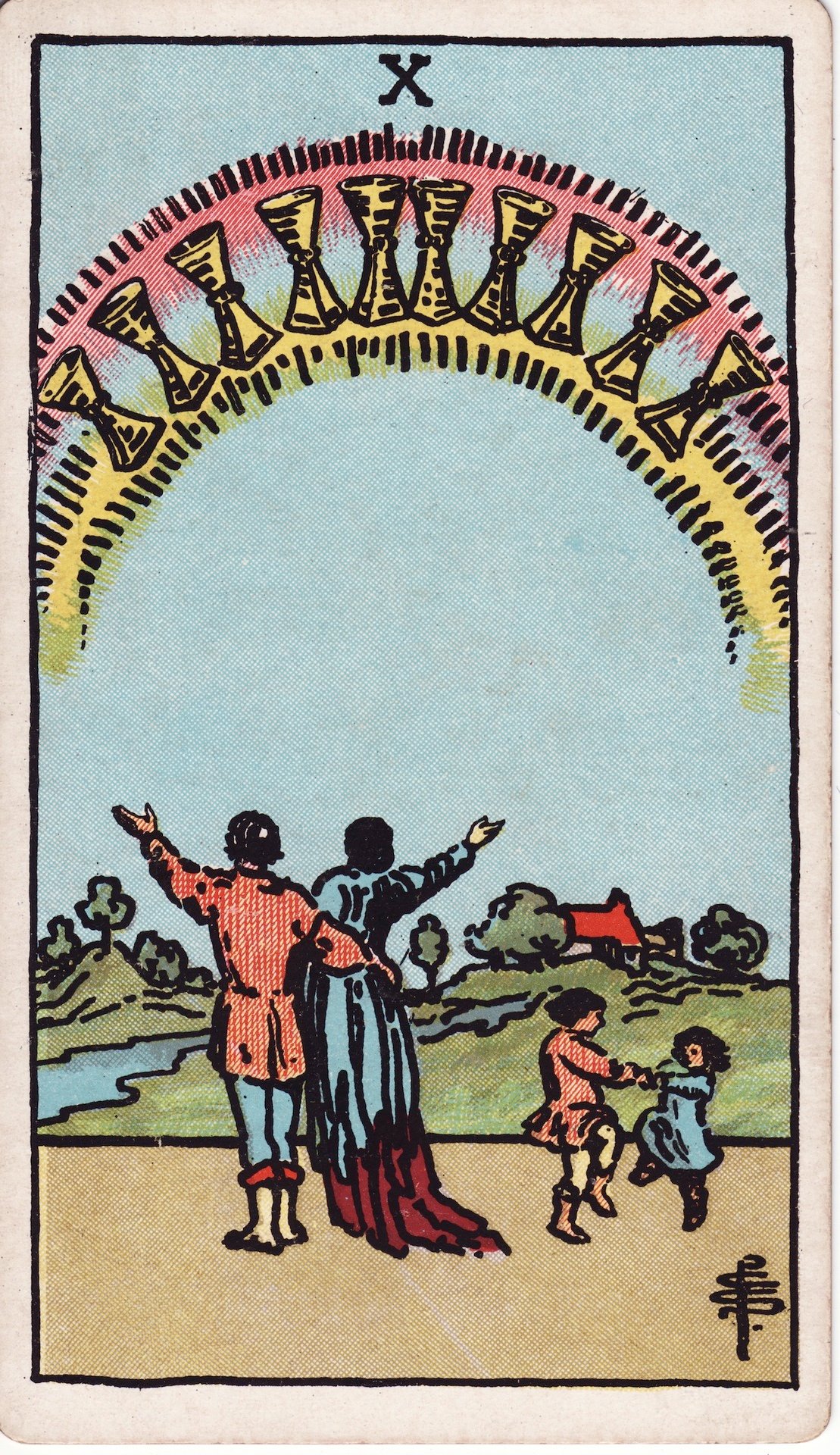
Ten of cups: fullness
The Ten of Cups is the happiest ten: a rainbow of cups over a family celebrating under it, emotional life at full capacity. It points to harmony in relationships, a home that works, a stretch of life where people get along. It can also be simpler than that: a good evening with people you love, counted as the real thing instead of a footnote. Readers sometimes skip past this card looking for drama. Do not. Fullness is the point.
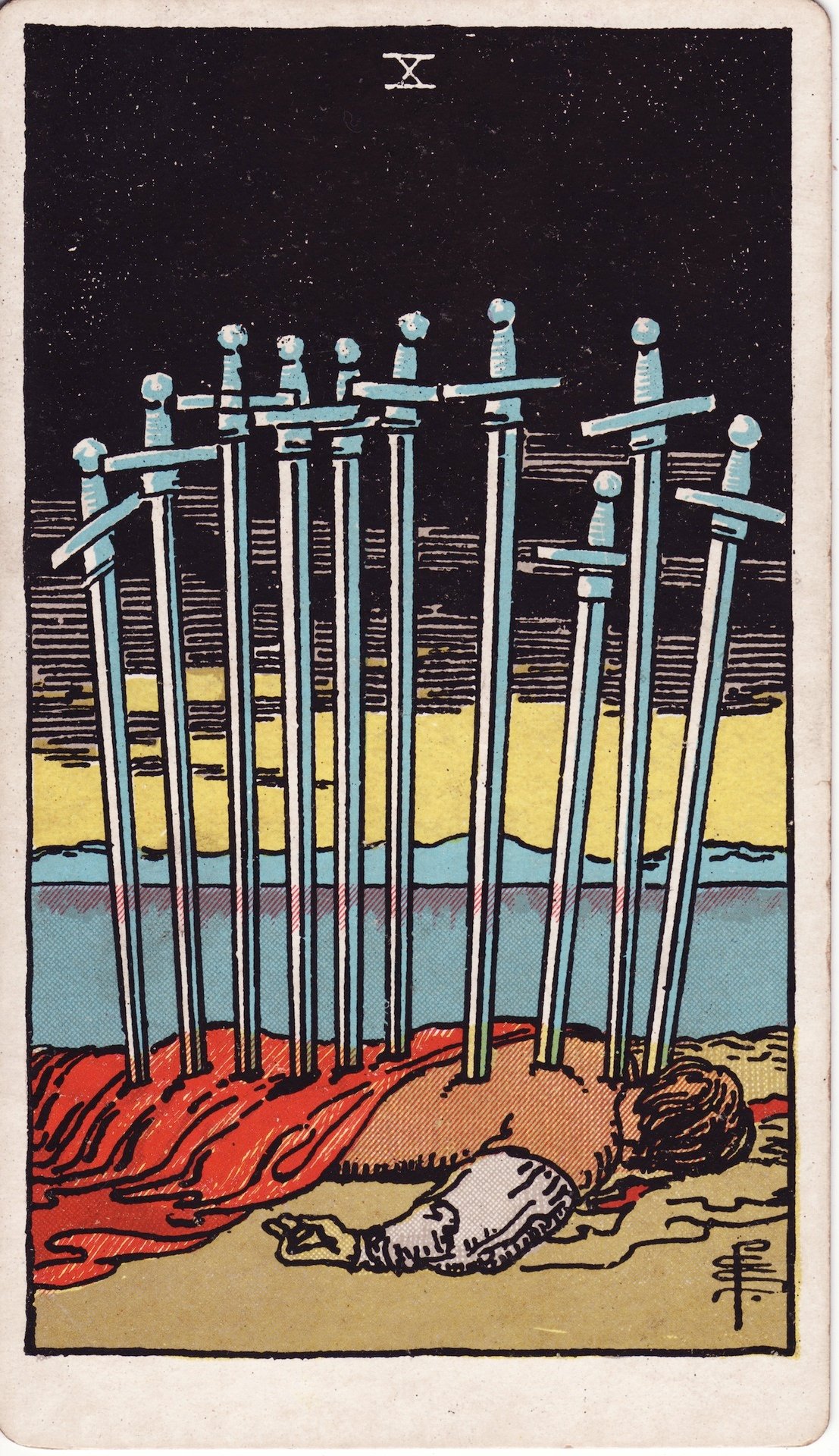
Ten of swords: a hard ending
The Ten of Swords shows a figure face-down with ten swords in their back, and it is the card people fear most. Read it plainly: something is over, and the worst has already happened. The card rarely announces a new disaster. It announces that the disaster is finished. Because ten is completion, the Ten of Swords is also the floor: there is nowhere lower for this story to go, which is why it so often marks the start of recovery. Name the ending, and let it end.
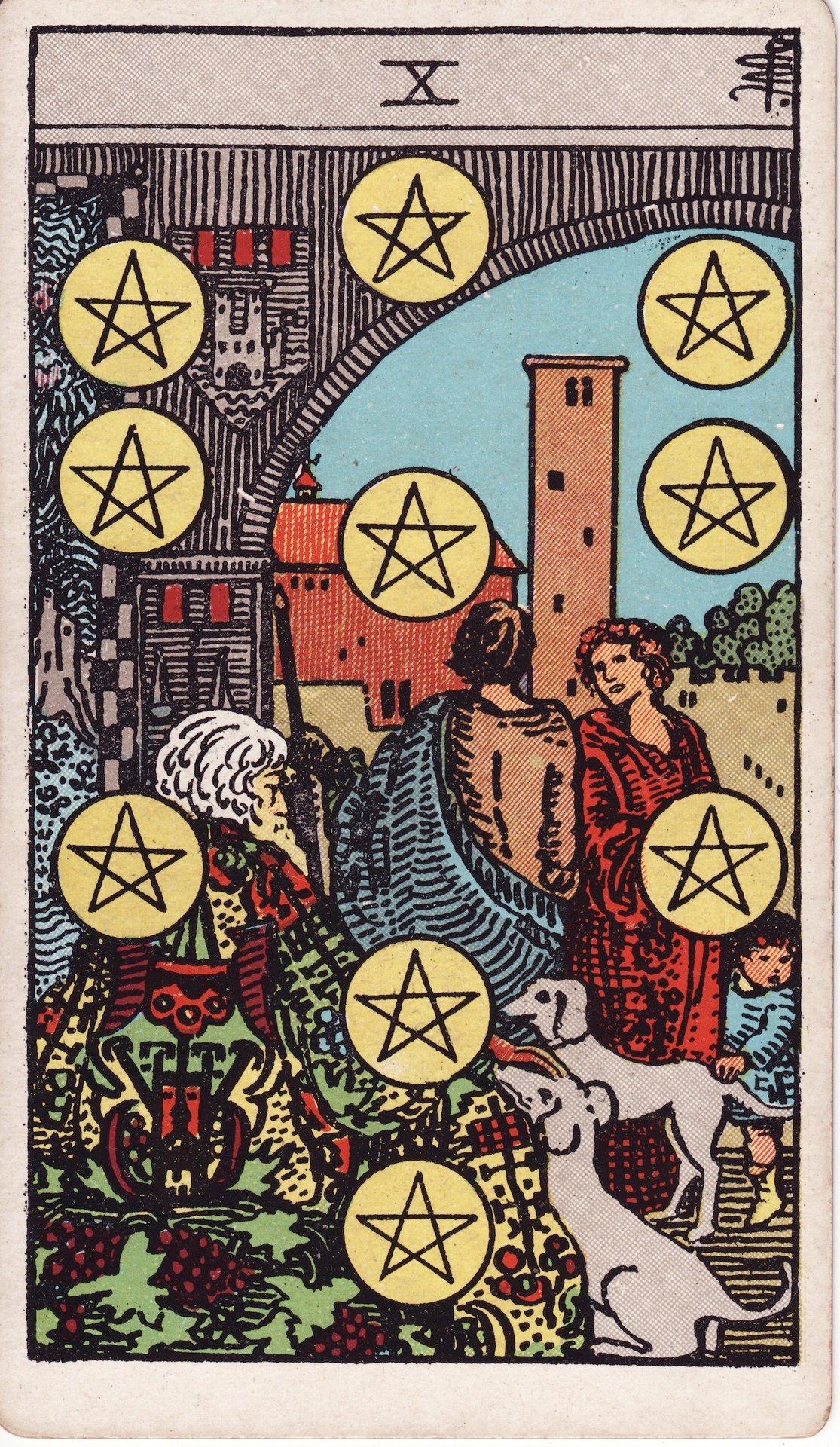
Ten of pentacles: a settled legacy
The Ten of Pentacles is completion in the material world: long-term security, family money handled well, a business or home built to last. It is the only ten that looks beyond the present moment, toward what gets handed down. In practical readings, it favors plans with long horizons: retirement, property, family agreements, work that outlives the worker.
Completion or overload: how to tell
Two questions sort tens in a live reading. First, which suit is it, and does that suit end well or badly? Cups and pentacles usually complete into something good. Wands and swords usually complete into something that needs to stop. Second, is the reader at the end or in the middle? A Ten of Wands for someone mid-project is a warning about load. For someone finishing, it is permission to put the bundle down.
One more note for context. A ten can feel final, but it is not the most final thing in a spread. When a major arcana card sits beside a ten, read our piece on when a major arcana card dominates a reading, because the major arcana can reframe a ten’s ending as a doorway rather than a wall. The ten still means completion. The major arcana says what the completion is for.