
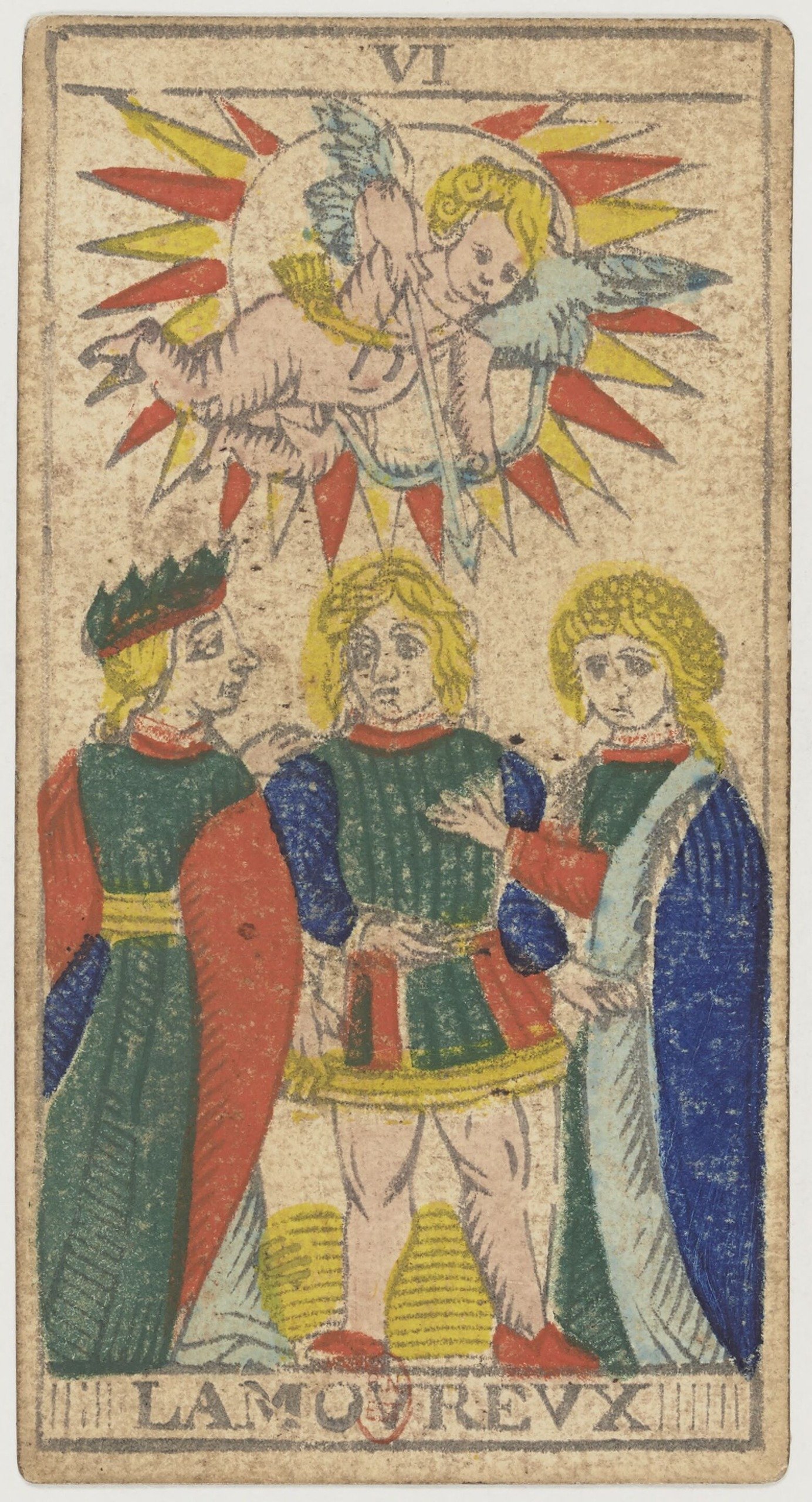
Two tarot traditions dominate the English-speaking tarot world, and they look like they belong to different centuries. The Rider-Waite deck gives every minor card a full illustrated scene. The Marseille deck gives you numbered pips, plain as playing cards, and majors with old French titles. Both are complete 78-card tarot decks. They just ask completely different things of the reader.
Where the two decks come from
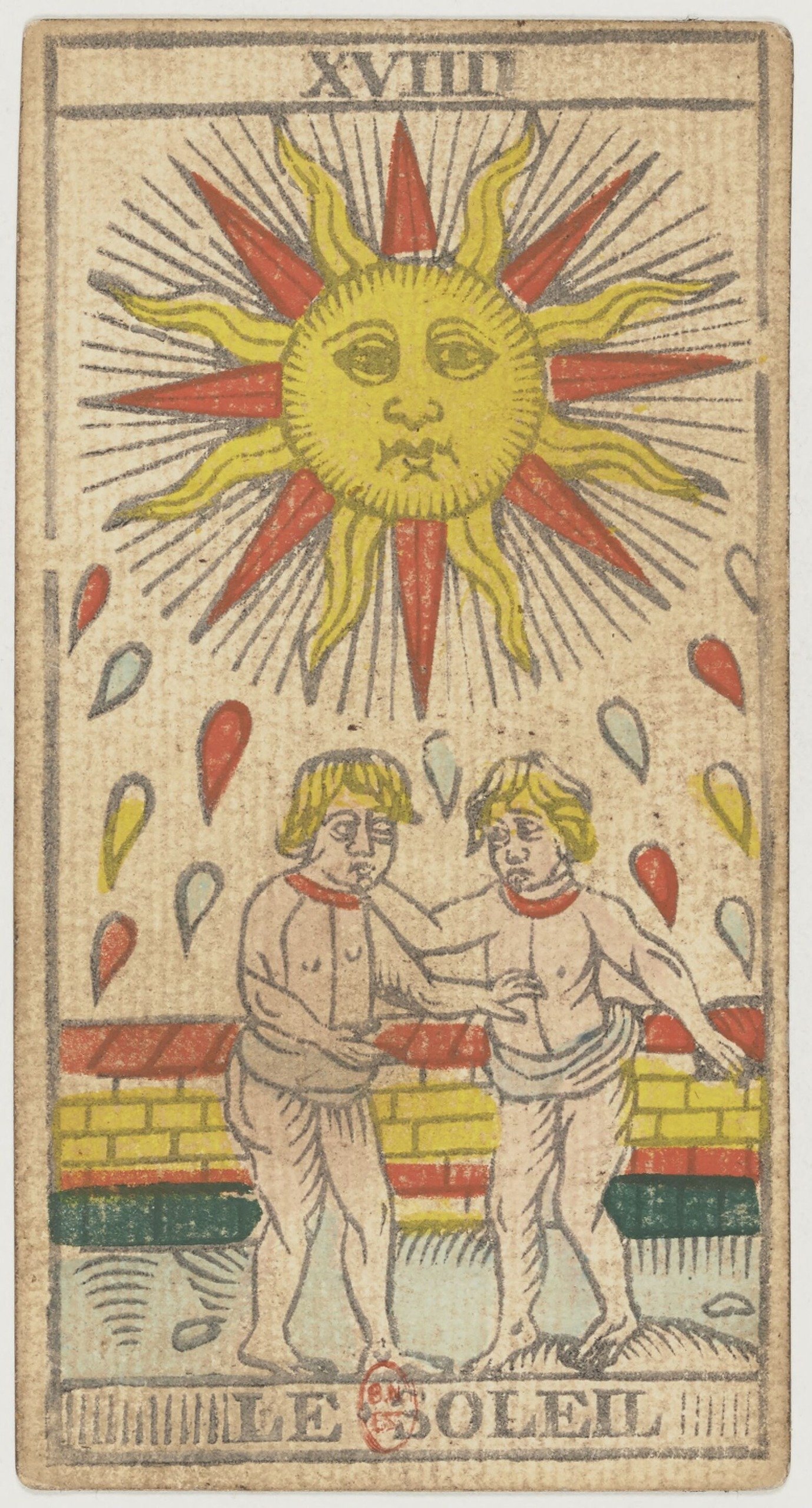
The Marseille pattern is the older of the two by centuries. Tarot games were played in northern Italy and France from the 1400s, and the Marseille style of the cards settled into its classic form in the 1600s and 1700s. Surviving examples include decks by Jean Noblet (around 1650), Jean Dodal (around 1701), and Nicolas Conver (1760). The name “Tarot de Marseille” itself was coined by the French occultist Papus in 1889; before that it was simply how tarot cards looked in that region.
Rider-Waite arrived in 1909, designed by Arthur Edward Waite and drawn by Pamela Colman Smith. Its famous innovation was giving all 56 minor arcana cards their own narrative illustrations instead of plain pips. That single change reshaped tarot learning for the next hundred years, because a beginner could pick up the Three of Swords and see a heart pierced by three blades under a gray sky without opening a book.
The biggest visible difference: the minor arcana
Flip through a Marseille deck and the minors look sparse. The Eight of Cups is eight cups arranged in a pattern, nothing more. There is no figure walking away from them under a moon, the way Smith drew it for Rider-Waite. Marseille pips give you number, suit, and arrangement, and they leave the storytelling to you.
That sparseness is either the Marseille deck’s weakness or its whole point, depending on how you read. Readers who learn on Rider-Waite sometimes call the Marseille minors “blank.” Marseille readers answer that the pips are a cleaner instrument: with no scene to lean on, you read the number and the suit directly, and you notice visual relationships between cards that illustrated scenes would hide. The Two of Coins in the Conver deck, for instance, is famous for its ribbon looping around the two coins, a small visual detail generations of readers have worked with.
How the reading methods differ
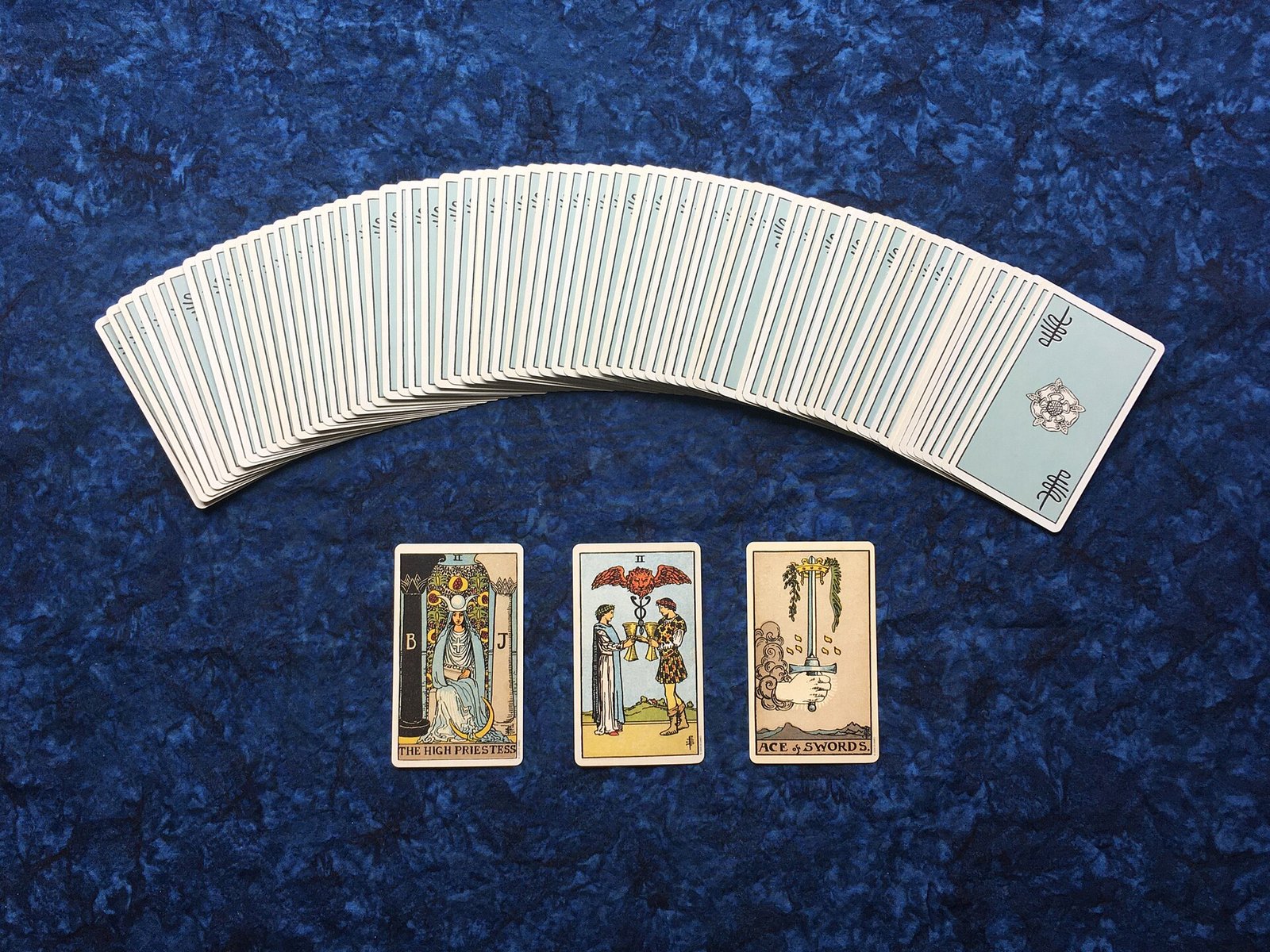
The two decks encourage different habits. Rider-Waite invites narrative reading: you describe what you see in the scene, and the description becomes the interpretation. A course built around this deck usually teaches card meanings one by one, and the practical meanings of all 78 cards pair naturally with its images.
Marseille reading leans structural. Without scenes, readers work from the suit’s element, the card’s number, and how the pips sit on the card, then combine those with the question. This method transfers across every card at once: once you understand what fives do and what swords do, the Five of Swords is readable without memorizing a separate definition. Many Marseille readers also read the majors as a sequence of archetypal stations rather than as 22 separate pictures.
Neither method is more correct. They are two reading muscles, and each deck trains one of them.
The majors are not the same either
The Marseille majors carry their old French names: Le Bateleur, La Papesse, L’Imperatrice, L’Empereur, Le Pape, and so on. Two details stand out. The Marseille deck keeps La Papesse (the Popess) and Le Pape (the Pope), figures Rider-Waite renamed to the High Priestess and the Hierophant. And the Marseille Fool, Le Mat, is unnumbered, which changes how some readers place him in the sequence.
Visually, the Marseille majors use a flat, woodcut-derived style with strong outlines and limited color, a look modern reproductions keep on purpose. Smith’s majors are softer and more pictorial. If you read intuitively from images, the difference in art alone will push you toward one deck or the other.
Learning support and study material
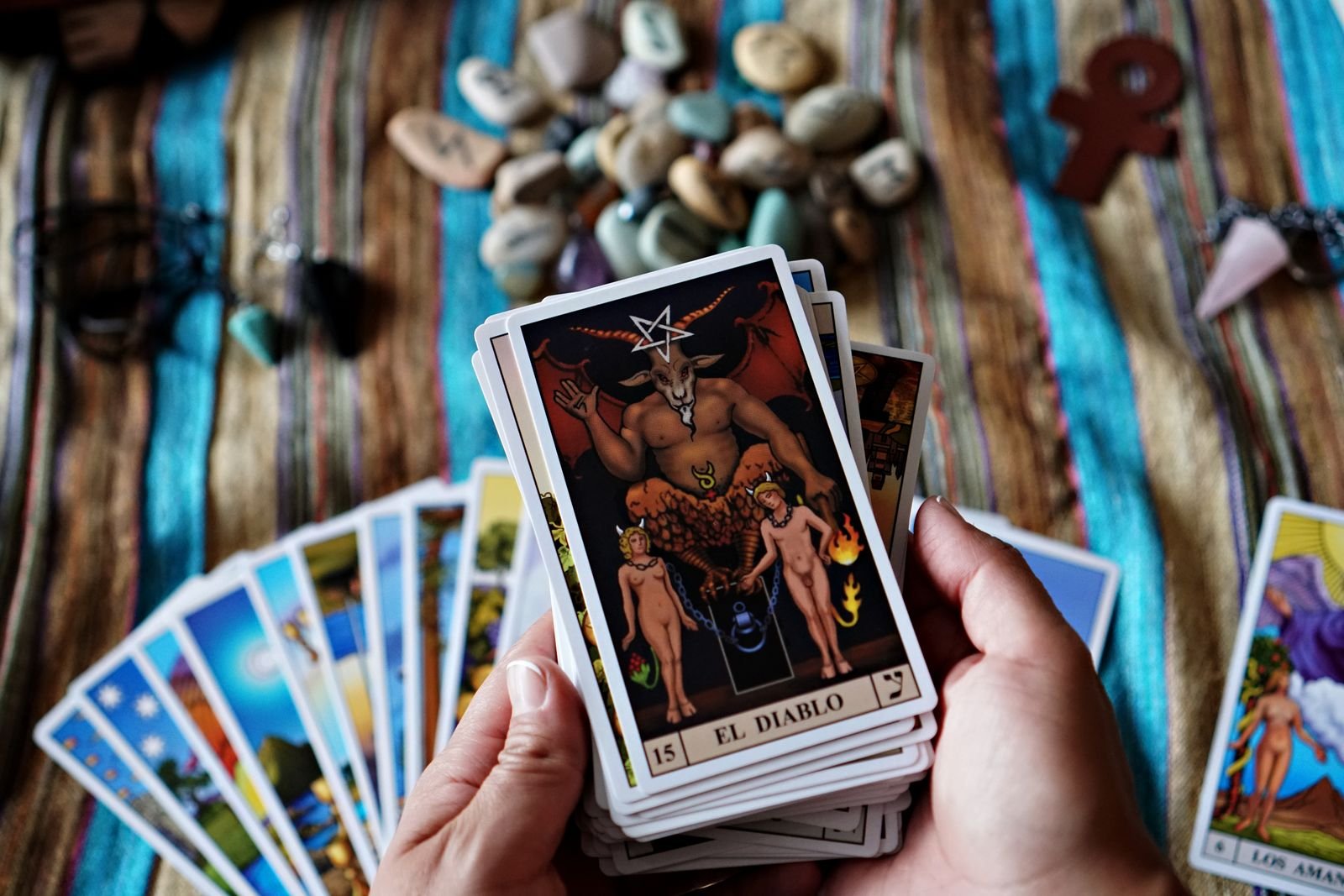
Rider-Waite wins on available help, and it is not close. Nearly every beginner book, course, and keyword list assumes this deck. If your teacher says “the Six of Pentacles,” they are picturing Smith’s merchant handing coins to beggars. Our guide to choosing your first tarot deck assumes you may start here for exactly that reason: the ecosystem around the deck is part of what you are buying.
Marseille study material exists but is thinner in English. The best-known modern teachers, like the French reader Yoav Ben-Dov, wrote specifically to make the Marseille tradition accessible, and his book The Open Reading is the usual starting recommendation. You will do more of the work yourself, which some readers count as a feature.
Which deck fits which reader
Pick Rider-Waite if you learn best from pictures, want the widest range of books and courses, and like readings that build from concrete scenes. It is the common language of modern tarot, and learning the common language first is rarely a mistake.
Pick Marseille if plain pips appeal to you, you enjoy building meaning from number and suit, or you want a deck with no illustrated crutch forcing a particular story. Readers who start with Marseille often develop a spare, structural style that later makes every other deck easier to read, because they learned the grammar instead of the vocabulary.
Plenty of readers keep both. A common pattern is to learn the shared card structure on Rider-Waite and then spend a season with Marseille to see what the pips reveal when the pictures are taken away. The two decks do not compete for the same job; they train different eyes.