
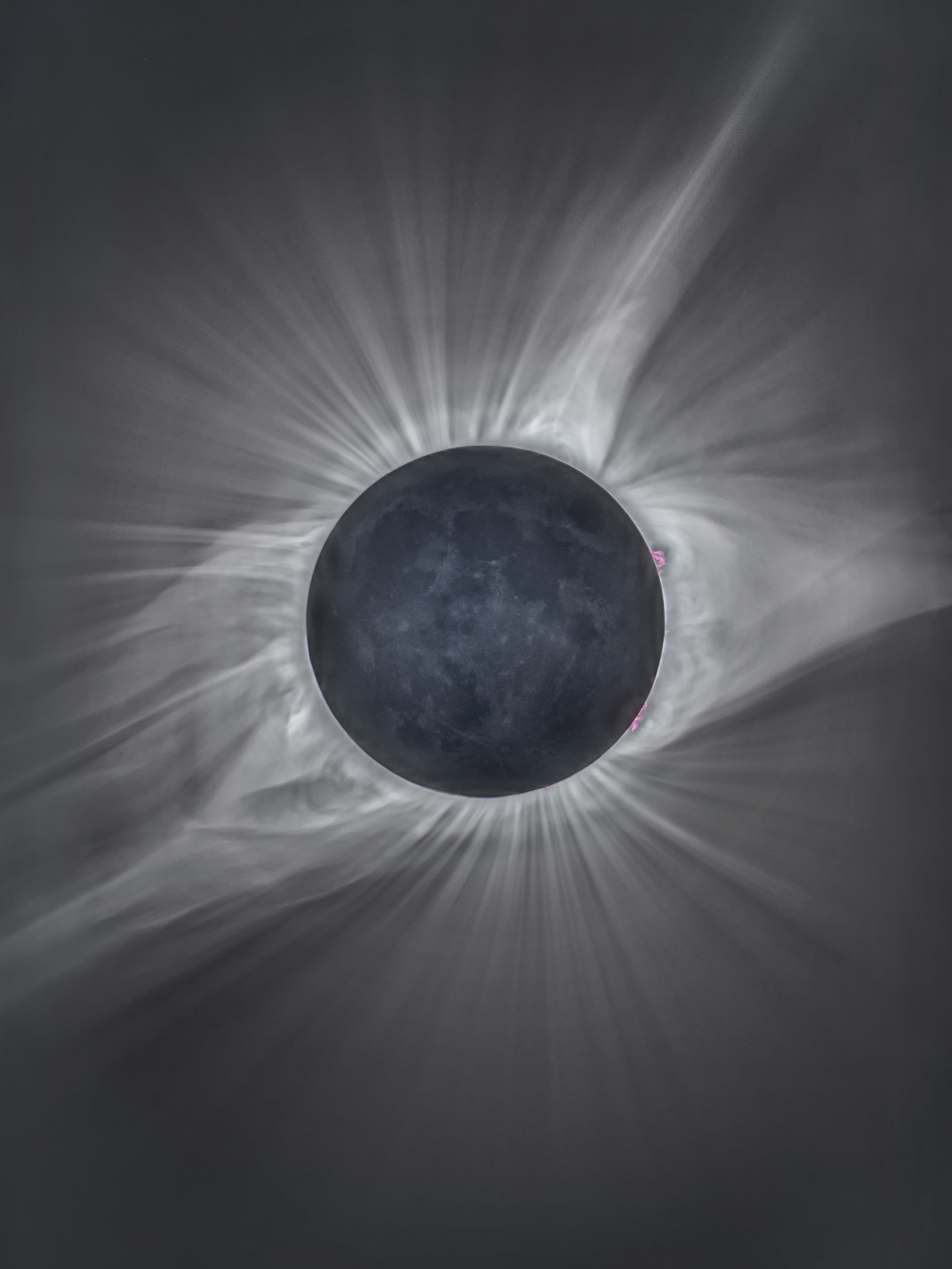
An eclipse is a new moon or a full moon that falls close to the lunar nodes, the two points where the Moon’s path crosses the Sun’s path. A solar eclipse happens at a new moon, when the Moon passes between Earth and the Sun. A lunar eclipse happens at a full moon, when Earth passes between the Sun and the Moon. Eclipses arrive in seasons, usually twice a year, with two or three eclipses in each season. Astrologers read them as concentrated versions of the new moon and full moon themes, acting on the house they fall in.
The house matters more than the sign for this kind of reading. The sign colors the eclipse, but the house names the area of life where the shift shows up: a home move, a work change, a partnership decision, a health matter, or a private ending. Two people can have an eclipse in the same sign and live through plainly different months, because the eclipse falls in different houses in their charts. Eclipse season in general explains the timing; this article explains how to place an eclipse in a chart and read it house by house.
How to find the house

Take the degree of the eclipse, from an ephemeris or a reliable eclipse table, and find which house of your birth chart contains that degree. If the eclipse falls at 14 degrees of Aries, look for the house whose span includes 14 degrees of Aries in your chart. That is the house the eclipse activates. If the eclipse falls close to a house cusp, within a few degrees, read both houses, with the house the eclipse is moving into carrying the newer theme.
House systems divide the chart differently, so the same eclipse can fall in a different house under whole sign houses than under Placidus. That difference is normal, and it is not a reason to pick the system that gives a more dramatic answer. Use the system you already use for the rest of the chart, and note the alternative only if the eclipse sits right on a cusp. A quick tour of the twelve houses gives the one-paragraph meaning of each house if you need a refresher before placing an eclipse.
Solar and lunar eclipses do different work

A solar eclipse, at a new moon, is read as a beginning in the house it touches: a new direction, a new role, or a door opening that was closed before. A lunar eclipse, at a full moon, is read as a culmination or a release in the house it touches: a result arriving, a pattern ending, or a truth that can no longer be kept private. Those are tendencies, not guarantees. A solar eclipse in the tenth house does not guarantee a promotion, and a lunar eclipse in the seventh house does not guarantee a breakup. They mark a period when that area of life is lit up and changes are more likely to surface.
Houses one through four: self, money, mind, home
An eclipse in the first house puts attention on identity and presentation: how you come across, what you start, and what you stop apologizing for. In the second house, attention turns to income, spending, and what you own, including a job change that is really a money decision. In the third house, attention turns to siblings, neighbours, short trips, learning, and daily communication, where a message or a local matter can take on larger weight. In the fourth house, attention turns to home, family, and the base of life, where a move, a family change, or a need for privacy often surfaces.
Houses five through eight: joy, work, partnership, shared resources

An eclipse in the fifth house touches creativity, romance, children, and pleasure, where a project starts or a romance changes shape. In the sixth house, it touches daily work, routine, and health, where a schedule, a job duty, or a health habit needs revising. In the seventh house, it touches partnership of every kind, including marriage and business partnership, where terms get renegotiated or a commitment is tested. In the eighth house, it touches shared money, debt, and other people’s resources, where a loan, an inheritance matter, or a joint account comes into focus.
Houses nine through twelve: wider life, career, friends, endings
An eclipse in the ninth house touches study, travel, publishing, and belief, where a course, a trip, or a change of mind opens a wider view. In the tenth house, it touches career and public standing, where a role, a reputation, or a boss changes. In the eleventh house, it touches friends, groups, and plans for the future, where a group joins or leaves your life, or a long-term plan gets revised. In the twelfth house, it touches rest, privacy, and endings, where a quiet period, a retreat, or a matter kept out of sight needs attention.

A sound eclipse reading has three parts: the house, the kind of eclipse, and the facts of life in that house right now. The house names the area. The kind of eclipse, solar or lunar, suggests beginning or release. The facts of life supply the content: a lease ending, a job interview, a medical appointment, a relationship conversation already scheduled. Without the third part, an eclipse reading is only a weather report for a place with no address.