
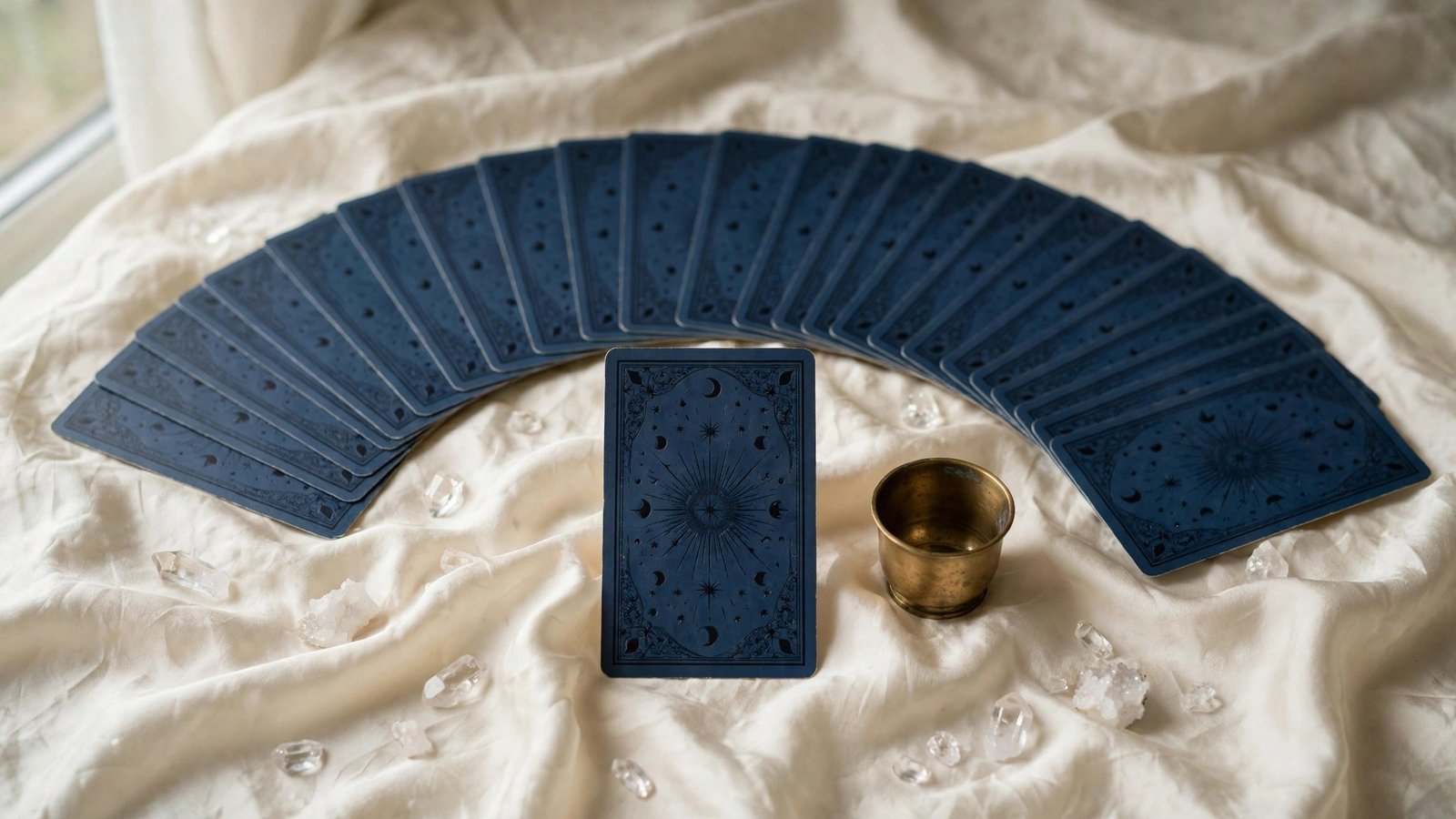
The High Priestess. Again. That’s the fourth time this month — different questions, different days, same card staring back at you. It’s unsettling enough that you’re googling it, which means it’s time for a straight answer about repeating tarot cards: what they usually mean, what they don’t, and what to actually do about one.
Short version: a card that keeps appearing is usually pointing toward an unfinished theme in your life — something your attention keeps circling because it isn’t resolved yet. But before assigning cosmic significance, it’s worth ruling out the mundane explanations too.
First, Rule Out the Boring Explanations
Honesty first — sometimes a repeating card is just probability wearing a costume:
- Small sample sizes lie. Drawing the same card 3 times in 20 draws feels meaningful, but streaks happen in any random process. Flip a coin enough and you’ll see five heads in a row; nobody calls the coin haunted.
- Your shuffle may not be random. If you don’t shuffle thoroughly — a quick overhand shuffle between readings — cards can clump. Cards from your last reading tend to stay near each other. Mix well, cut the deck, and see if the stalker card persists.
- Confirmation bias is real. You notice the repeating card and forget the 30 unremarkable draws between appearances. Our brains are pattern-finders; they find patterns even in noise.
None of this means your experience is meaningless — it means you should check the mundane causes before concluding the universe is sending memos. If the card survives good shuffling and honest counting, then it’s worth listening to.
What a Genuinely Repeating Card Points Toward
When a card keeps surfacing across different questions and well-shuffled decks, readers traditionally treat it as a theme card — a background process running beneath your various questions. The card isn’t answering each individual question so much as tapping you on the shoulder about something bigger.
Common patterns and what they tend to signal:
- A Major Arcana repeater (The Tower, Death, The Hermit) often points toward a life chapter in progress — a transformation, a withdrawal, a restructuring that colors everything else.
- A court card repeater may reflect a person heavily on your mind, or a quality you’re being asked to embody (or confront).
- A “difficult” card repeater (Five of Cups, Nine of Swords, The Devil) frequently mirrors something unprocessed — grief, anxiety, a pattern — that keeps coloring your questions because it colors your days.
- A gentle card repeater (The Star, Temperance, Four of Swords) can be reassurance: the theme is healing, patience, rest — possibly an instruction you’re not following.
The key question to ask a repeating card: “What in my life right now matches your theme — regardless of what I asked about today?” The answer is usually obvious once you stop looking at the question and start looking at your week.
What to Do With a Stalker Card
Once you’ve confirmed the pattern is real (or real enough), make it productive:
- Name the theme out loud. Write one sentence: “The Hermit keeps appearing, and I think it’s about ___.” Vague unease becomes workable insight the moment it’s articulated.
- Do a dedicated reading on the card. Pull three cards with positions: What is this card trying to show me? / What am I avoiding about it? / What would engaging with it look like? Let the repeater be the question for once.
- Take one concrete action. Insight without action is just interesting. If the Five of Pentacles keeps appearing, the response isn’t more readings — it’s addressing the scarcity or support issue directly.
- Watch for the release. Repeating cards tend to stop appearing once the theme is genuinely engaged. When the stalker card retires, you’ll know the work landed.
A 7-Day Experiment With Your Repeating Card
Instead of just wondering about your stalker card, try this week-long practice:
- Day 1: Write down the card and your one-sentence theory of what it’s about. Date it.
- Days 2–6: Each evening, spend two minutes noting where the card’s theme appeared in your day — even subtly. The Hermit repeater might notice the craving for solitude; the Tower repeater might spot the wobbling structure.
- Day 7: Do the dedicated three-card reading on the card itself (what it’s showing / what you’re avoiding / what engagement looks like), informed by a week of observations.
This turns a spooky coincidence into a structured inquiry — and it works whether the repetition is “real” or psychological. Either way, you spend a week paying attention to a theme your unconscious flagged as important. That’s never wasted time. Many readers report the card stops appearing once the experiment completes — not because the mystery is solved, but because the message was finally received.
Frequently Asked Questions
Is a repeating card a warning?
Not necessarily — and defaulting to alarm is the least useful response. A repeating card is an emphasis, not a threat. Even the intimidating cards repeat as invitations: the Tower repeating may be pointing toward a change you’re resisting, not a disaster that’s coming.
How many times does a card have to appear before it “counts”?
There’s no official threshold, but most readers start paying attention around three appearances across different readings within a few weeks — especially if the questions were unrelated. Track it in writing; memory exaggerates streaks.
Should I take the card out of the deck?
Some readers do this as a ritual — setting the card aside as an acknowledged theme. It’s harmless and can feel satisfying. Just know it’s symbolic; the theme doesn’t leave because the cardboard did. The work is still the work.
Can a repeating card be positive?
Absolutely. Repeating Stars, Suns, and Aces are common during good stretches — the deck reflecting a season, not just a problem. Don’t pathologize every pattern; sometimes the cards are just celebrating with you.
Track your patterns: our Reading Patterns tool helps you spot which cards and themes recur across your readings — turning vague “this keeps happening” feelings into visible data. Pair it with a Tarot Journal habit, and stalker cards become some of your most productive teachers.