
Most tarot confusion is not about card meanings. It is about spread selection: ten cards laid for a question that needed one, or a single card pulled for a situation that needed a map. The spread is a tool, and like any tool, it should match the job. Here is a practical picker: match your question type to the spread shape, and stop defaulting to the Celtic Cross for everything.
Start with the question, not the spread
Every spread choice begins one step earlier, with the question itself. A vague question defeats any layout, so tighten the wording first; our guide to asking better tarot questions is the prerequisite for everything below. Once the question is clean, its shape tells you the spread: daily check-ins want one card, decisions want comparisons, tangled situations want timelines.
The picker by question type
“What is today’s energy?”: one card. The daily draw is the right tool and the only tool. One card, one reflection, done. Pulling three cards for a daily check is how readings get muddy before breakfast.
“What do I need to see about X?”: three cards. The three-card spread (past-present-future, situation-action-outcome, mind-body-spirit) is the workhorse of tarot. It handles most everyday questions: the relationship wobble, the work situation, the general “what is going on.” If you learn one spread beyond the daily draw, make it this one.
“Should I do A or B?”: the choice spread. Two cards side by side, one per option, plus a third for advice. For three or more options, use a dedicated multi-option layout instead of squeezing extra cards into the two-path shape.
“What is happening and where is it going?”: the Horseshoe. Seven cards in an arc: past, present, hidden influences, obstacles, outside forces, advice, outcome. This is the right size for situations with real complexity but no need for the Celtic Cross’s full ten.
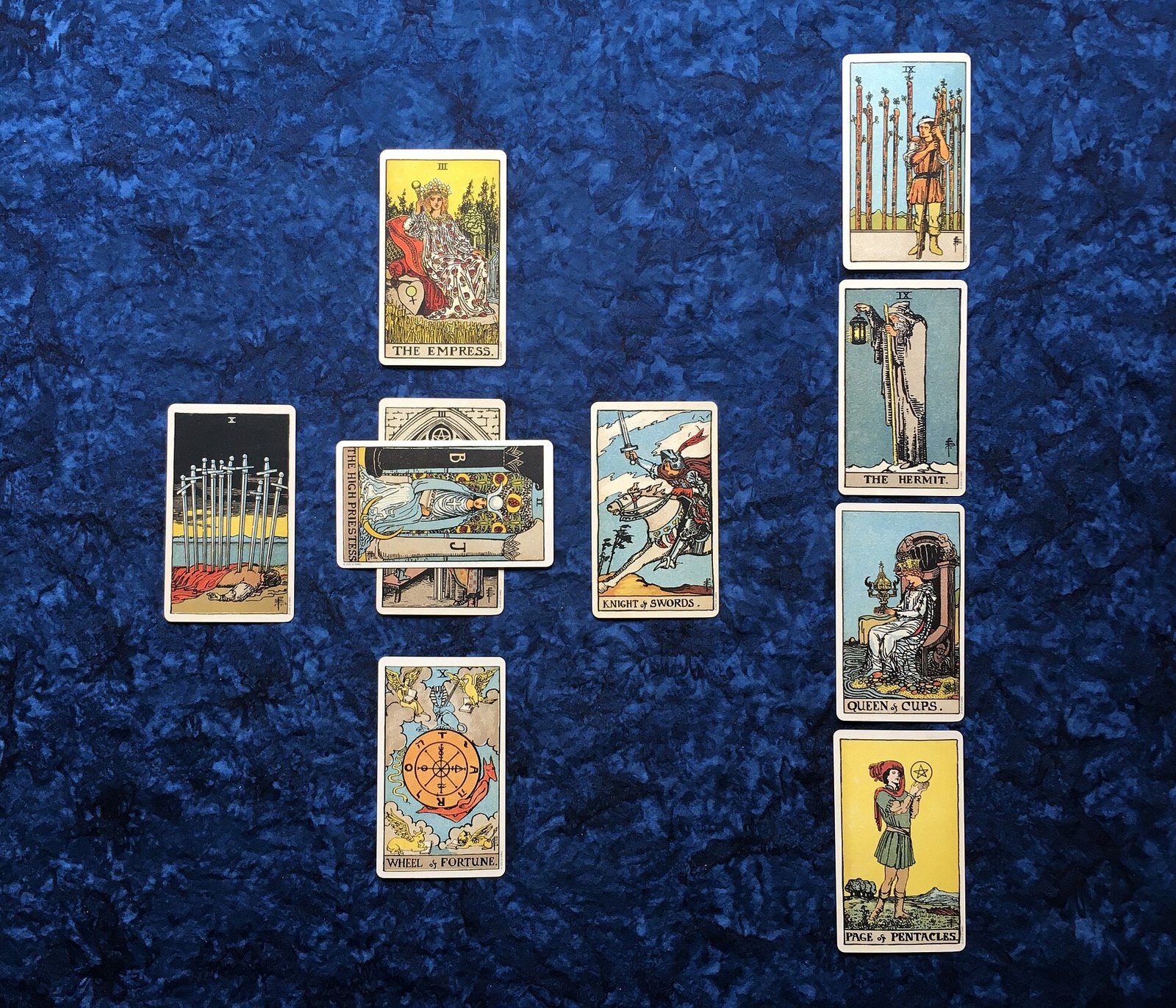
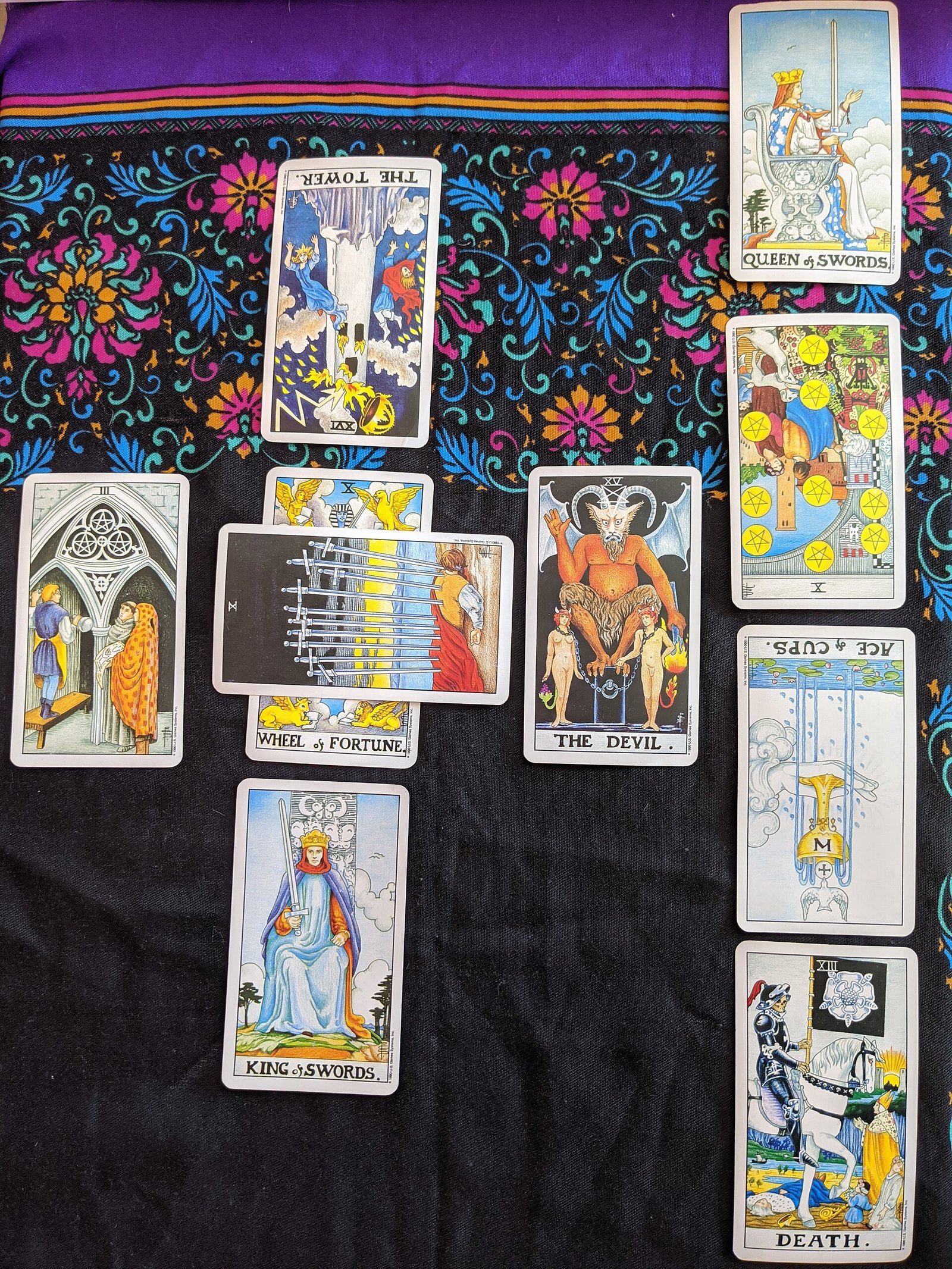
“Tell me everything about this situation.”: the Celtic Cross. Ten cards, and worth it only when the situation genuinely warrants the depth: a major life decision, a tangled relationship, a year-long project. The Celtic Cross is a weekend spread. Using it on weeknights is why beginners burn out on it.
“What is this month/year about?”: the calendar spreads. Monthly and yearly layouts (cards per month, or the twelve-month circle) fit time-boxed questions. Do not use a general spread and squint at it for timing; use the spread built for time.
“I need insight on a theme.”: the themed spread. Relationship spreads, career spreads, shadow-work layouts: use the spread designed for the territory. A generic three cards will answer a relationship question, but a relationship spread asks the questions you would not think to ask.
Rules of thumb
Match the card count to the question’s size. Small question, small spread. The most common beginner error is over-spreading: seven cards for a yes-or-no, ten for a daily draw. Extra cards do not add extra clarity; they add noise.
When in doubt, go smaller. A three-card spread read well beats a Celtic Cross read badly. You can always pull clarifiers. You cannot un-pull confusion.

One spread per question. Laying three different spreads for the same question is asking until you get the answer you want. If the first spread confused you, the fix is usually a better question or a night’s sleep, not a second spread.
Let the spread fit your available attention. A ten-card spread needs twenty unhurried minutes. If you have five, pull one card and read it properly. The beginner’s step-by-step method works at any spread size; the method is the constant, the layout is the variable.
Build your personal rotation
Most experienced readers settle into a rotation of three or four spreads they know deeply: a daily one-card, a three-card workhorse, one big situational spread, and one specialty (a relationship layout, a decision spread, a monthly check). Depth with a few spreads beats shallow familiarity with twenty. Pick your rotation, practice each one until the positions feel automatic, and add new layouts only when a question arrives that your rotation cannot hold.