

Almost every tarot reading ends with the same follow-up question: “But when?” Someone asks about a job change, a move, a relationship shift, and the cards give them a picture of what is unfolding. Then they want a date. Readers have developed several systems for answering that question, and they are worth knowing about, even if you end up treating every timing answer as approximate.
Timing is the least settled part of tarot. Card meanings have centuries of shared tradition behind them. Timing methods do not. They are folk systems, passed between readers, and different readers will give you different answers from the same card. That reflects the nature of the tool: shared symbolism for meaning, folk invention for timing.
The suit-to-season system
The most common timing method maps the four suits to the four seasons. Wands tend to mean spring, Cups summer, Swords autumn, and Pentacles winter, though some readers swap Swords and Wands or tie the suits to the astrological elements instead of calendar seasons. When a timing question comes up and the card is a suit card, the suit suggests the season in which things develop.

These mappings come from folk tradition. No council of readers ever standardized them, so a reader who learned Wands as spring will read the Three of Wands as a spring development while another reader calls it weeks rather than a season. If you read for yourself, the useful move is to pick one mapping, write it in your journal, and stay consistent. Consistency is what makes any timing system usable. Switching systems between readings just gives you noise.
Numbers as time units
The second common method treats the card’s number as a count. Aces count as one, pips count at face value, and the unit, days, weeks, or months, is either agreed on before the draw or read from context. The Five of Pentacles might mean five weeks. The Two of Cups might mean two months. Some readers assign fixed units per suit: Wands as days because they are fast, Pentacles as months or years because they are slow, Cups as weeks, Swords as weeks or months depending on the reader.

Court cards complicate this method, and most readers admit it. Pages, Knights, Queens, and Kings usually point to people or attitudes rather than dates, so a court card in answer to “when” often means the timing depends on someone, or that the question is really about who rather than when. That is a useful redirect on its own.
Astrological timing through the major arcana
A third method uses the astrological correspondences of the major arcana. Each major arcana card is linked to a planet or zodiac sign, and the timing answer becomes the season or transit associated with that sign. The Sun card, linked to the Sun itself, might suggest summer or a period of visibility. The Moon card might suggest a lunar cycle, roughly a month. The Tower, linked to Mars, might suggest sudden timing, soon and without much warning.
This method has the most structure behind it, since the correspondences are standardized in the Golden Dawn tradition most modern decks follow. It still requires interpretation. A card linked to Scorpio season could mean late October, or it could mean “when the situation gets intense and honest,” which is a Scorpio quality rather than a date. Readers disagree about which reading to prefer, and the cards do not settle it.

Why honest readers keep timing fuzzy
There are good reasons experienced readers hedge on timing. First, tarot describes developments. It shows the shape of a situation, what is growing, what is ending, where the friction is, and it was never designed to output calendar dates. Forcing a date onto a reading squeezes more precision out of the cards than they hold.
Second, timing answers have a way of looking right after the fact. If a reader says “by autumn” and something happens in November, it feels like a hit. If it happens in February, nobody remembers the prediction. Memory edits the record in favor of the reader. Keeping a written log of timing predictions, with dates, is the fastest way to see how often they actually land.
Third, a date changes behavior. Tell someone a job offer comes in March and they may stop applying in January, or panic in April when nothing has arrived. A timing answer can quietly rewrite the future it claims to describe. Careful readers know this and frame timing as conditional: this is the pace things are moving at, if nothing changes.
The same caution applies beyond tarot. Timing in astrology comes with the same caveat: transits describe periods of emphasis, and treating them as guaranteed events on fixed dates overreads them.
If you still want to ask about timing
You can, and many readers do. The trick is to ask about sequence and conditions instead of dates. “What needs to happen first?” gives you a chain of events, and chains are something tarot reads well. “What season of this am I in, beginning, middle, or end?” gives you position without pretending to give you a calendar. “What would speed this up?” and “what is slowing it down?” give you something to act on, which a bare date never does.
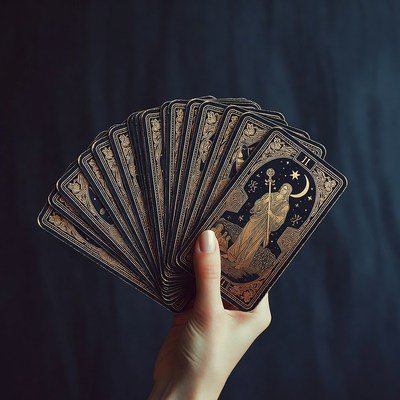
When you do pull a card for timing, note the method you used and the answer you got, then check back later. A journal turns timing from a party trick into a study. You will learn which of your methods tracks reality for you and which ones flatter you. That knowledge is worth more than any single date a reading ever gives.
And if a reading leaves you unsure what to ask next, it helps to ask better tarot questions before you ask for a timeline. A clear question about the situation usually tells you more than a fuzzy question about the calendar.