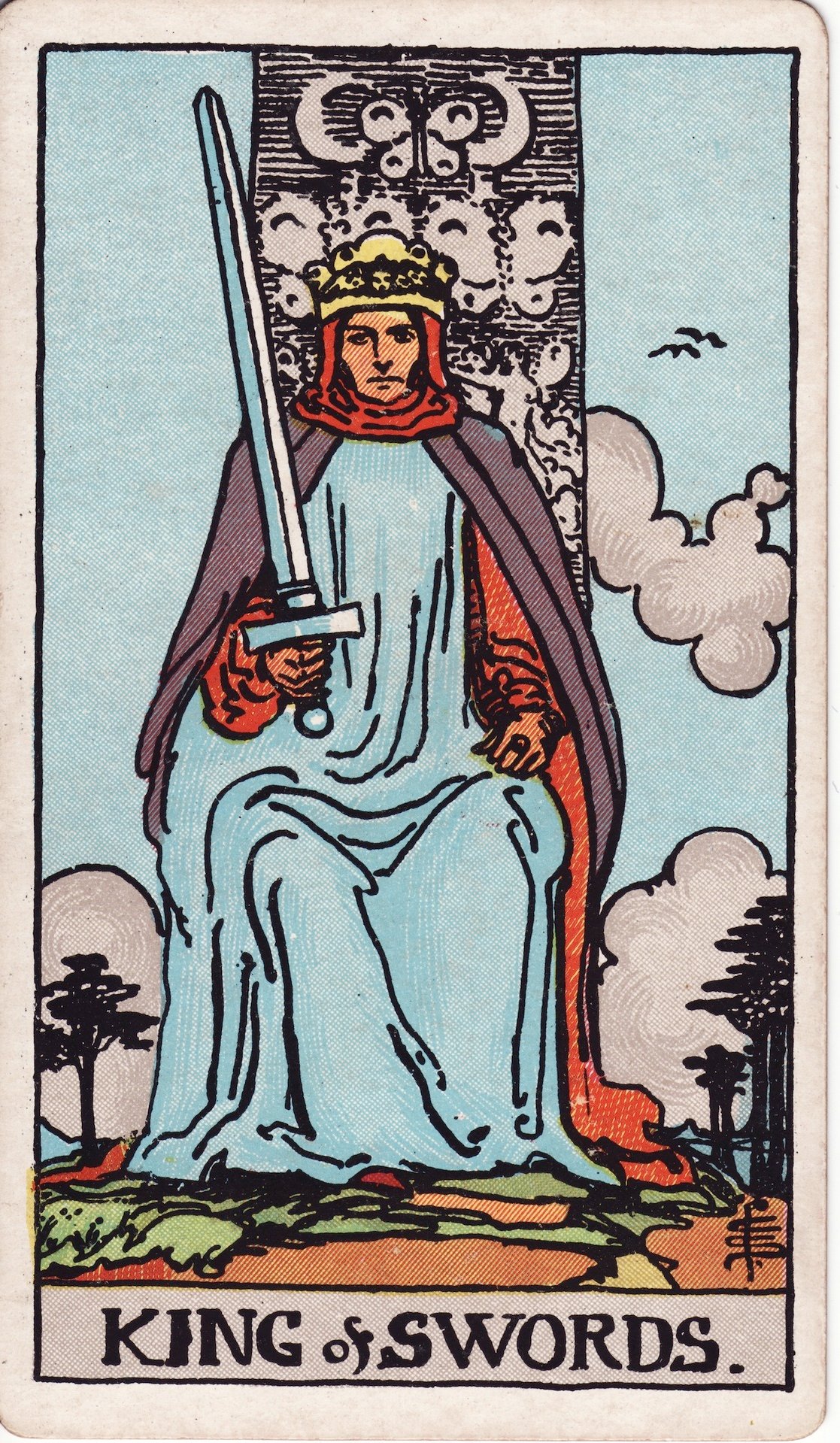
A court card turns up in your spread. The Knight of Swords is charging across the card, the Queen of Cups sits still with her gaze on the water. Now you have to say something about it, and the card could mean three different things. Most guides teach only one of them, which is why court cards have a reputation for being hard.
There are sixteen court cards in the deck: page, knight, queen, and king in each of the four suits. Our guide to the sixteen court cards covers the ranks and suits one by one. This piece is about something else: the three kinds of answers a court card can give, and how to tell which one the card means right now.
The three readings
Every court card can point to a person in your life, to a situation around you, or to a part of yourself. The card never labels which one it means. The reading does, through the question you asked, the position the card sits in, and the cards around it.
Reading one: a person
This is the oldest and most common reading. Each court card sketches a personality: the suit gives the domain, the rank gives the style. The Queen of Cups often reads as a calm, caring person who listens well. The Knight of Swords looks like someone who rushes in with strong opinions. Kings read as authority figures or people in control of a situation. Pages read as younger people, students, or messengers bringing news.
When the question names a specific someone, or the spread is about a relationship, the person reading is usually the right one. If your friend is exactly the kind of warm, steady presence the Queen of Wands describes, the card is probably about her. Trust the match when it is obvious.

Reading two: a situation or atmosphere
Sometimes no person fits, and forcing one only makes the reading stranger. A court card can also describe the feel of a scene. The Knight of Swords as a situation is a fast-moving argument, a rushed decision, or news arriving all at once. The Page of Pentacles as a situation is a learning phase: a new project at its humble, careful start. The Queen of Wands describes a confident, warm environment where people feel welcome.
This reading fits best when the question is about how something is going rather than who is involved. Ask what is happening, not who is doing it, and the card often stops sounding like a person and starts sounding like weather.

Reading three: a part of you
The third reading turns the card inward. The King of Wands can be your own decisive streak, the side of you that commits and follows through. The Page of Cups can be the playful, open part you rarely show. A queen can be a quality you already carry and should lean on; a knight can be a mode you are slipping into, for better or worse.
This reading works best when you are the main actor in the question and no outside person matches the card. It is also the reading people skip most often, because it asks for honesty instead of gossip. When a court card keeps showing up across readings, it is usually pointing at you.