
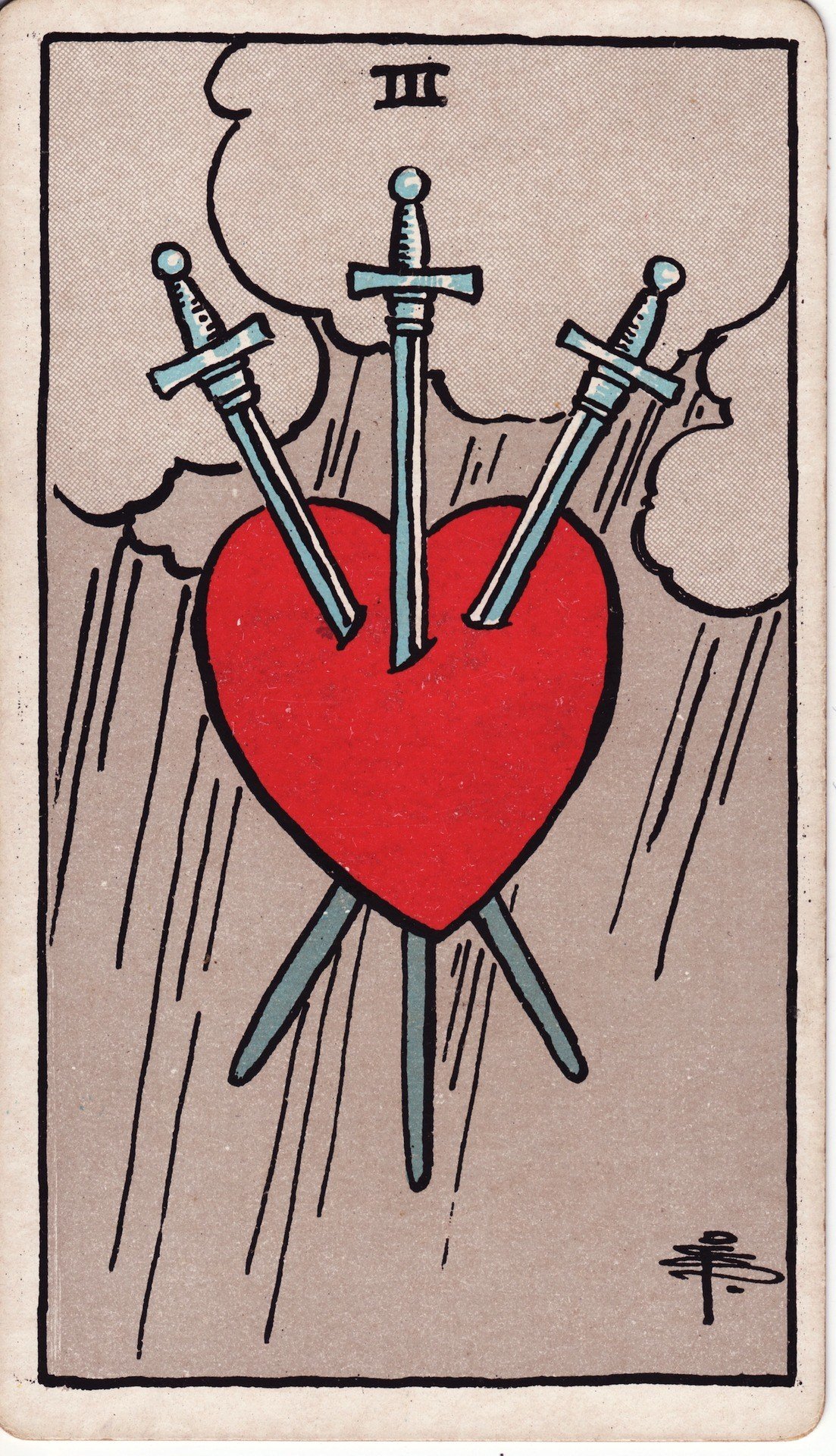
No suit makes a querent’s face fall faster than swords. The Three of Swords shows a heart pierced three times over. The Ten of Swords shows a figure face down with ten blades in the back. Small wonder that beginners treat the whole suit as bad news. But the swords are the suit of air, which makes them the suit of the mind: thought, language, truth, and the conflict that comes with all three. Read that way, they stop being a warning and start being a diagnosis.
Air, made visible
Each tarot suit belongs to an element, and swords belong to air. Air is invisible until it moves, and the mind works the same way: you cannot see a thought, only what it does. Swords in a reading usually point to mental activity first. A decision being weighed. A conversation that needs to happen. A belief that no longer holds up. The cards show physical scenes, but the action they describe is often interior.
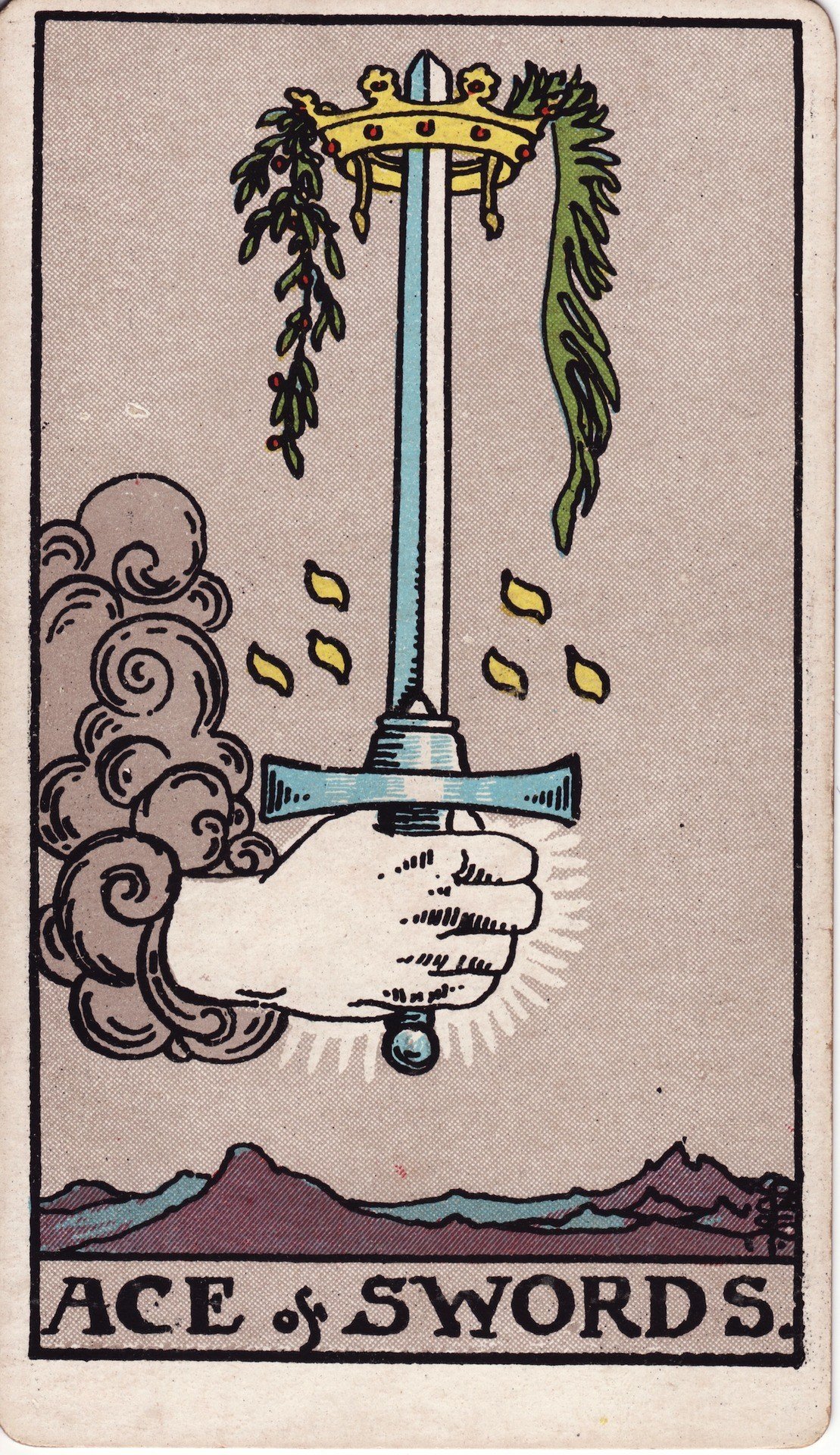
A sword has two edges, and so does thinking. The same sharpness that cuts through confusion can also cut other people. This is why the suit holds both the Ace of Swords, a breakthrough of clarity, and the Five of Swords, a victory that costs more than it wins. The suit is not telling you that thinking is dangerous. It is showing the full range of what the mind can do.
Why the swords look so harsh
About half the suit depicts conflict, grief, or anxiety, so the reputation is earned rather than imagined. The difference is that tarot treats these states as information instead of punishment. The Three of Swords is grief that needs naming before it can be processed. The Nine of Swords is the 3 a.m. anxiety spiral, and recognizing it as a mental event rather than a fact about your life is half the work of getting out of it.
The Ten of Swords looks like the worst card in the deck until you notice the sunrise on the horizon. The figure is down, the worst has happened, and the sky is already lightening. In the Rider-Waite-Smith tradition this card means rock bottom, and rock bottom has a use: it is the floor you push off from. Swords endings tend to be clean ones. What is over is over, and the mind is free to move on.
Our guide to the four tarot suits and what they represent puts swords in context with cups, wands, and pentacles, which helps when a reading mixes suits.
The numbers tell a story
Read the swords Ace through Ten as one arc and you get the biography of a difficult thought. The Ace is the breakthrough, a clear idea arriving all at once. The Two is stalemate, a decision held in balance. The Three is heartbreak, when truth hurts. The Four is rest, the mind deliberately set down. The Five is conflict with no real winner. The Six is moving on, literally rowing away. The Seven is strategy, or evasion, depending on the question. The Eight is the feeling of being trapped by your own framing. The Nine is anxiety given a throne. The Ten is the end of the hard part.
You do not need to memorize all of this. Numbers carry consistent meanings across suits, as our practical guide to all 78 cards covers in full, and the suit tells you which part of life the number is acting on. A Four is always rest; the Four of Swords is rest for the mind specifically.

The court cards of the mind
The sword courts are people, or ways of thinking personified. The Page of Swords is curiosity: sharp questions, fast learning, sometimes speaking before thinking. The Knight of Swords charges in with an argument fully formed, brilliant in a debate and exhausting in a disagreement. The Queen of Swords has been through the Three of Swords and come out clear-eyed; she says the true thing kindly but does not soften it. The King of Swords is reason with authority: the judge, the strategist, the one who decides on evidence.
When a court card appears, ask who in the situation thinks this way, and whether that way of thinking is helping. A Knight of Swords approach solves some problems and creates others. The card is asking you to notice which one you are doing.
Reading swords without flinching
The practical habit is simple: when swords appear, ask what the thought pattern is. The Seven of Swords in a work question is rarely about theft; it is usually about strategy, yours or someone else’s. The Eight of Swords is almost never about real restraints; it is about a story you are telling yourself that has you tied up. The card names the mental weather so you can dress for it.

Reversed swords often mean the mental weather is changing. The Nine of Swords reversed can show anxiety lifting; the Five of Swords reversed can show a conflict defusing. Reversals do not simply mean the opposite; they often mean the energy is internal, delayed, or resolving. The suit rewards the reader who stays curious instead of bracing. Swords are the mind talking about itself, and listening is the whole skill.