
Nine is the last single digit, and the nines feel like it. Each one describes the final stretch of its suit’s story: the work nearly done, the lesson nearly learned, the feeling nearly resolved. Nines are quieter than the dramatic middle cards. They show solitary figures, finished arrangements, and states of mind rather than events. The tens will bring completion and its consequences. The nines ask a simpler question: what does almost-done feel like, and what do you do with the last stretch?
What the number nine adds to a suit
In tarot numerology, nine is the culmination of the suit’s personal journey. The social tests are over; what remains is between you and the thing itself. Nines often show one figure alone with the results of everything so far: the resilience earned, the satisfaction achieved, the worry that will not quiet, the independence built. When a nine appears, the situation is nearly resolved. Your job is to handle the ending well rather than to change the outcome. Read the image first and let it tell you which kind of almost-done this is; you can read tarot without memorizing definitions precisely because cards like these wear their meaning on their faces.
Nine of wands: the last stand
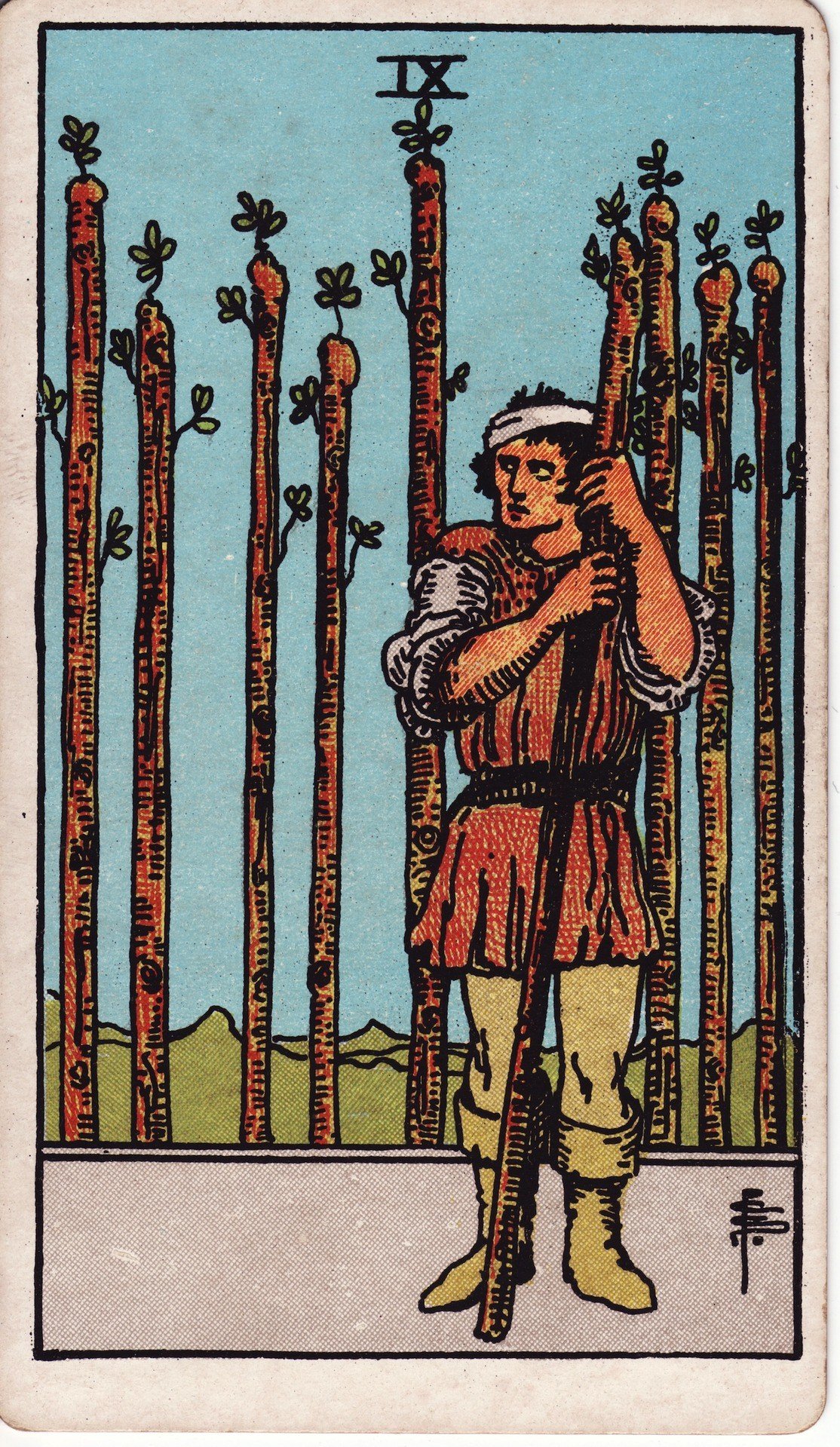
The Nine of Wands shows a bandaged figure leaning on a staff, eight wands planted behind him like a fence. He has been through the fight and he is still standing, which is the whole card. This is resilience as a state rather than an event: the project in its final difficult week, the recovery nearly complete, the last objection to overcome. The card honors how tired you are without suggesting you stop. One more effort, one more boundary, one more day. The wands behind him are the proof that he has survived worse than whatever is coming. The card’s question is whether the guard can come down soon, because perpetual defensiveness has its own cost.
Nine of cups: the wish card
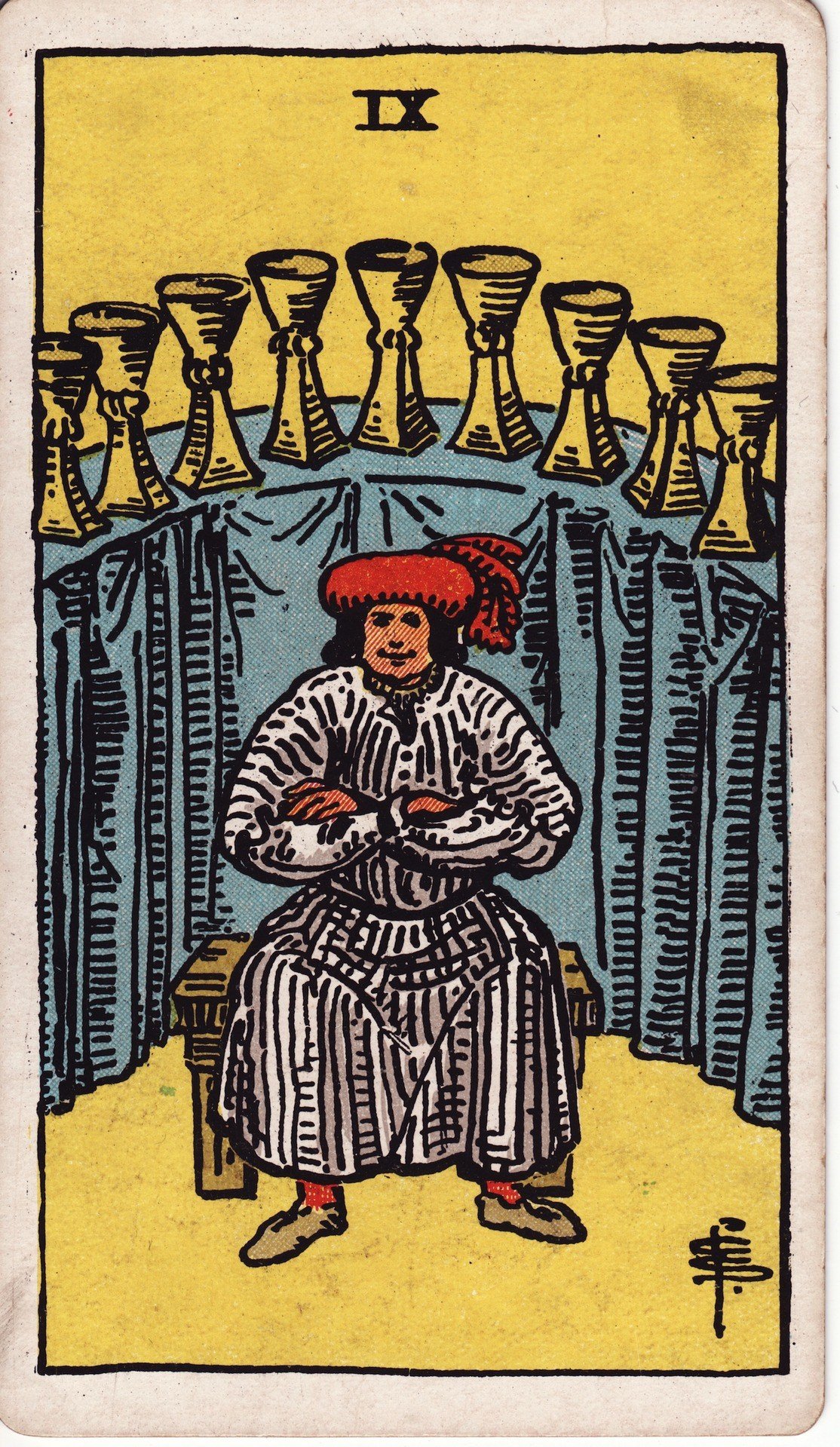
The Nine of Cups shows a satisfied figure seated before nine cups arranged in an arc, arms crossed in contentment. This is the famous wish card: emotional satisfaction, the desire fulfilled, the comfortable moment after wanting. It appears when something you hoped for actually arrives, and its instruction is to enjoy it without immediately wanting the next thing. The card is sometimes read as pure good fortune, but the crossed arms add a note of self-containment. This is satisfaction you give yourself, not applause from others. Let the wish land. Name what you wanted and notice that you have it. The moment passes faster if you skip the noticing.
Nine of swords: the 3 a.m. card
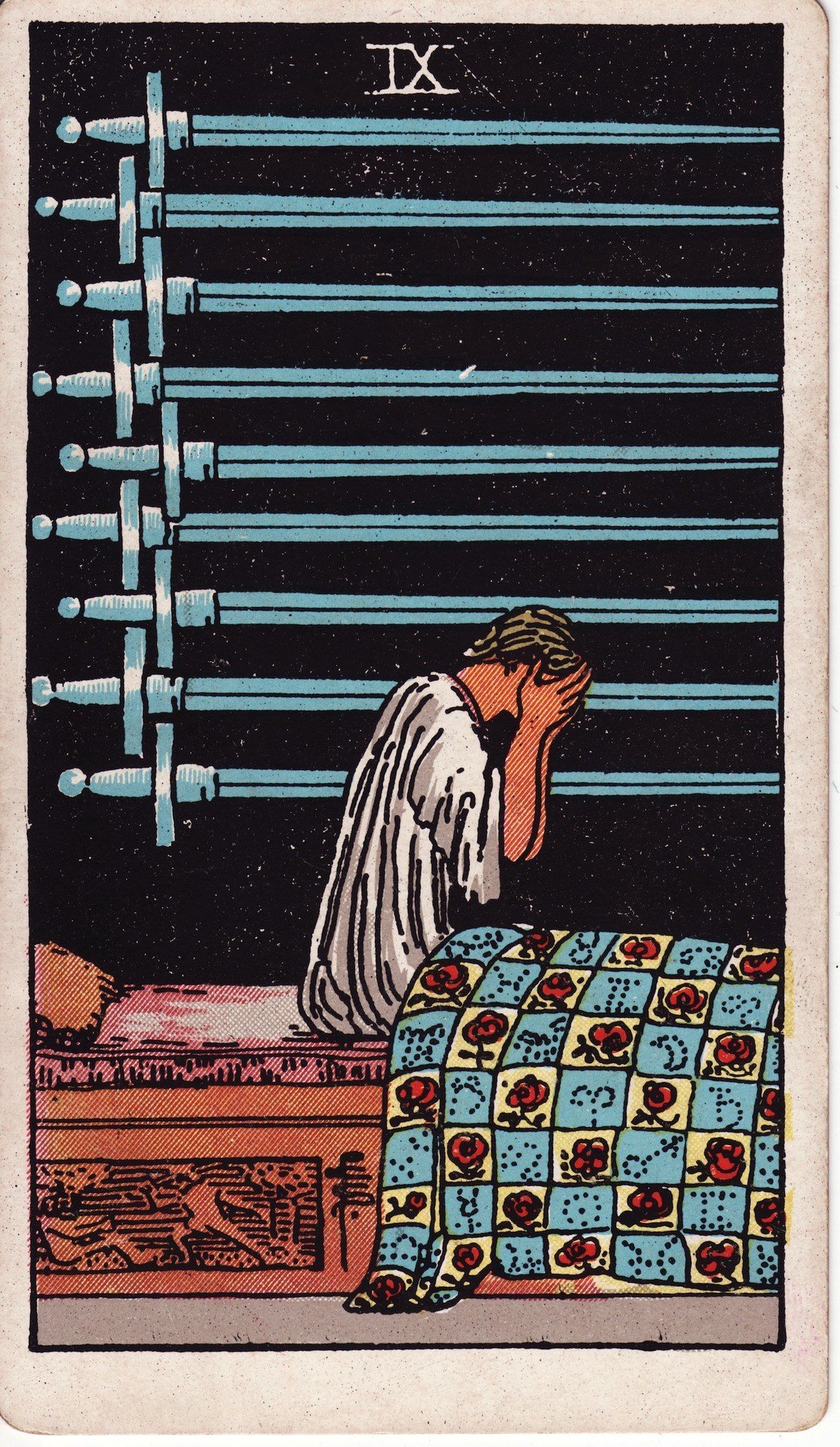
The Nine of Swords shows a figure sitting up in bed, head in hands, nine swords on the wall behind. Every reader knows this card: the 3 a.m. worry, the anxiety that feels enormous in the dark. The card’s honesty is in its staging. It is night, the figure is alone, and the swords hang on the wall rather than striking. Most Nine of Swords situations look different in daylight, which does not make the fear fake. It makes it a night-fear, real and disproportionate at once. The card’s advice is practical: write the worry down, and deal with it in the morning. If the same worry survives three daylights, it is a real problem wearing anxiety’s clothes, and it wants a plan, not rumination.
Nine of pentacles: the garden you built
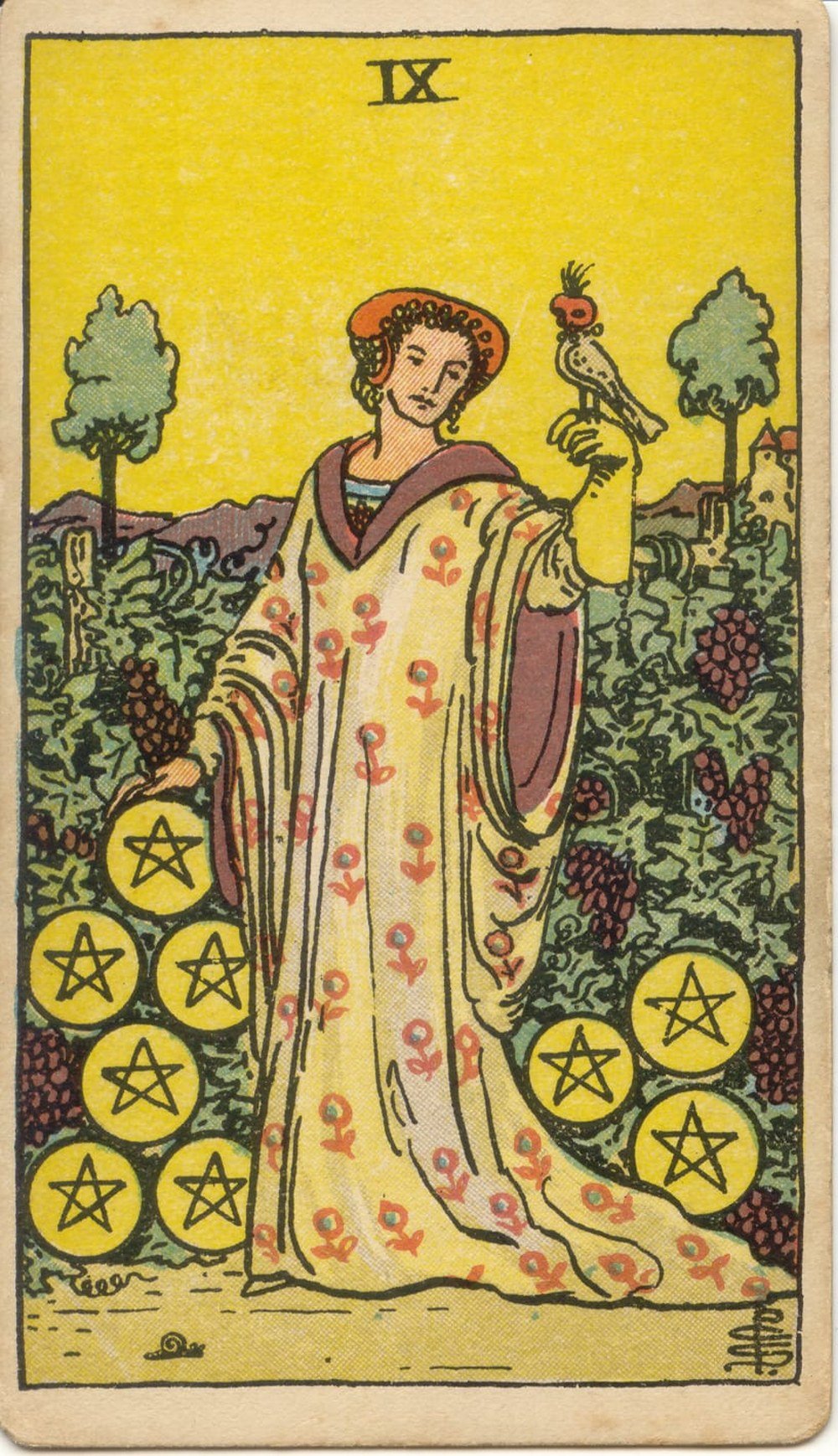
The Nine of Pentacles shows a woman in a vineyard, a falcon on her glove, nine pentacles among the vines. This is self-sufficiency as luxury: the independence earned through your own work, enjoyed on your own terms. It appears for the business that runs, the skill that pays, the life arranged exactly as you like it. The falcon matters. This is not passive wealth; it is trained, disciplined capability. The card celebrates enjoying what you built without apology. Its quiet warning is about the garden walls. Self-sufficiency curdles into isolation if you stop letting people into the vineyard. Share the harvest occasionally. It tastes better that way.
Nines ask what done looks like
Every nine is a preview of the ten to come, which means every nine asks you to prepare for the ending. The Nine of Wands asks whether you can lower the guard. The Nine of Cups asks whether you can receive what you wished for. The Nine of Swords asks whether the worry is real. The Nine of Pentacles asks whether the independence includes other people. Answer these in the nine, and the ten arrives as completion rather than collapse. The last stretch is still work. It is just the best kind: the work of finishing well.