

The new moon is the sky’s blank page: the moon is dark, the month’s cycle is restarting, and the traditional association is with beginnings and intentions. A tarot spread timed to the new moon works with that symbolism instead of against it. This five-card layout is built for one job: setting direction for the lunar month ahead, the roughly 29 days until the next new moon.

When and how to lay it
Do the reading within a day or two of the new moon; the exact astronomical moment matters less than the feeling of a fresh cycle. Keep the question open and forward-looking: “What direction serves me this month?” works better than “Will I get the job?” This is a compass spread, not a fortune-telling spread, so frame the question around guidance rather than outcomes.
Lay five cards in a simple row or a gentle arc. Light a candle if you like ritual markers; the new moon’s darkness makes a single flame a fitting centerpiece. Read the cards as a sequence, left to right, from what to release to where to aim.
The five positions
Card 1: What the last cycle taught. The month just ended leaves one lesson. This card names it so you can carry it forward instead of repeating it.
Card 2: What to leave in the dark. The new moon is dark, and something belongs in that darkness: a grudge, a stalled project, a habit that stopped working. This card identifies it.
Card 3: The seed to plant. The central card and the heart of the spread. This is the intention for the month, stated as a card: a quality to grow, a project to start, a direction to face. If only one card of the five matters, it is this one.
Card 4: What will nourish it. The seed needs tending. This card shows the resource, habit, or person that helps the intention grow: rest, a specific conversation, a weekly practice.
Card 5: The month’s horizon. Where this direction leads by the next new moon if you follow it. Read it as a signpost, not a guarantee; the spread is about aiming, and aims can be adjusted.
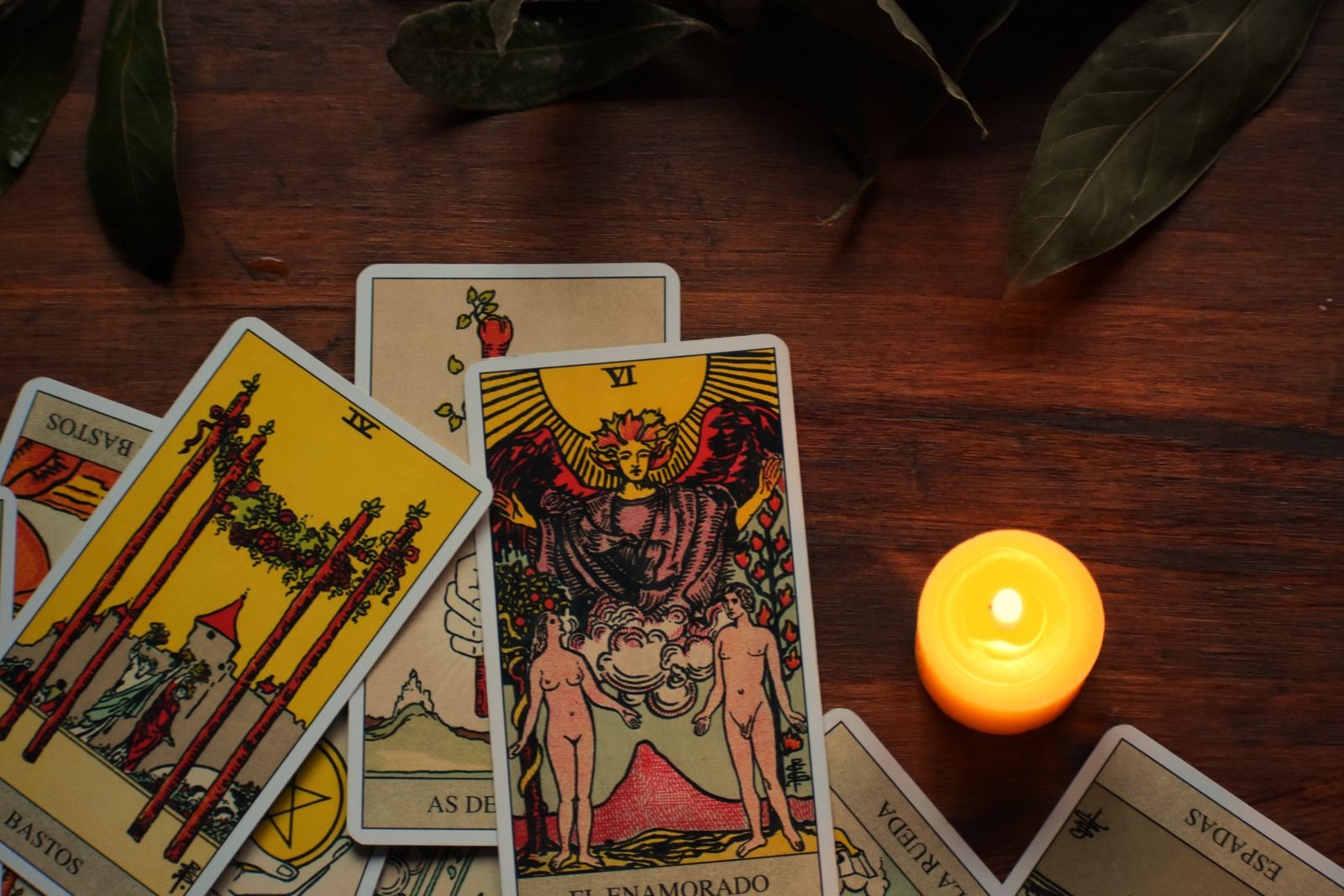
Reading the spread as one gesture
The five cards should read as a single movement: lesson, release, seed, nourishment, horizon. If card 2 (what to leave) and card 3 (the seed) seem to contradict each other, sit with the contradiction; it usually means the intention requires giving something up first, and the spread is showing you the price honestly.
Watch the seed card’s suit for the month’s register. A wand seed means the month is about action and initiative. A cup seed means it is about relationships or inner life. A sword seed means decisions and clarity. A pentacle seed means work, money, or the body. A major arcana seed means the month has archetypal weight; treat the intention as important and give it real calendar time.

Making it a monthly practice
The spread compounds when it becomes a habit. Keep each month’s five cards and one-line intention in a tarot journal, dated to the new moon. At the full moon, two weeks later, glance back at the seed card and ask whether you have been tending it; the full moon is the traditional time of illumination, and it makes a natural midpoint check. Our guide to the moon phase versus the moon sign explains why the phase, not the sign, is the right timer for this kind of cyclical work.
After three or four months, the journal shows a pattern: the kinds of seeds you plant, the releases you resist, the nourishment you forget. That pattern is the real reading. The cards change every month, but the reader is the constant, and the new moon spread is one of the fastest ways to meet yourself on paper.