

Every tarot reader knows the moment. The spread is on the table, one card makes no sense, and the hand drifts toward the deck for one more. That extra card has a name: a clarifier. Used well, it is one of the most practical tools in tarot. Used badly, it is the first step toward a reading that says whatever you want it to say. The difference comes down to when you pull one, and when you stop.
What a clarifier can actually do
A clarifier is a card drawn deliberately, after the spread is laid, to shed light on one specific card. The original card was ambiguous, contradictory, or oddly flat, and you are asking the deck a follow-up question about that card alone. “What is the Tower pointing at here?” Draw one card. That is the whole technique.
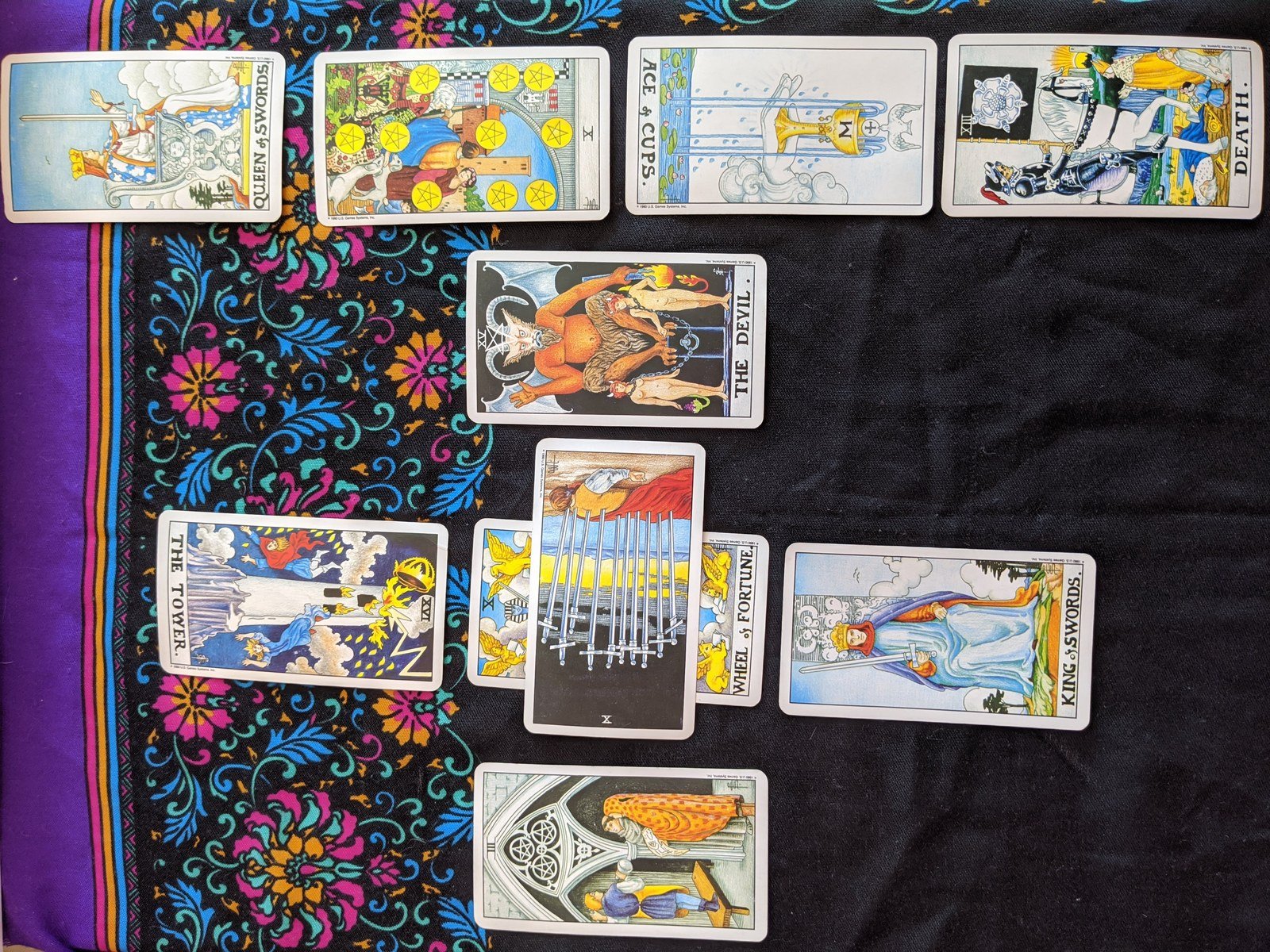
Notice the constraint built into the definition. A clarifier clarifies a card, not the reading, and not the situation in general. It is a zoom lens, not a second opinion. When it works, the two cards snap together into a meaning neither one carried alone: the Tower plus the Six of Cups becomes upheaval rooted in the past, and suddenly the reading moves again. The best clarifiers feel like translations, rendering a card you could not read into plain language.
Good moments to pull one
Pull a clarifier when a single card is genuinely unreadable in context. Every reader meets cards that refuse to cooperate: the court card that could be three different people, the pip that fits the position too loosely, the major arcana card whose weight feels wrong for the question. One extra card, aimed at that card, is the honest response.
Also fair game: the card that contradicts everything around it. If nine cards describe a calm, stable situation and one card screams crisis, a clarifier can tell you whether that card is flagging a real exception or just noise. Either answer is useful. And a clarifier is reasonable when the querent asks a direct follow-up about something already on the table. “You mentioned my sister, what is that about?” is a question about a card, and one card is a proportionate answer.
Before you reach for the deck, though, check whether the question itself is the problem. A vague question produces vague cards, and no clarifier fixes that. Our guide to asking better tarot questions will do more for your readings than any number of extra draws.
Bad moments to pull one
Do not pull a clarifier because you dislike the answer. This is the bright line, and it is worth stating without decoration: drawing again until a card tells you what you wanted to hear is not clarification, it is shopping. The cards did their job. Your discomfort with the result is information, not a malfunction.
Do not pull one because the reading is over and you are stalling. Some readings end with an answer the querent does not want to carry out of the room, and extra cards become a way of postponing the ending. If the spread answered the question, let it stand. If a reading has genuinely upset you, there are better responses than more cards; we wrote about what to do when a reading upsets you for exactly those moments.
And do not pull a clarifier for a clarifier. If the first extra card did not help, the problem is not a shortage of cards. It is either a muddy question, a spread that has run its course, or a reader who needs to sit with uncertainty for a while. More cardboard will not fix any of those.
The trap: pulling until you like the answer
The trap has a recognizable shape. The first clarifier disappoints, so you pull another “to clarify the clarifier.” The second is confusing, so a third feels necessary. By the fifth card you have a small second spread arguing with the first, and the original question is buried. Every reader who has done this, and most have, remembers the hollow feeling at the end: a reading that technically continued but actually ended three cards ago.
The mechanism is simple and human. Each new draw is a fresh chance for the answer you wanted, which makes stopping feel like giving up. But a tarot reading is a conversation, and conversations where one party keeps rephrasing until they hear “yes” are not conversations. The discipline is to decide the rules before the draw, not during it. This is the same principle behind our guidance on asking the same question twice: repetition does not make an answer truer, it makes it louder.
One-clarifier discipline
The practice that prevents all of this fits in one sentence: one card, one clarifier, then stop. State the question the clarifier is answering, out loud if you are reading for someone else. Draw a single card. Read the pair together. Then put the deck down.
If the pair still does not make sense, write both cards in your journal and move on. Meanings often arrive later, on review, when the pressure to produce an answer is gone. Readers who pace their readings sensibly already know this rhythm: the reading ends, the understanding continues.
None of this means treating the deck as fragile or the rules as sacred. Tarot is a flexible tool, and experienced readers break the one-clarifier rule on purpose sometimes, usually when a spread has genuinely opened a second question that deserves its own draw. The difference between breaking a rule and never having one is everything. Set the rule, learn what it protects, and then you will know the rare moments when it is worth bending.
Featured image: photo by Nielsoncaetanosalmeron (CC BY 4.0), via Wikimedia Commons.