
The fours built something stable. The fives knock it over. Five is the most uncomfortable number in the minor arcana, and deliberately so: it describes the disruption that arrives right when things felt settled. Conflict, loss, humiliation, hard times. Nobody hopes to see a five in a reading, but experienced readers know fives are often the most useful cards in the spread. They name the fight you are actually in, which is the first step to getting through it.
What the number five adds to a suit
In tarot numerology, five breaks the structure of four. The stable arrangement meets a force it cannot absorb: competition, grief, defeat, scarcity. Fives describe the crisis, not the resolution. That is what makes them hard to sit with and well worth reading. A five tells you where the real tension lives, stripped of the polite story. The suit tells you which part of life is disrupted. The cards around the five, read together as a group, tell you what resources you have for the fight; our guide to interpreting multiple cards together shows how to read those combinations.
Five of wands: sparring
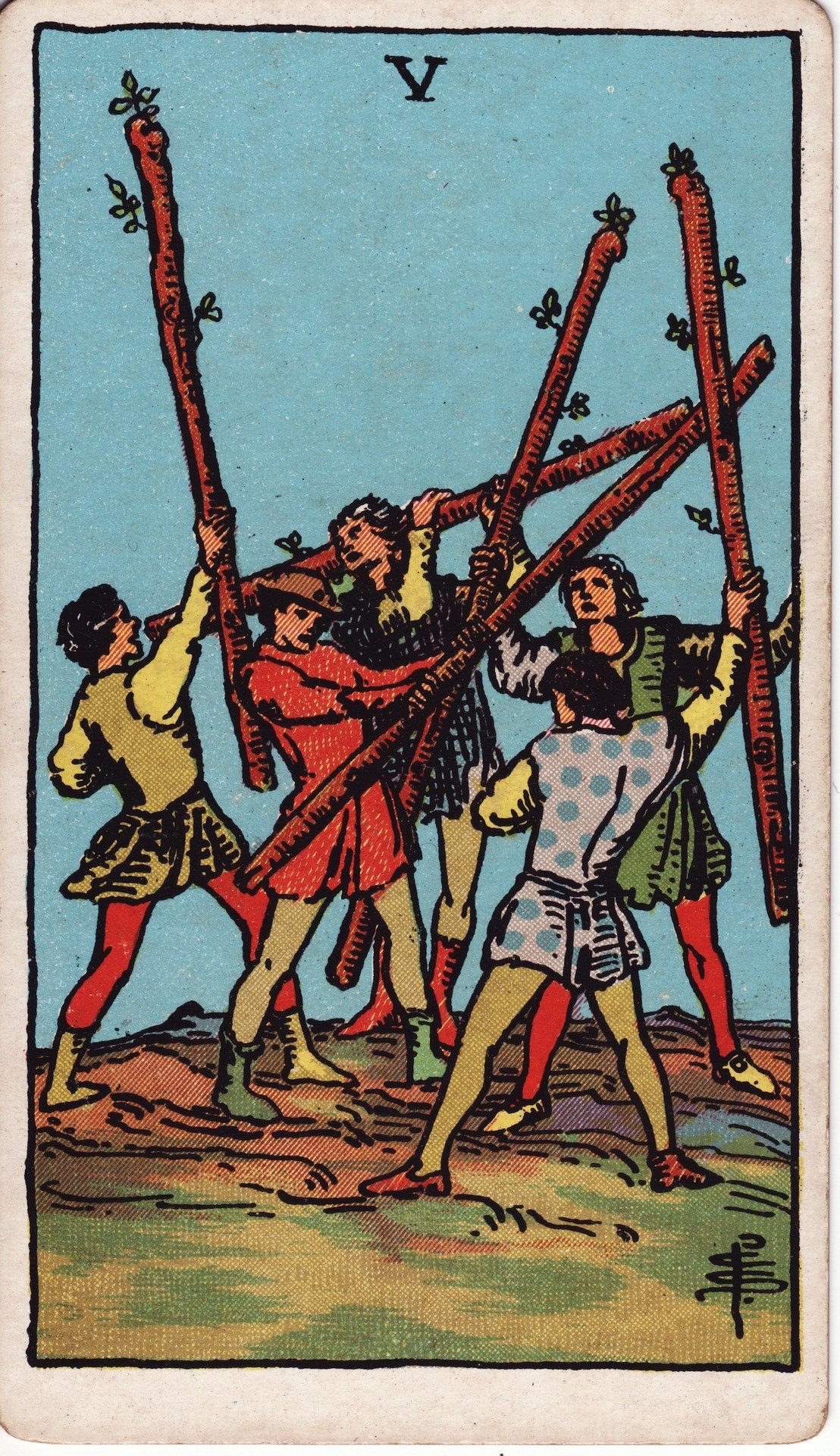
The Five of Wands shows five figures waving staves at each other in a tangle with no clear sides. This is conflict without malice: competition, brainstorming gone loud, the team that argues because everyone cares. It appears when too many strong opinions share too small a space. The card’s advice is to treat the sparring as productive. Nobody is trying to hurt anyone; the clash is how the best idea survives. Set some ground rules, let everyone swing, and pick the strongest outcome. The danger is only if the play-fighting turns real, which happens when someone stops listening and starts keeping score.
Five of cups: grief and what remains
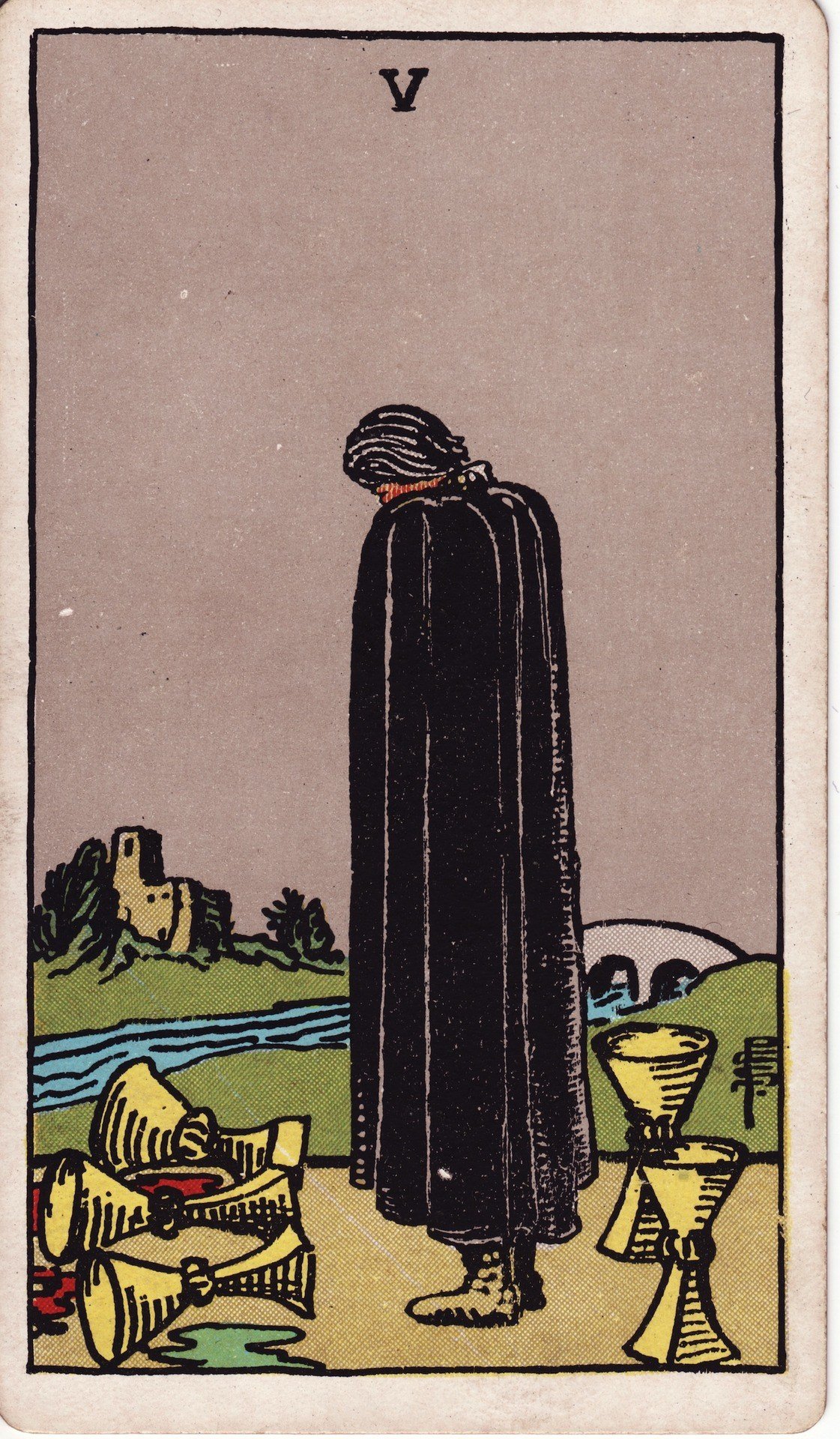
The Five of Cups shows a cloaked figure staring at three spilled cups, back turned to two full ones still standing. This is the card of loss fully felt: the relationship that ended, the opportunity that fell through, the plan that did not survive contact with reality. The card does not rush the grief. The three cups are genuinely spilled, and pretending otherwise helps no one. But the composition is deliberate: two cups remain upright behind the figure, unnoticed. The card’s question is not whether the loss is real. It is how long you will stare at the spill before you turn around and see what survived.
Five of swords: winning ugly
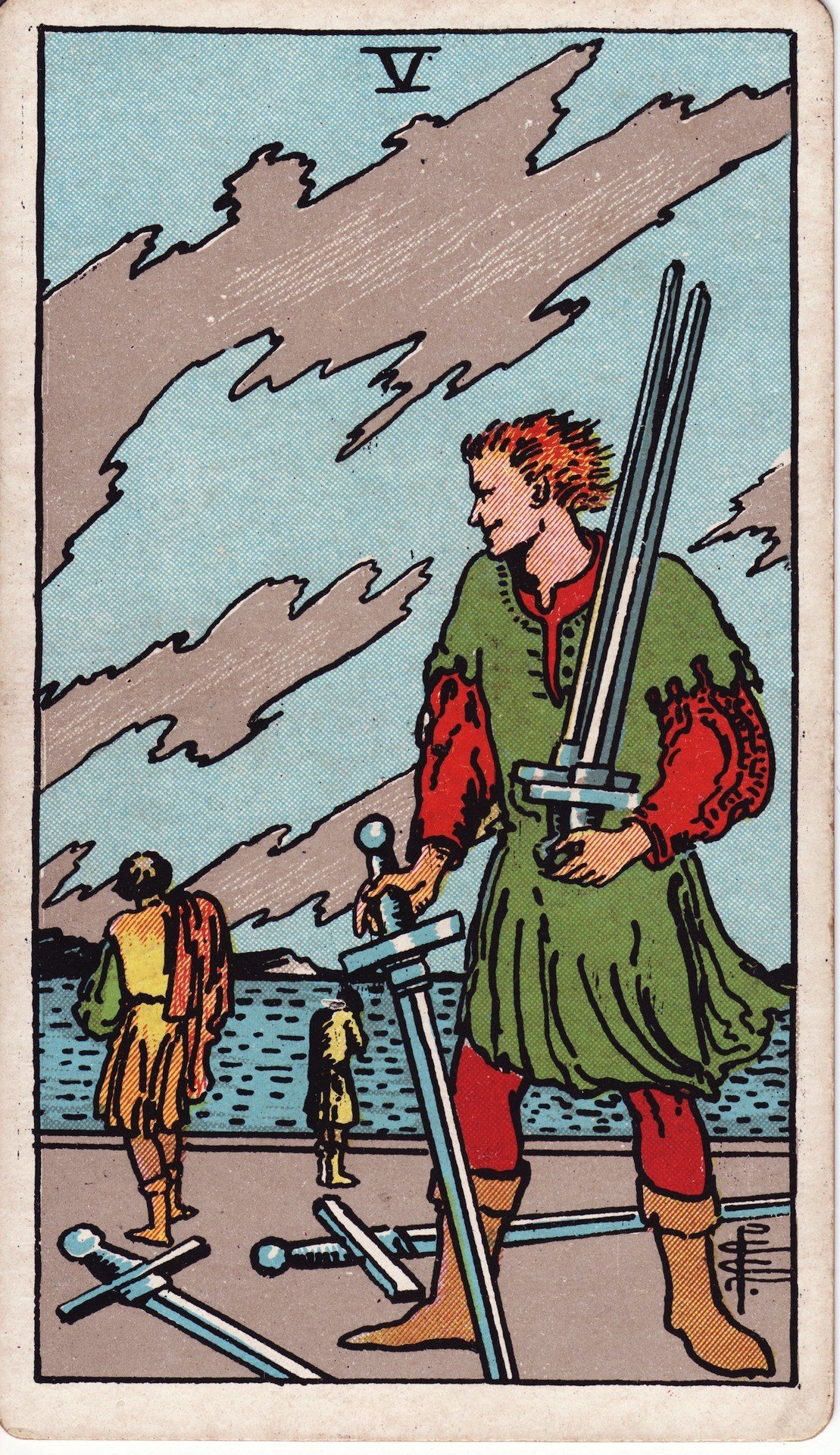
The Five of Swords shows a smirking figure collecting swords while two others walk away defeated. This is victory at someone else’s expense: the argument won by saying the cruel true thing, the office politics played a little too well, the divorce proceedings that turned scorched-earth. The card asks the uncomfortable question of whether the win was worth its cost. Sometimes the answer is yes, and the card simply names the price honestly. More often it suggests the prize was hollow. In readings about other people’s behavior, it warns you that someone is playing to win rather than to resolve. Do not mistake their tactics for the truth.
Five of pentacles: out in the cold
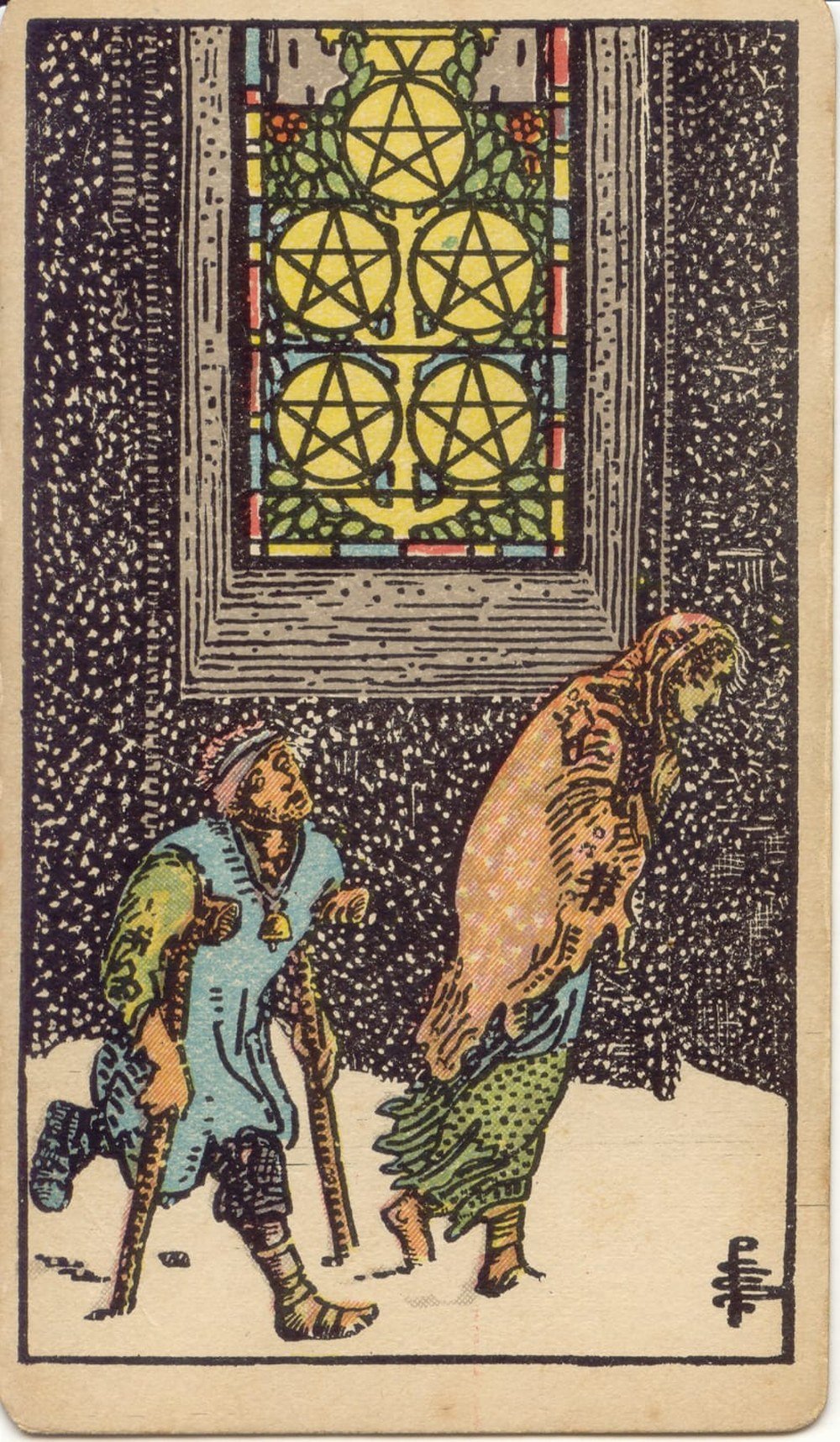
The Five of Pentacles shows two figures limping through snow past a lit church window. This is material hardship: the tight month, the job loss, the bill that arrived at the worst time. It also covers the subtler poverty of being shut out: feeling unwelcome, unsupported, on the outside of something warm. The church window is the card’s quiet argument. Help, community, or resources exist nearby, but pride or despair keeps the figures walking past. The card asks you to notice the window. Asking for help during a Five of Pentacles period is not weakness. It is the entire point of the card.
Fives as turning points, not endings
Every five sits at the middle of its suit’s story, which means every five is a turning point rather than a conclusion. The conflict of the Five of Wands can forge the team. The grief of the Five of Cups can clear the ground. The ugly win of the Five of Swords can teach you what you will not do again. The cold of the Five of Pentacles can show you who shows up. Fives hurt because something real is at stake. Read them as the middle of the story, and they tell you what the next chapter needs to be about.