
A new school year starts with a mix of plans and nerves that is hard to sort out in one sitting. A short spread gives that mix a shape. The spread below uses five cards, one for each part of the term that a student can actually work with. It does not grade the year in advance, and it does not pick a result for any class. It gives a way to name what matters in the first weeks, so the reader can act on it while the term is still fresh.
Shuffle with a clear question in mind, such as what this school year asks of me. Lay the cards face down in a row, then turn them over from left to right. Read the row as a short story about the term ahead, not as five separate answers.
The five positions

The first card is what to carry forward. It names a habit, a strength, or a lesson from last year that still helps. The second card is the first lesson, meaning the subject, skill, or attitude the term will test early. The third card is a classmate, a teacher, or a group that will matter more than expected. The fourth card is the hurdle, the part of the term that will ask for extra time or patience. The fifth card is the end of term, the tone the reader can expect if the earlier cards are handled with care.
Keep the positions in plain language while you read. A card in the first position is about what already works, so do not force it to mean something new. A card in the hurdle position is about friction, not failure. The end-of-term card is a direction, not a prize. Readers who hold those limits in mind tend to get more use from the spread, because they stop hunting for a single dramatic card and start looking at how the five positions fit together.
An example reading
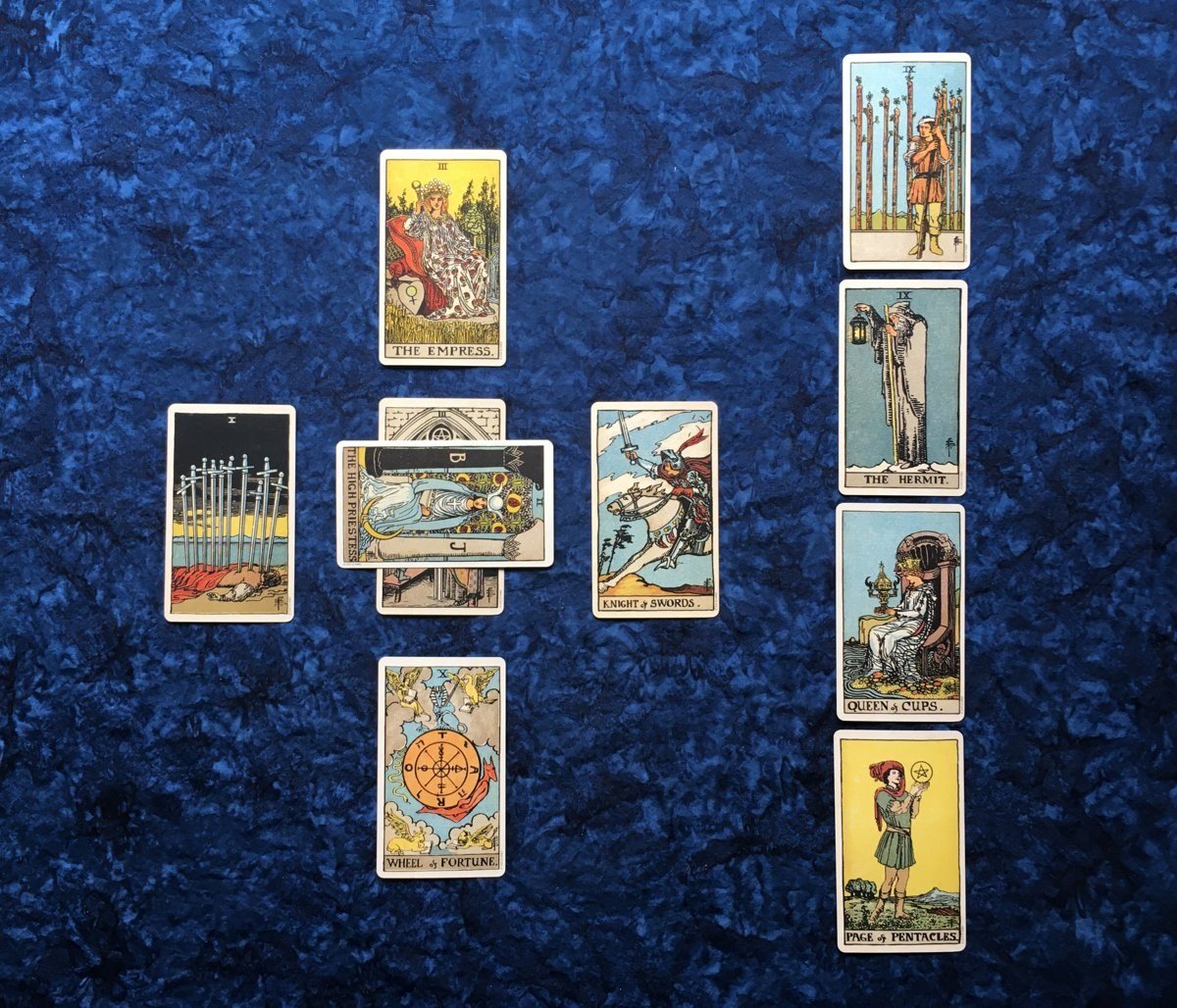
Imagine the row reads like this. The first card is the Six of Pentacles, which points to a habit of sharing notes and time fairly with others. The second card is the Page of Swords, which points to a term that opens with fast questions and a lot of new information to sort. The third card is the Three of Cups, which points to a small study group that makes the work feel lighter. The fourth card is the Seven of Wands, which points to a busy stretch where the reader has to defend study time against other demands. The fifth card is the Star, which points to a calmer close to term, with a clearer sense of what to build on next.
Read together, the row tells a plain story. The reader starts with a fair way of working, meets a fast and talkative first month, finds support in a group, hits a crowded middle stretch, and ends the term steadier than it began. The reading does not promise top marks. It points to one practical move: protect study time in the middle of term, and keep the study group close.
How to use the spread through the term
Write the five cards down with one sentence each about what they mean for this term. Put the note where it will be seen, inside a planner or on a desk. When the term gets busy, the note works as a reminder of the plan made in a calm moment. If a card in the hurdle position names time pressure, the response can be simple: block two evenings a week for homework before other plans fill them. If a card in the classmate position names a group, the response can be just as simple: ask one person to study together after class.
The spread also works well as a repeat check at the halfway point. Lay the same five positions again and compare the new row with the first one. The comparison often shows progress that daily school life hides. A hurdle card that softens in the second reading may match a routine that finally settled. A new card in the first position may name a skill picked up since September. For readers new to laying out cards, this beginner guide to reading tarot cards covers shuffling, layout, and reading a row as a story.
The misread to avoid
The common misread here is treating the spread as a forecast of grades. A card such as the Tower in the hurdle position does not mean a failed exam, and a card such as the Sun in the end-of-term position does not mean straight top marks. The cards describe attitudes, pressures, and choices. Grades follow from study, teaching, health, and luck on the day, and no spread can add those up in advance. Reading the spread as a grade forecast turns a useful planning tool into a source of worry, and it robs the reader of the one thing the spread can give: a plan.
A second misread is reading only the end-of-term card and skipping the rest. The last card only makes sense after the four cards before it. A calm final card after a hard hurdle card tells a different story from the same final card after an easy row. Keep the whole row in view, and let the middle cards carry their weight. The major arcana cards in a school spread often name larger themes, and the major arcana and the Fool’s journey gives a plain account of what those cards tend to mean when they show up in a reading like this one.