
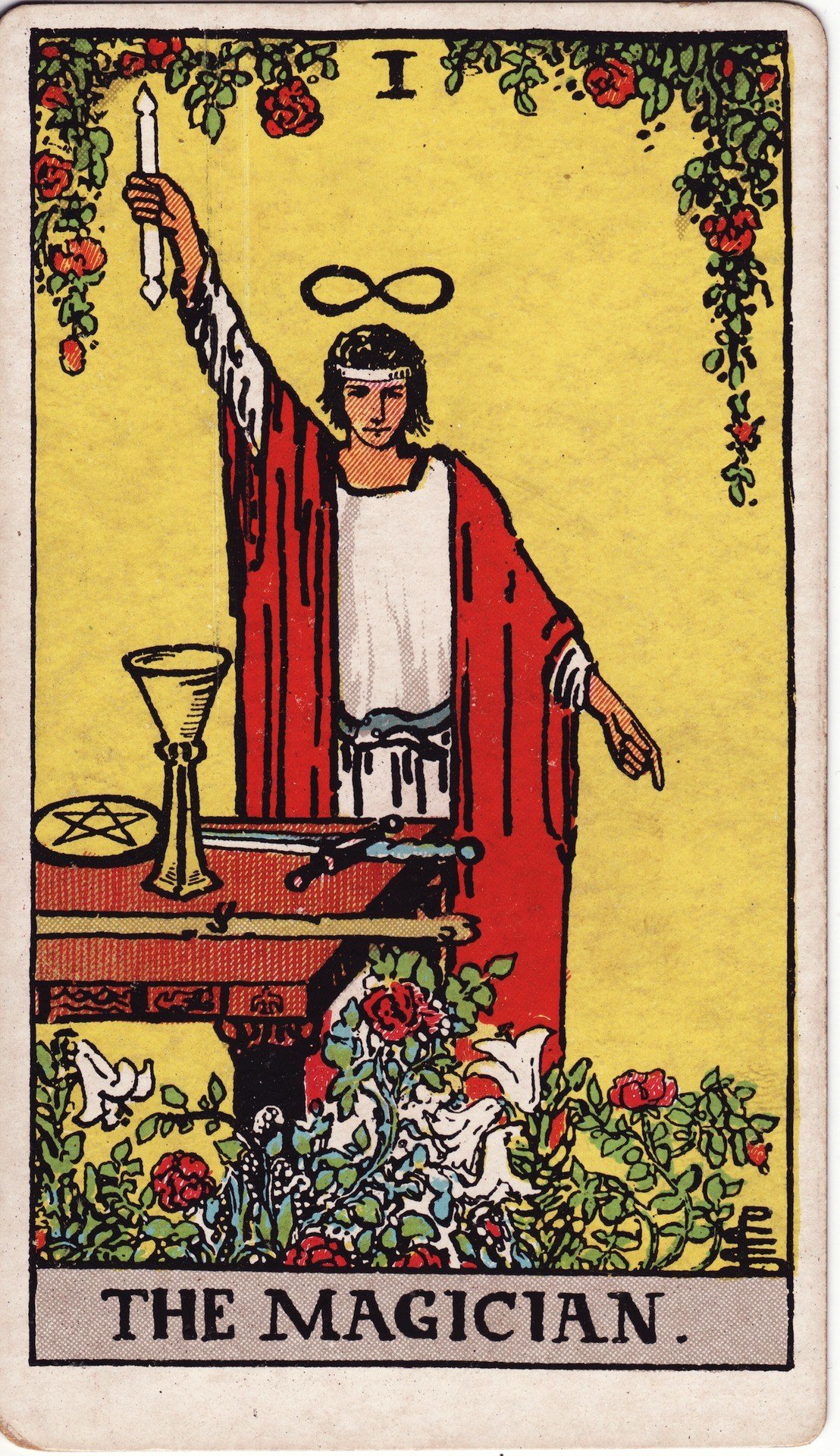
The Magician is the first numbered card of the major arcana, and the image is a small lesson in getting things done. A figure stands behind a table holding one tool from each of the four suits: a cup, a sword, a wand, and a coin. One hand points up to the sky and the other down to the earth, as if drawing something through. Above the head floats the sideways figure eight, the same symbol of flow and continuity you will find on the Strength card. Everything needed is already on the table. The work is to pick it up.
After the Fool’s open-ended beginning, the Magician is the moment of initiative. The question changes from “will I go?” to “what will I do with what I have?” If the four tools are unfamiliar, the four tarot suits and what they represent explains what each one stands for.
The table and its tools
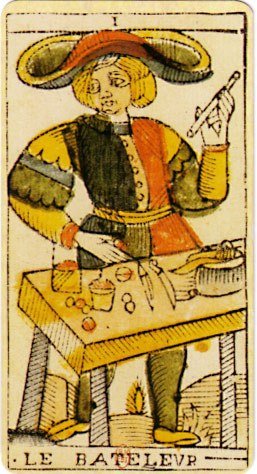
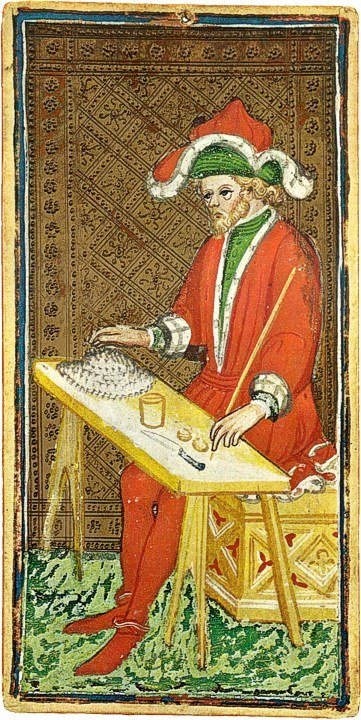
The table is the whole point of the card. On it sit the four implements of the minor arcana, which means the Magician has access to every kind of resource: feeling, thought, action, and material means. In older decks the figure is the Bateleur, a street mountebank or juggler, and the table holds the props of his trade. The Rider-Waite-Smith version cleaned him up into a ceremonial magician, but the meaning kept the street performer’s edge: this is someone who works with whatever is at hand.
Readers who learn to decode card images symbol by symbol will get the most out of this card. How to read tarot symbolism is a practical walkthrough of that skill, from colors to hand gestures.
Upright: resourcefulness and initiative
Upright, the Magician is the card of making do, and making do well. It appears in readings where the questioner has more resources than they are using: the skill they have not applied, the contact they have not called, the tool they own and keep forgetting about. The card’s advice is unglamorous. Take stock. Use what is on the table. Start before the conditions are perfect, because they never will be.
In a career reading, the Magician often marks the moment to pitch, apply, or launch. In a creative reading, it marks the point where preparation should turn into production. The will the card describes is not raw force; it is directed attention, the choice to aim the tools you have at the thing you actually want.
The other edge: the con artist
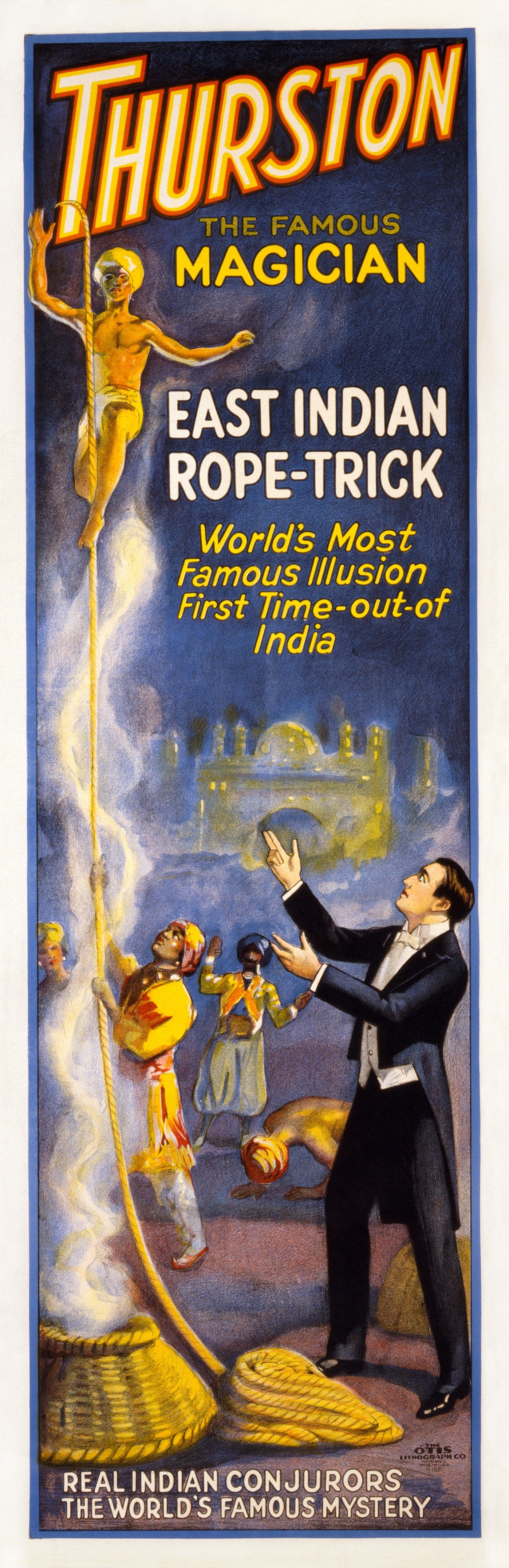
Every card has a shadow, and the Magician’s is manipulation. The same talent that lets someone marshal resources can be used to misdirect an audience. Reversed, or sitting in an uncomfortable position in a spread, the card can describe trickery: the too-smooth pitch, the deal where the terms keep shifting, the person who makes you feel clever while emptying your pockets. Sometimes that person is the questioner, using charm as a substitute for follow-through.
This is worth saying plainly because beginners tend to read the Magician as pure praise. It is not. Skill is neutral. The card asks what the skill is being used for, and whether everyone at the table can see the same table. A reading that ignores that question is doing half the job.
The Magician in practice: three examples
A job seeker draws the Magician when asking how to handle an interview. The read: stop rehearsing new answers and lead with the experience you already have; the tools are on the table, so name them. A writer stuck on a draft draws it when asking about the project. The read: the research phase is over; the material gathered is enough; begin. A person asking about a persuasive conversation draws it reversed. The read: check whether you are trying to win the argument or to be understood, because the card reversed suggests the tactics have taken over from the point.
None of these are predictions. They are reflections with a direction attached, which is how this site treats every card. The practical guide to all 78 tarot card meanings collects the full deck in the same grounded style.
Magician and Fool, side by side
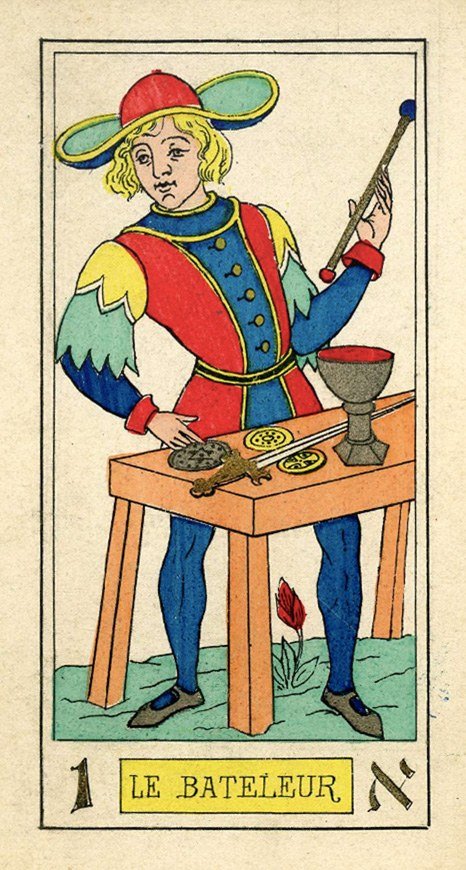
It helps to read the first two major arcana cards as a pair. The Fool, numbered zero, is the uncommitted start: the leap, the open road, the willingness to look unready. The Magician, numbered one, is the first committed act: the gathering of tools, the focusing of will, the decision about what the leap is for. One is the energy; the other is the aim. Most real beginnings need both, and in that order. The leap first, the workbench second. Draw them together in a reading and the message is usually that the timing has moved from “someday” to “now, with what you have.”