
Most astrology works with the wandering stars, the planets. But a handful of fixed stars, the bright stars that barely move, have been read as chart factors for thousands of years. Two of them, Regulus and Spica, show up often enough in ordinary charts that every student should know their names. Here is what fixed stars are, how to check yours, and what the famous ones traditionally mean.
What makes a star “fixed”
The planets move against the background sky; the fixed stars are that background. They do move, very slowly, but for chart purposes they sit still while everything else wanders. Traditional astrology assigned meanings to the brightest of them, usually from the myths attached to their constellations.
A fixed star matters in your chart when a planet or angle sits very close to it, traditionally within about one degree. That tight orb is the whole discipline: with a wider orb, everyone would have every star activated and the technique would mean nothing. Check conjunctions only, and keep the orb tight.
Regulus, the little king
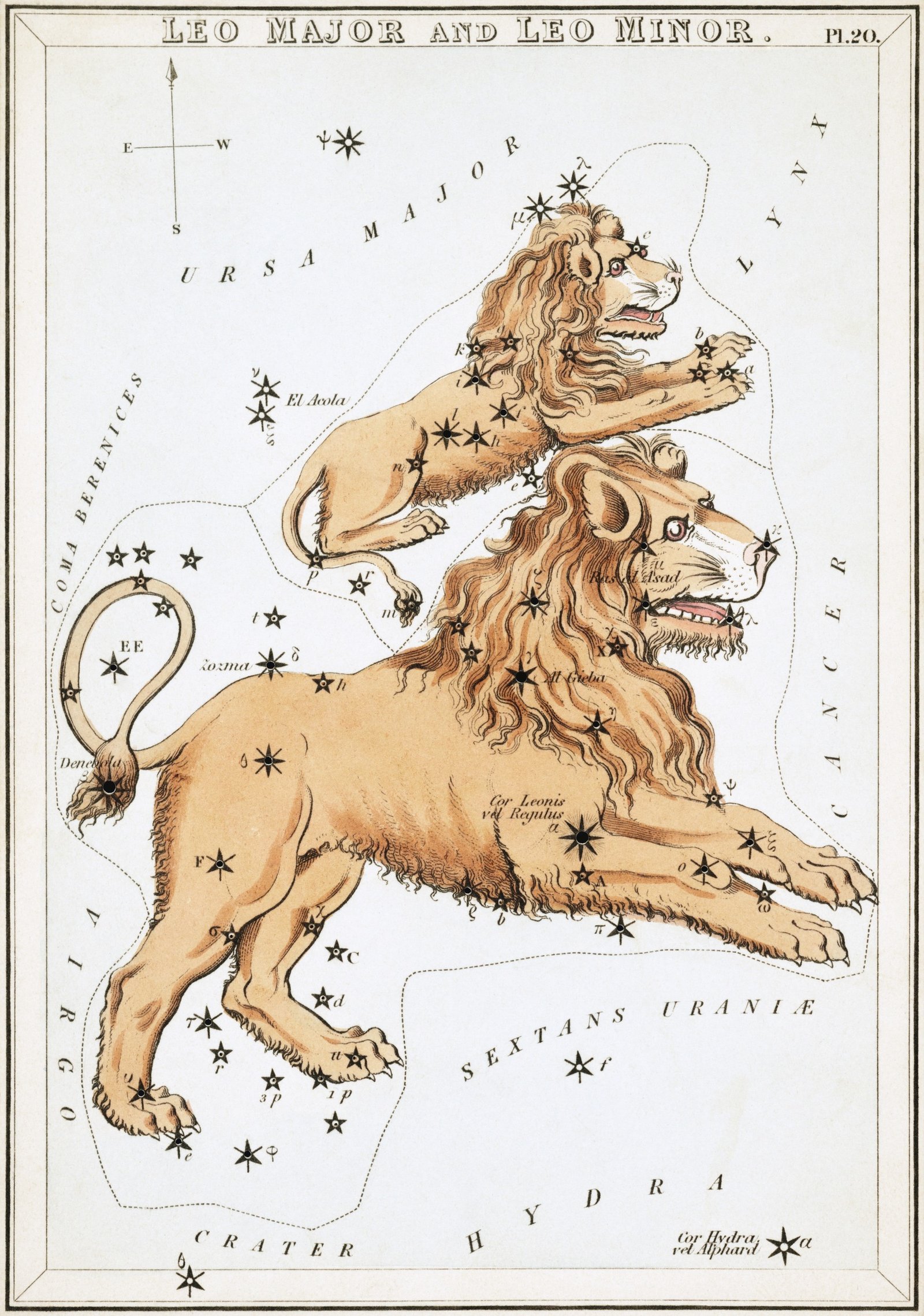
Regulus is the heart of the Lion, currently sitting near the end of tropical Leo. It was one of the four royal stars of Persia, and its traditional meaning matches the title: leadership, prominence, success earned in public life, with the old warning that the fall from such heights is steep. A planet conjunct Regulus is read as carrying that royal signature: visibility, authority, and high stakes.
Regulus is also the star to watch for sign changes. Because of precession it is slowly moving out of Leo and into Virgo, a shift traditional astrologers have written about for years. If your Regulus conjunction sits at 29 degrees of Leo, it is worth knowing the star is in transition.

Spica, the fortunate ear of wheat
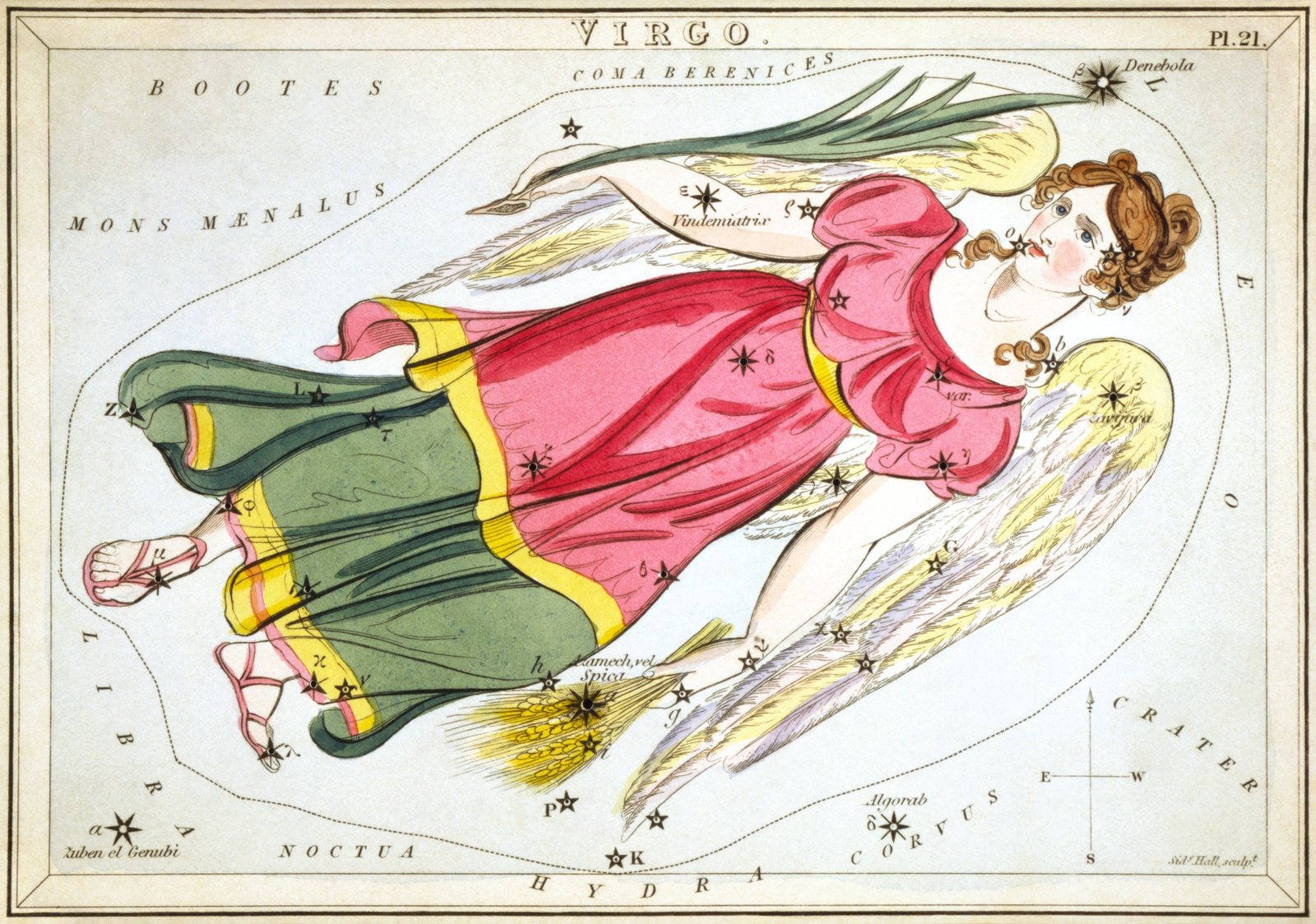
Spica, in Virgo, has a softer reputation. It is associated with brilliance, talent, and gifts that arrive through refinement rather than force. A planet conjunct Spica is read as blessed in that planet’s domain: Venus with Spica suggests grace in relationships and art, Mercury with Spica suggests a gifted mind.
The star does not do the work for the planet, in the traditional view; it gilds the work the planet does.
The rest of the company
Beyond the famous two, a few more stars come up regularly. Algol, in Taurus, carries the tradition’s darkest reputation, linked to intensity and extremes; modern readers tend to read it psychologically, as powerful shadow material rather than doom. Aldebaran, Antares, and Fomalhaut complete the old set of royal stars with Regulus, each marking one of the sky’s four directions. None of them needs memorizing at the start. Learn Regulus and Spica first, then add stars as they appear in charts you actually read.
Fixed stars combine naturally with the techniques you already know. A stellium with a star on it reads differently than one without, and our guide to how to read a stellium covers the cluster technique the stars plug into.

How to check your own chart
Most chart calculators do not show fixed stars by default, but astro.com’s extended chart selection includes them, and several free tools list star conjunctions. Look up the current positions of Regulus and Spica, then check whether any of your planets or angles sits within a degree. Remember that the stars move through the tropical zodiac slowly, so use current positions, not the ones in an old textbook.
Two cautions keep the practice honest. First, the tight orb is non-negotiable; a planet three degrees from Spica is not conjunct Spica. Second, a star conjunction modifies a planet, it does not override the chart. Venus conjunct Spica in a difficult house is still Venus in a difficult house, wearing a nicer outfit. Used that way, as seasoning rather than the main dish, fixed stars add a genuine layer to chart reading. The slow drift of the stars through the signs is also a good reason to understand tropical versus sidereal astrology, since precession is what moves them.