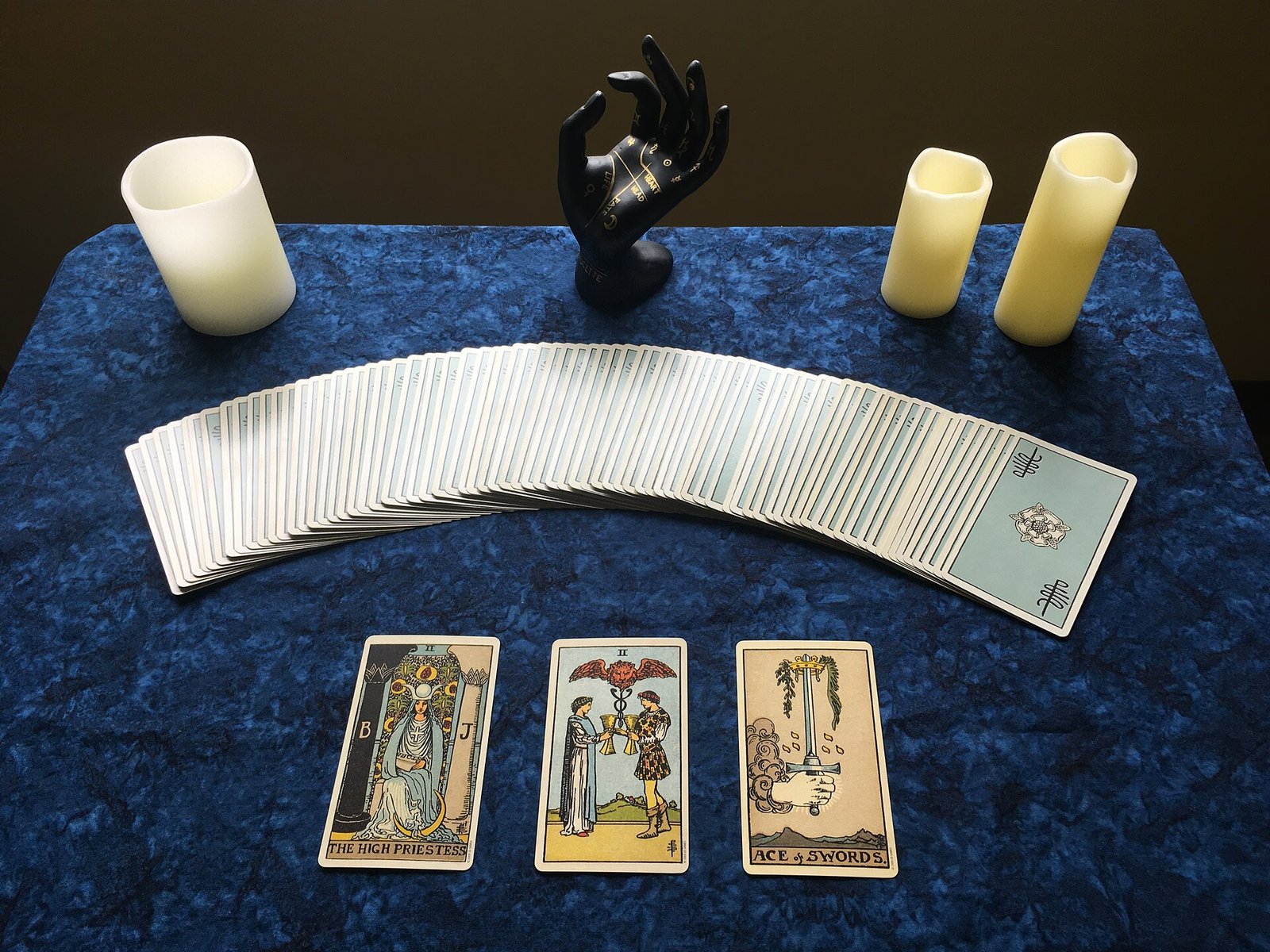
The Horseshoe spread is one of the oldest seven-card layouts in tarot: seven cards in an arc, read left to right like a story with a past, a present, and two possible futures. It is popular because it answers “what is going on and where is it heading” without the Celtic Cross’s ten-card sprawl. It is confusing for exactly one reason: the last three positions sound alike. Here is the spread with that confusion removed.
The layout
Lay the cards left to right in a horseshoe or arch. Card 1 starts at the lower left, the arc rises through cards 2 to 6, and card 7 lands at the lower right. The shape is a timeline: the left side is behind you, the top of the arc is now, and the right side is ahead. Deal them in order, 1 through 7, and flip them the same way.
Before you lay a single card, settle the question. The Horseshoe works best on open situations: a relationship, a career phase, a decision with a real fork in it. Vague questions give vague arcs, so tighten the wording first; our guide to asking better tarot questions has the method.
The seven positions
Card 1: The past. What shaped the situation. This card is context, not blame; it shows the conditions you walked in with.
Card 2: The present. Where things actually stand right now, which is often different from where you feel they stand.
Card 3: Hidden influences. What is operating under the surface: someone else’s motives, your own unexamined habit, a fact you have not faced. This card earns its place when it surprises you.
Card 4: Obstacles. What stands in the way. Note that obstacles include internal ones. A reversed-feeling Four of Cups here might be your own checked-out attitude, not an external wall.
Card 5: Outside influences. People, institutions, and circumstances you do not control. The attitude to take here is strategic: this is the weather, so dress for it.
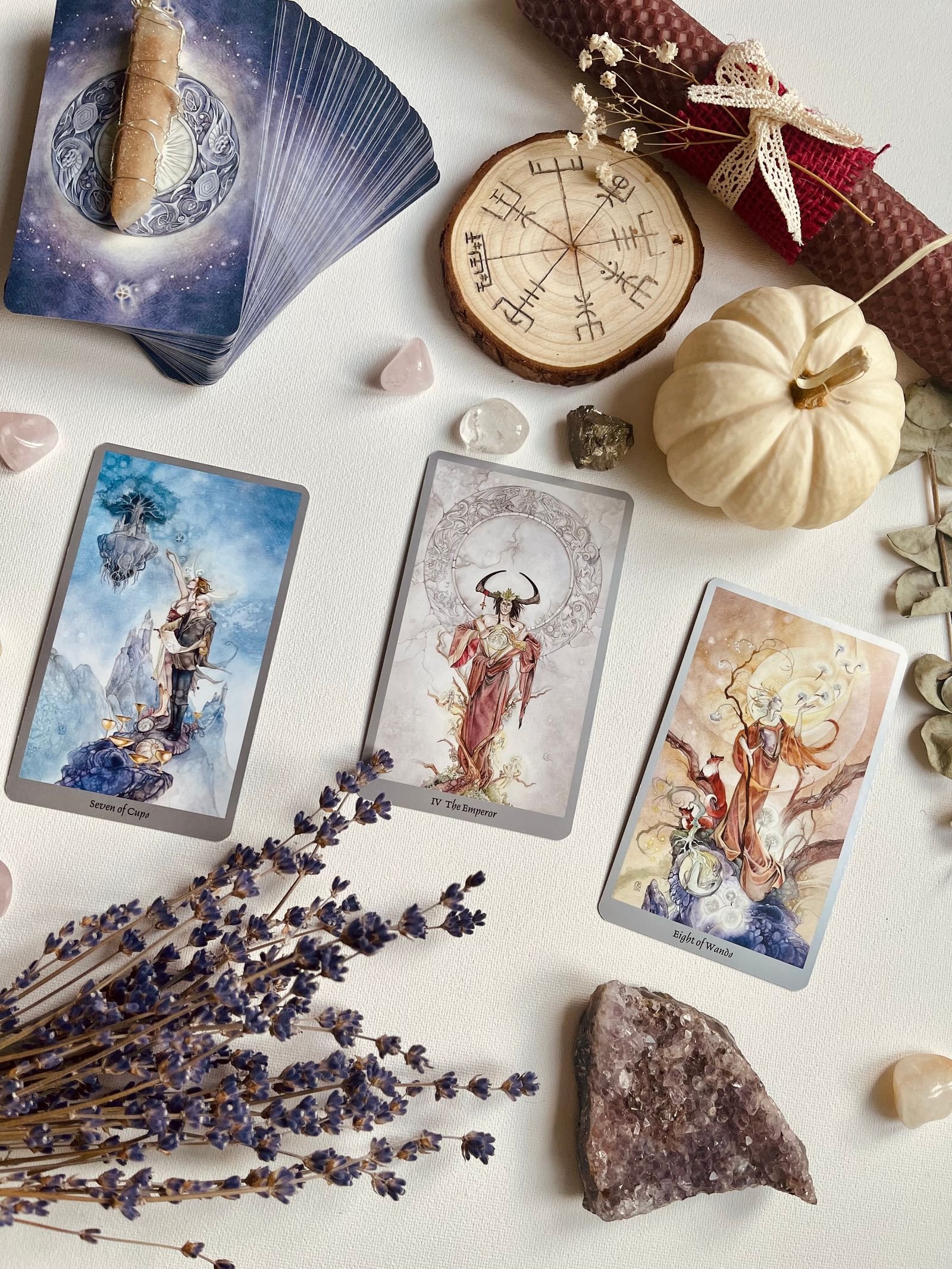
Card 6: Suggested action. What to do about all of the above. This is the position beginners misread as a second obstacle card. It is not. It is advice, and it usually reads as a verb: reach out, wait, set the boundary, do the research.
Card 7: The likely outcome. Where the current trajectory lands if nothing changes. Treat this as a weather forecast, not a verdict: card 6 exists precisely so you can change the forecast.
The fix for the confusing middle
Cards 3, 4, and 5 blur together because all three describe “things affecting the situation.” Keep them separate with one test each. Card 3 is what you cannot see yet. Card 4 is what is actively resisting you. Card 5 is what is happening around you regardless. If you can say “I didn’t know that” (card 3), “that’s in my way” (card 4), and “that’s the environment” (card 5), the spread is working.
The other common tangle is reading cards 6 and 7 as a pair of predictions. Read them as a pair of levers instead: card 6 is the lever, card 7 is what moves when you pull it. A spread that ends with advice plus a forecast is useful. A spread that ends with two forecasts is just suspense.
How to read the arc as a whole
After reading each card, step back and read the arc. Does the energy rise from left to right, with the later cards lighter than the first? Does it collapse, with card 7 heavier than card 1? Do the suits cluster: a lot of swords in the middle cards suggests the problem is mostly mental framing, while pentacles across cards 5 to 7 suggests practical circumstances will decide it. The beginner’s step-by-step reading method applies here exactly: positions first, individual cards second, the story third.
One practical note: shuffle with the spread’s size in mind. Seven cards plus a possible clarifier or two means you want a well-mixed deck, and a quick overhand shuffle with a cut is enough. The Horseshoe is a weeknight spread; keep the ritual simple and the reading honest, and it will tell you where the arc is bending.