
Fours are the steadiest cards in the deck, and steadiness cuts both ways. The number four builds the floor you stand on: the home, the routine, the savings account, the recovery period. But a floor can also become a ceiling. Every four in tarot describes a stable situation and quietly asks whether the stability is serving you or keeping you in place. Learning the difference is the whole lesson of the fours.
What the number four adds to a suit
In tarot numerology, four is structure. The energy of the first three cards settles into a form that can hold: walls, routines, reserves, agreements. Fours rarely describe dramatic events. They describe conditions: rest, security, boredom, control. When a four appears, the question is usually not what will happen but what the current arrangement is doing to you. Is the structure protecting something worth protecting, or has it become the thing you need protection from?
Four of wands: the milestone worth marking
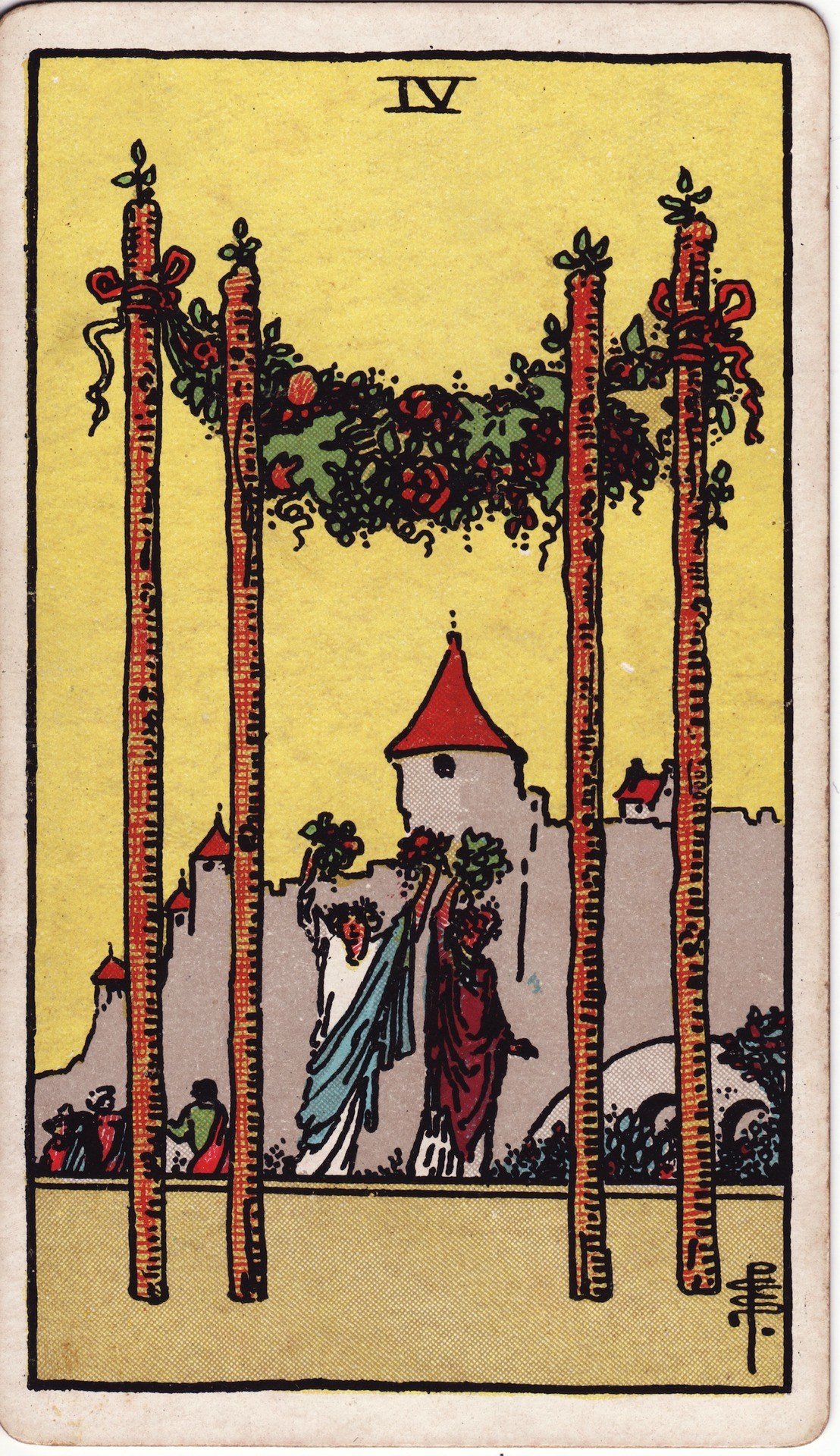
The Four of Wands shows a garland-draped canopy of wands over a celebrating pair, a castle behind them. This is stability as achievement: the home bought, the wedding, the project completed, the community that holds. It is one of the warmest cards in the deck, and it carries a simple instruction to pause and mark the moment. People skip this step constantly, rushing from one milestone to the next without letting any of them land. The Four of Wands says the foundation is real. Celebrate on top of it before you start building the next floor.
Four of cups: the plateau of feeling
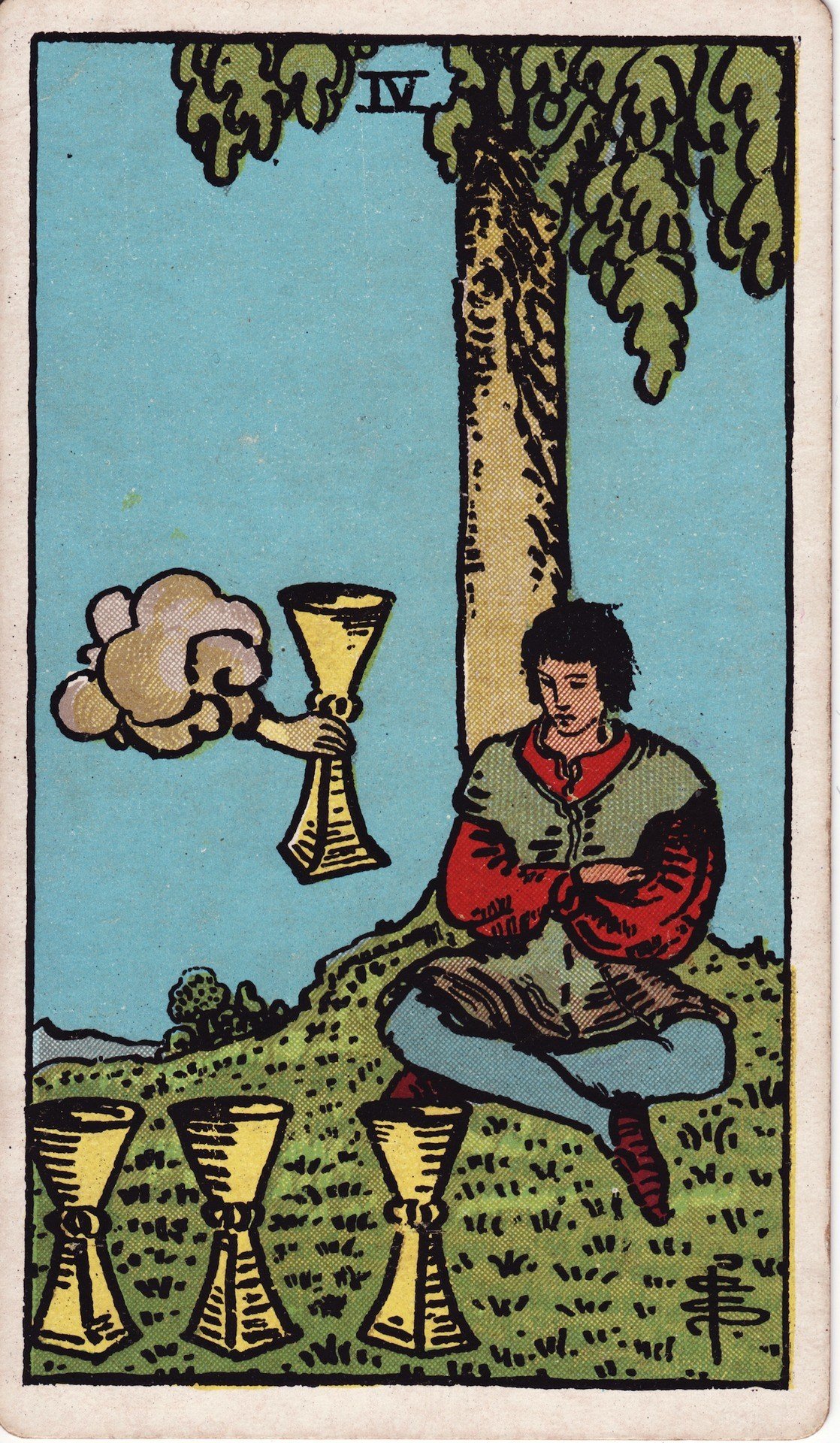
The Four of Cups shows a figure sitting under a tree, arms crossed, ignoring the cup being offered from a cloud. Three cups sit in front of him already. This is the emotional plateau: life is fine, nothing is wrong, and nothing feels like enough. The card appears during the flat stretches when the old pleasures stop working and the new ones have not arrived yet. The offered cup matters. It represents the opportunity, invitation, or feeling you are too checked-out to notice. The card does not scold the apathy. It just points at the cup and asks how long you plan to keep not seeing it.
Four of swords: rest as strategy
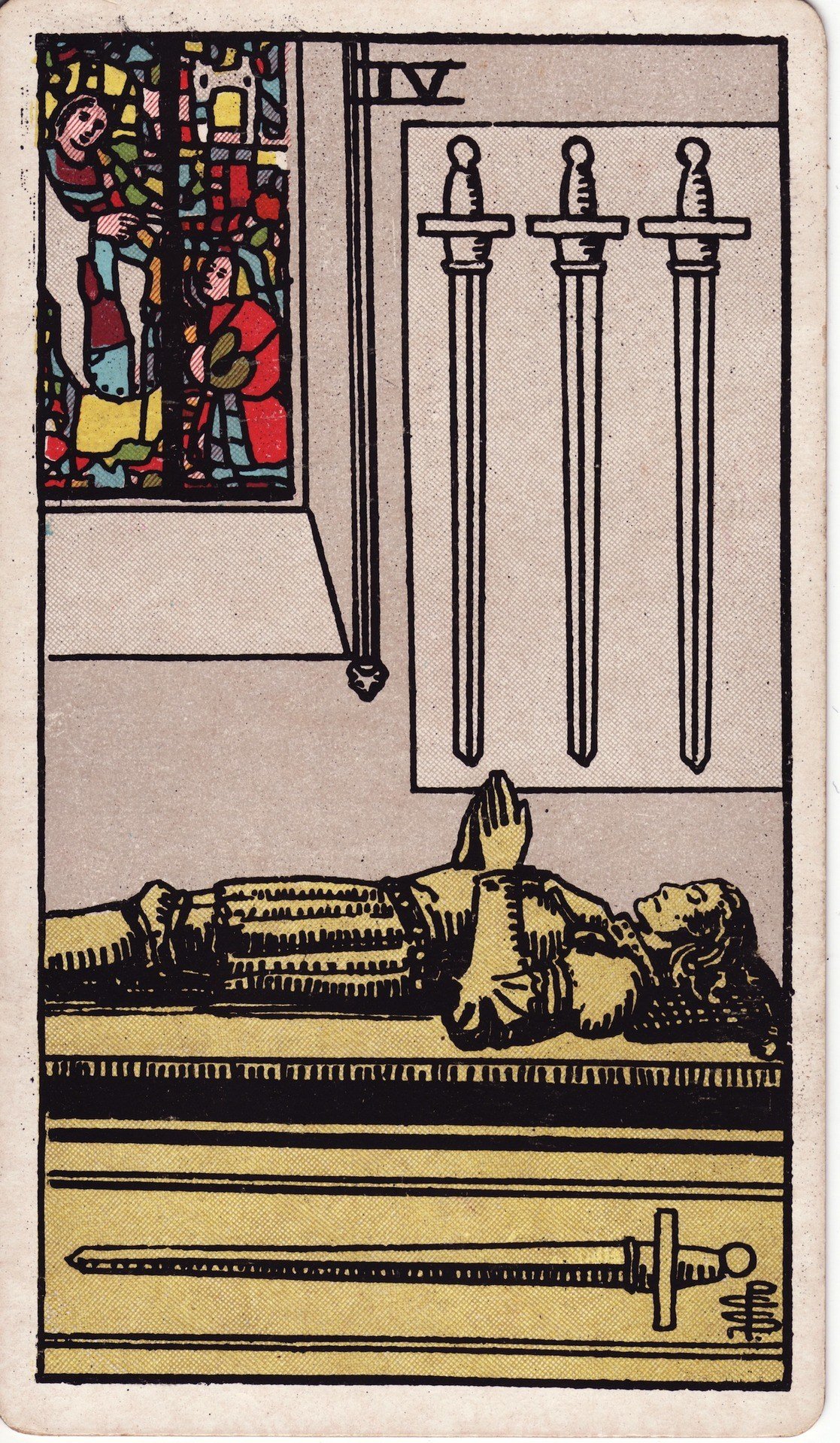
The Four of Swords shows a knight lying in repose on a tomb, three swords on the wall above and one beneath. This is the deck’s most explicit permission to stop. It appears after the battles of the earlier swords cards: the conflict is over or paused, and what you need now is genuine recovery, not planning the next fight. The card distinguishes rest from avoidance. Avoidance is the Two of Swords, sitting still while the decision waits. The Four of Swords is stillness with a purpose: sleep, retreat, the weekend fully off, the mind allowed to go quiet so it can work again later. Take the rest seriously and it pays compound interest.
Four of pentacles: holding tight
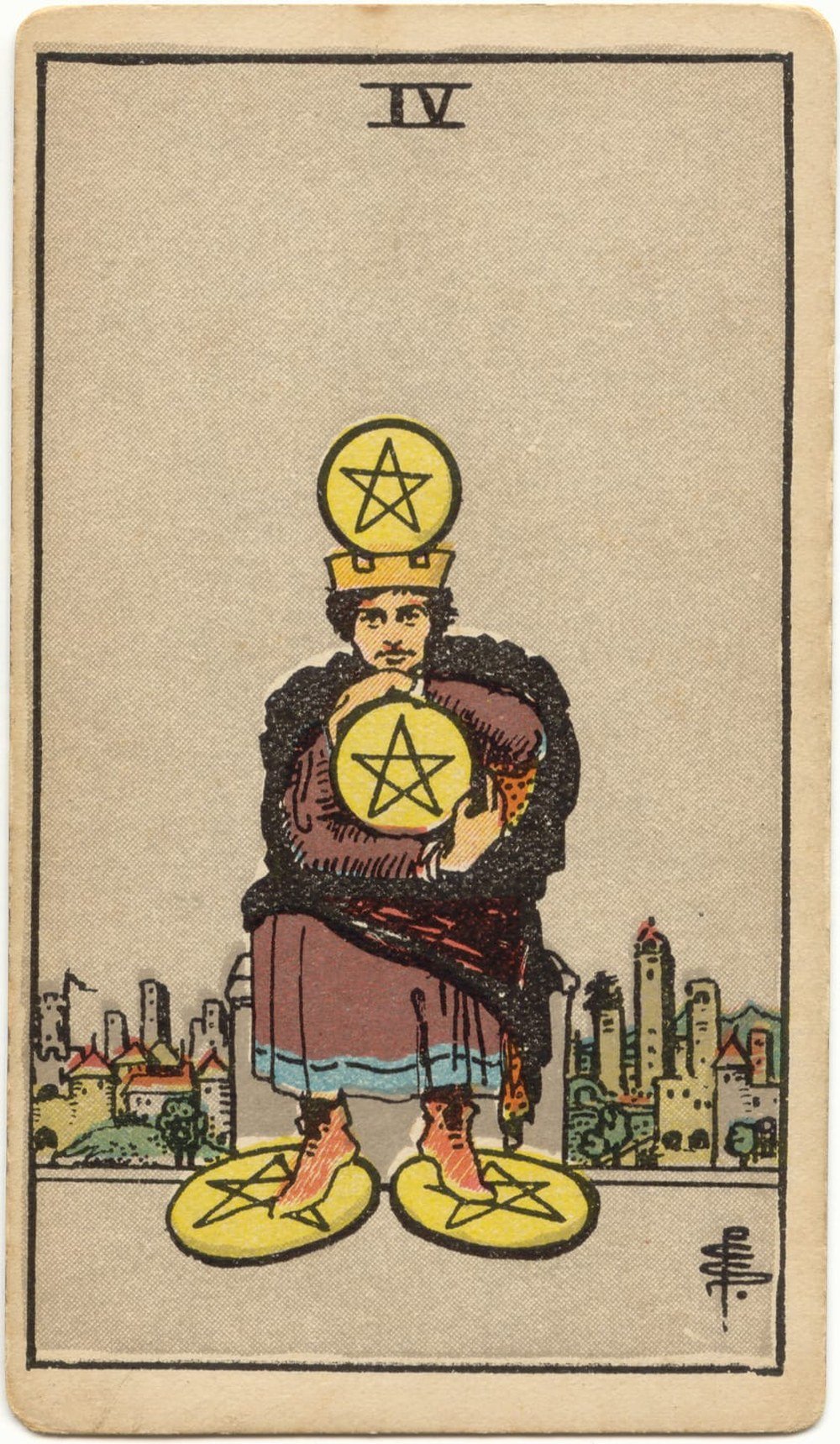
The Four of Pentacles shows a figure clutching a coin to his chest, coins under his feet and on his crown. This is security curdling into control: the savings that became a refusal to spend, the routine that became a refusal to change, the grip that keeps everything safe and nothing alive. The card is not anti-security. It asks what the holding is costing. Money kept in motion serves you; money clutched too tightly starts to own you. When this card appears, look for the place where loosening your grip slightly would let something better in. Keeping a tarot journal helps here, because the Four of Pentacles pattern is easiest to spot across weeks of entries rather than in a single reading.
When stability turns into stuck
All four fours share one diagnostic question: is this structure still alive? The Four of Wands celebrates a living foundation. The Four of Swords protects one while it recovers. The Four of Cups and the Four of Pentacles warn when the structure has gone rigid. A useful test is to imagine the structure removed. If the thought brings relief, the stability has become a cage. If it brings fear, the foundation is doing its job. Fours do not demand change. They ask you to check, honestly, whether the floor you are standing on is still the right one.