

Every suit in the minor arcana opens with an ace: one clear symbol, no complications, the suit at full strength. The twos are where life gets interesting. Two is the first number that involves another person, another option, or another force pushing back. That is why twos in tarot almost always describe a relationship between two things: you and a choice, you and another person, or two parts of your life pulling in different directions. Learning to read the four twos gives you a fast way to name the exact shape of any either-or situation.
What the number two adds to a suit
In tarot numerology, one is the seed and two is the first split. Something that was whole now has two sides, and the card describes how those sides relate. Sometimes they cooperate. Sometimes they negotiate. Sometimes they refuse to move at all. The suit tells you which part of life the split touches: drive, feeling, thought, or material fact. The picture on the card usually shows the tension directly, so start with what you can see before you reach for a memorized meaning.
Twos also carry a useful warning. A decision with two real options is harder than a decision with one, and people in a two-card situation often stall. When a two appears, part of your job as a reader is to say the quiet part out loud: there are two things here, and they cannot both have all of your attention.
Two of wands: choosing a direction

The Two of Wands shows a figure holding a globe, standing between two wands, looking out past the castle wall toward the distance. This is the card of the plan that has outgrown the room you are standing in. It appears when you have already decided to go and now must choose which way: the job in another city, the project that changes your role, the trip you keep postponing. The figure holds the whole world in one hand, which is the card’s promise and its pressure at once. The future is genuinely open, but openness is not a plan. The card favors the bolder option and asks for a real decision rather than another month of research. Pick the direction, then start walking.
Two of cups: mutual feeling
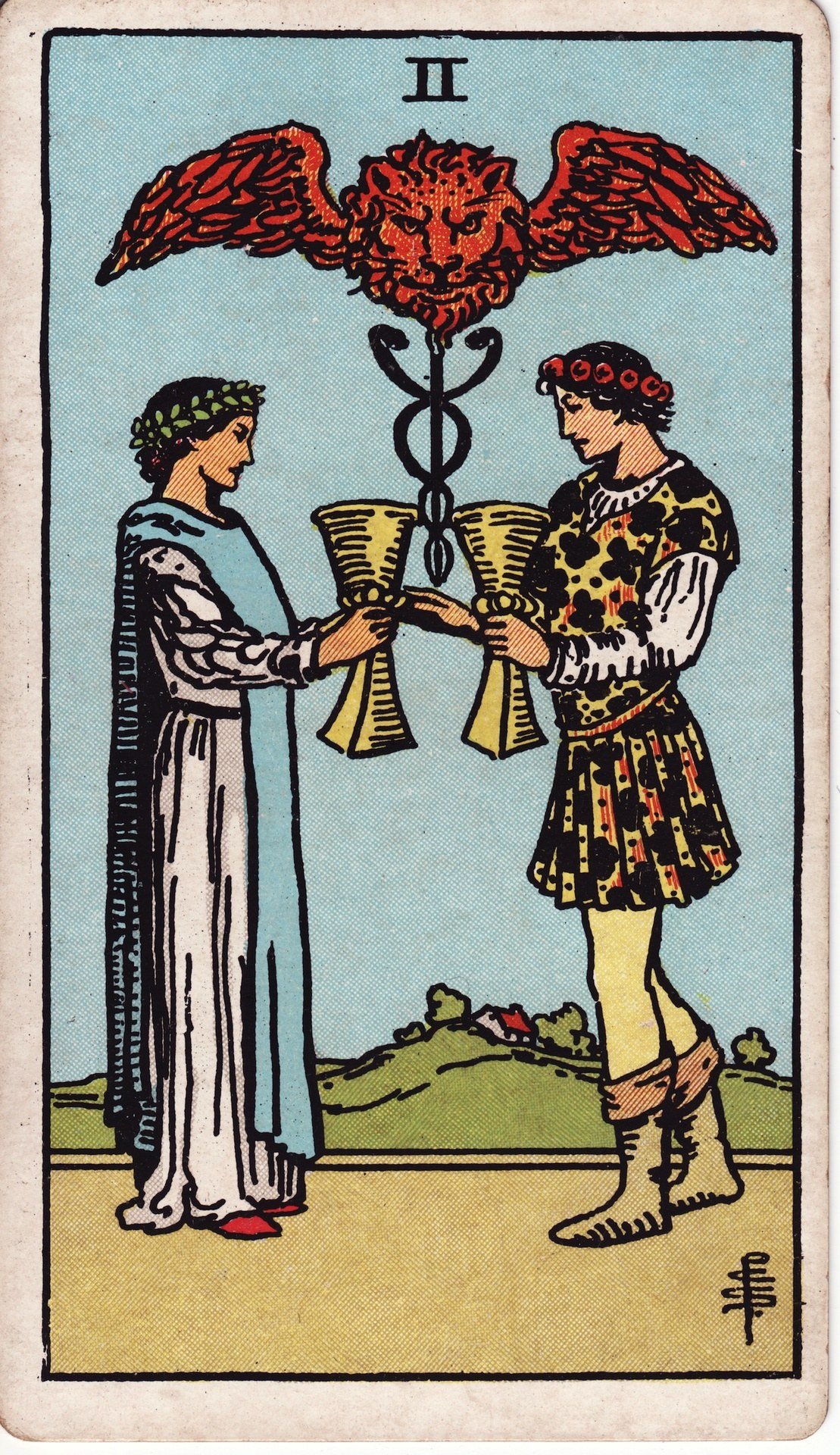
The Two of Cups shows two people exchanging cups, a winged lion above them. Where the Ace of Cups was an opening, the Two of Cups is an agreement: two people feeling the same thing at the same time. It turns up for new relationships, reconciliations, and partnerships of every kind, including business ones. The card describes balance between two equals rather than one person carrying the whole connection. That equality is the thing to check. When this card appears reversed, the usual question is whether the exchange has gone one-sided; our guide to what changes when a card is reversed covers how to read that shift without turning it into doom.
Two of swords: the decision you are not making
The Two of Swords shows a blindfolded figure holding two crossed swords, sitting perfectly still by the water. This is the stalemate card, and it is the two people most often misread as peaceful. Look closer: the blindfold is voluntary, the arms are locked, and the sea behind is calm only because nothing is moving. You know a decision is waiting, and you have arranged your life so you do not have to make it. The card is honest about the cost of waiting. The swords stay crossed whether you choose or not, but choosing at least lets you put one of them down. In a reading, ask what the blindfold is blocking and who the truce is actually protecting. The answer is often the person holding the swords.
Two of pentacles: keeping things moving
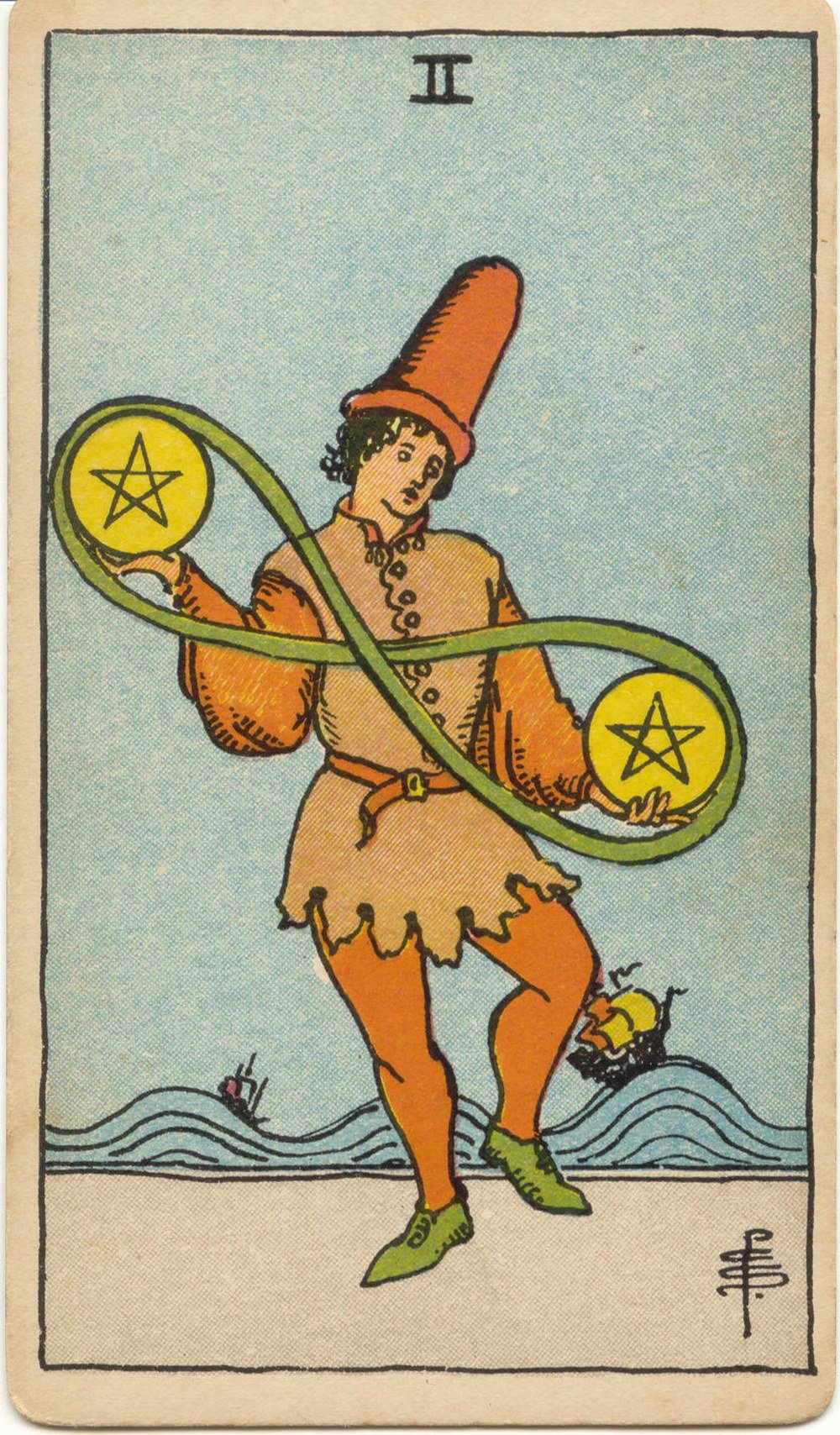
The Two of Pentacles shows a juggler with two coins looping in a figure eight, ships riding big waves behind him. This is balance as motion rather than stillness: money in and money out, two jobs, work and family, the budget that only works if everything keeps moving. Unlike the Two of Swords, this card is not stuck. The juggler is coping, and the card respects that. The question it asks is whether the juggling is sustainable. If the answer is no, the fix is usually to set one thing down on purpose instead of waiting for it to drop on its own. Done well, this card describes flexibility. Done badly, it describes the month before the burnout.
When twos repeat in a spread
Two or more twos in one reading point to duality running through the whole question. Look for the places where the querent is split: between two people, two offers, two cities, or two versions of themselves. The twos rarely name the right answer. They name the shape of the choice so the querent can see it clearly enough to decide. Name both sides out loud in plain words, say what each side costs, and the decision usually gets easier. That is the quiet service the twos perform: they turn a fog of unease into two visible options.